 |
|
|
|
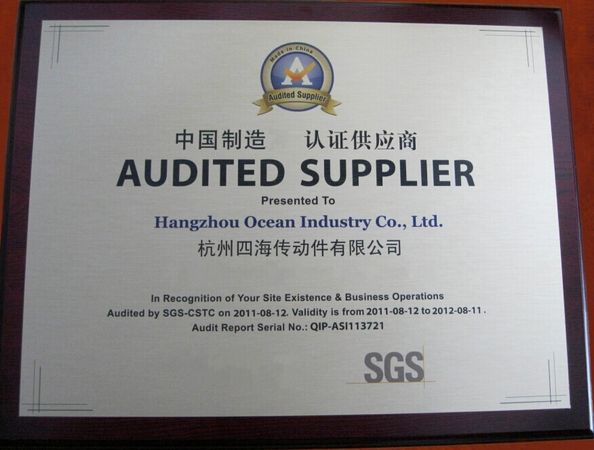
Certification

- I'm Online Chat Now
Company News
20CrMnTi: The "All-Purpose Workhorse" of China's Gear Steel Industry
For mechanical engineers in China, the steel grade 20CrMnTi is a household name. Despite the emergence of numerous new materials in recent decades, this decades-old alloy remains an unshakable cornerstone of China's gear manufacturing sector, earning it the reputation as the "all-purpose workhorse" of Chinese gear steels. Its enduring dominance stems not from flawless performance parameters, but from its perfect alignment with China's industrial needs and resource endowments.

The origin of 20CrMnTi is a classic example of "resource-driven technological innovation." In the 1950s, as China embarked on industrialization and sought to produce the iconic Liberation truck, engineers faced a critical challenge: the nickel-based steel specified in foreign designs was inaccessible due to nickel's status as a scarce strategic material, more valuable than gold at the time. Drawing inspiration from the Soviet Union's nickel-saving 18KhGT steel, which used manganese as a substitute, Chinese engineers made a pivotal adaptation—leveraging China's abundant titanium reserves from Panzhihua. This led to the birth of 20CrMnTi, a steel grade tailored to China's unique resource landscape.
A key factor behind its reliability lies in the "magic touch" of titanium (Ti). Gear manufacturing requires carburization, a process conducted at temperatures up to 930°C. Most steels would develop coarse grains at such high temperatures, resulting in brittleness. However, titanium in 20CrMnTi forms stable titanium carbide particles that "lock" the grain structure in place, ensuring the final gears are robust and durable—even under extreme heat treatment conditions.
Two core advantages have solidified 20CrMnTi's position: cost-effectiveness and mature processing. By replacing expensive nickel with domestically abundant titanium and manganese, it offers significant cost advantages over European and American counterparts, making it a favorite among manufacturers. Additionally, its processing technology is highly refined—virtually every heat treatment technician masters working with 20CrMnTi. It boasts excellent machinability, minimal deformation, and high production efficiency, further cementing its popularity.
Over the past 60 years, 20CrMnTi has played a pivotal role in China's industrial development. It may not match the performance of high-end nickel steels, but its durability and affordability helped propel China's industrialization through its most challenging early stages. As a product of "resource-dictated technological routes," it perfectly embodies China's industrial ingenuity—turning domestic resource advantages into reliable, practical materials.
Today, as China's industrial output continues to soar, 20CrMnTi remains a mainstay in gear manufacturing. It serves as a reminder of how targeted innovation, aligned with national resource realities, can create enduring industrial staples. For the mechanical engineering community, 20CrMnTi is more than just a steel grade—it is a symbol of China's industrial resilience and pragmatic innovation.
As the industry evolves, the legacy of 20CrMnTi endures, prompting discussions about other China-specific industrial materials that have shaped the nation's manufacturing journey. Its story highlights the importance of adapting materials to local conditions—a principle that continues to guide innovation in China's manufacturing sector.
Pub Time : 2026-01-26 09:42:38
>> News list
Contact Details
Hangzhou Ocean Industry Co.,Ltd
Contact Person: Mrs. Lily Mao
Tel: 008613588811830
Fax: 86-571-88844378