 |
|
|
|
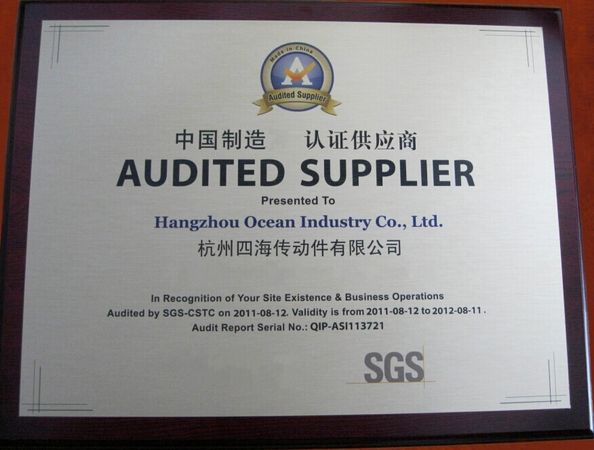
Certification

- I'm Online Chat Now
Company News
20CrNi3Mn2Al Age-Hardening Nitrided Gear Steel
With the continuous development of modern industrial technology, nitriding technology has become increasingly prominent in the field of surface strengthening, especially for large, high-speed, heavy-load, and precision gears. However, traditional nitriding steels have long suffered from the "eggshell effect"—a thin nitrided layer combined with low matrix hardness—limiting their application in heavy-load scenarios. To address this gap, the new age-hardening nitrided gear steel 20CrNi3Mn2Al has been successfully developed domestically. It integrates age hardening and nitriding strengthening, enabling it to partially replace carburizing processes in large heavy-load gear applications. This steel is particularly suitable for gears operating under harsh conditions such as a water medium with rust prevention requirements, a tooth surface stress of 1160MPa, a modulus of 1.5, and a tooth surface hardness exceeding 52HRC.
Key Characteristics of Nitrided Gear Steels
Nitrided gear steels must meet the following core requirements:
- Excellent machinability: The hardness of gear blanks should range from 30 to 36 HRC (283 to 332 HB) to facilitate machining operations.
- Synergistic strengthening: The alloy composition must achieve both age hardening and nitriding strengthening while maintaining high strength and toughness, enabling rapid deep nitriding.
- High performance: Gears manufactured from these steels should exhibit high fatigue resistance, minimal distortion after heat treatment, stable quality, and environmental friendliness.
Alloy Composition Design of 20CrNi3Mn2Al Steel
Alloying Principle
- Age hardening: Achieved through the coherent precipitation of ultra-fine intermetallic compound Ni₃Al with the α matrix, requiring the coexistence of Al and Ni.
- Nitriding strengthening: Realized via interstitial solid solution strengthening of nitrogen and the 弥散 precipitation of extremely stable nitrides formed by Al, Cr, Mo, and V—with the coexistence of Al, Cr, Mo, and V being essential.
- Low-carbon and high-manganese design: Low carbon content promotes nitrogen diffusion during nitriding. Carbon precipitates chromium carbides with Cr during aging, inhibiting the grain boundary precipitation of Ni₃Al, improving toughness, and delaying aging efficiency. Manganese enhances hardenability, retards pearlite transformation, and ensures predominantly bainitic transformation during air cooling.
Chemical Composition
Innovatively developed based on the American P21 steel, 20CrNi3Mn2Al takes nickel and aluminum as the core, combined with low carbon, high manganese, and the coexistence of Al, Cr, Mo, and V. Its chemical composition (mass fraction) is shown in the table below:
| Steel Grade | C | Mn | Si | Cr | Ni | Mo | Al |
|---|---|---|---|---|---|---|---|
| P21 | 0.18-0.20 | - | 0.2-0.4 | 0.2-0.3 | 3.90-4.25 | 0.22-0.25 | 1.05-1.25 |
| 20CrNi3Mn2Al | 0.10-0.25 | 1.0-2.0 | 0.2-0.5 | 0.3-1.0 | 3.0-3.5 | 0.2-0.3 | 0.1-0.5 |
Test Results and Analysis
Solution Treatment Temperature
Test results indicate that air cooling after solution treatment at 850-900℃ for 3 hours yields a hardness of 33-35 HRC, ideal for machining. The optimal temperature range is 850-900℃, with 870℃ as the commonly used parameter. The microstructure after treatment is dominated by granular bainite, with small amounts of lath martensite and retained austenite.
| Treatment Temperature (℃) | 840 | 860 | 870 | 890 | 900 | 920 |
|---|---|---|---|---|---|---|
| Air Cooling Hardness (HRC) | 34 | - | 34 | - | 34.5 | - |
| Oil Cooling Hardness (HRC) | - | 36 | 37 | - | - | - |
Aging Temperature
After solution treatment at 870℃ for 3 hours, specimens were aged at different temperatures for 6 hours, with some undergoing secondary aging (540℃×6h). Key findings include:
- Aging at 460-600℃ produces age hardening effects, with the highest hardness (40-43 HRC) achieved at 500-560℃. At this range, Ni₃Al precipitates are ultra-fine (≈10nm), uniformly distributed, and coherent with the matrix.
- Pub Time : 2026-01-14 10:23:31 >> News list
Contact Details
Hangzhou Ocean Industry Co.,Ltd
Contact Person: Mrs. Lily Mao
Tel: 008613588811830
Fax: 86-571-88844378