 |
|
|
|
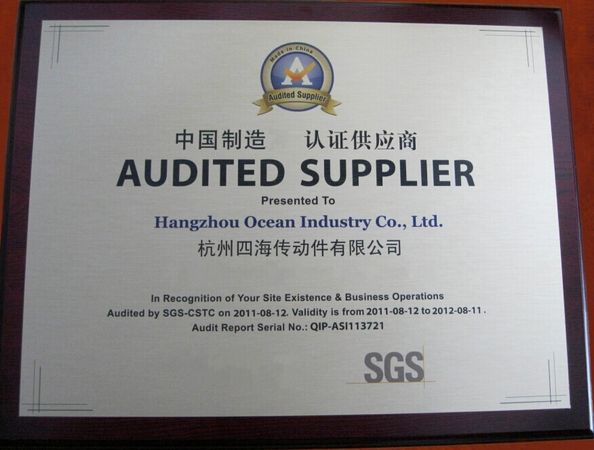
Certification

- I'm Online Chat Now
Company News
A Review of Dynamics Research on Gear Systems with Cracks
A Review of Dynamics Research on Gear Systems with Cracks
Gear systems are critical transmission components in aerospace, automotive, marine, and heavy machinery. Tooth root cracks are among the most common and dangerous failure modes, which directly reduce meshing stiffness, induce strong nonlinear vibration, shorten service life, and even cause catastrophic accidents. Over the past two decades, the dynamic behavior of cracked gear systems has attracted extensive attention from both academia and industry. This article systematically reviews the research progress, core methods, engineering applications, limitations, and future trends in this field.
1. Research Scope and Core Topics
Studies on cracked gear systems mainly cover three interrelated core areas:
Crack initiation and propagation prediction
Time-Varying Meshing Stiffness (TVMS) calculation
Dynamic response and vibration characteristics analysis
The research objects include spur gears, helical gears, planetary gear trains, and coupled gear‑rotor systems.
2. Crack Propagation Modeling
Gear cracks mostly initiate at the tooth root fillet under cyclic contact stress and bending stress.
Typical crack paths: along the tooth root or rim, approximately parabolic for small cracks and nearly linear for large cracks.
Modeling approaches:
Analytical beam model (cantilever beam assumption for gear teeth)
Finite Element Method (FEM) with fracture mechanics
Experimental observation with artificial notches
Key indicators: crack depth, crack length, crack angle, and propagation rate.
These models reveal how cracks grow under alternating loads and lay the foundation for stiffness degradation and life prediction.
3. Time-Varying Meshing Stiffness (TVMS)
Tooth cracks significantly reduce the effective section area, leading to stiffness reduction and periodic fluctuation.
Stiffness loss increases with crack depth.
TVMS is the key internal excitation linking crack severity to dynamic response.
Calculation methods:
Potential energy method
Finite element simulation
Analytical formula with modified sectional parameters
Stiffness reduction causes meshing impact, load fluctuation, additional vibration, and noise.
4. Dynamic Modeling of Cracked Gear Systems
Various dynamic models have been developed to capture vibration features caused by cracks:
Lumped Mass Model (LMM): widely used for its high efficiency
Typical DOF configurations: 4-DOF, 6-DOF, 8-DOF, 9-DOF, 12-DOF, 16-DOF, 21-DOF, 26-DOF
Finite Element Model (FEM): high accuracy for complex structures
Gear-rotor coupled models: for real transmission systems
Piecewise gear tooth models: improve local tooth deformation accuracy
These models support the analysis of natural frequencies, mode shifts, amplitude modulation, and fault features in frequency domain.
5. Vibration Response and Fault Characteristics
Crack-induced dynamics show obvious symptoms:
Increased overall vibration level
Periodic impacts and amplitude modulation
Sidebands around meshing frequencies
Sub- or super-harmonic resonance
Nonlinear jump and instability phenomena
These characteristics form the theoretical basis for gear fault diagnosis, condition monitoring, and remaining useful life (RUL) prediction.
6. Engineering Value
Reveal the physical mechanism: crack → stiffness reduction → meshing impact → abnormal vibration
Support early detection of tooth root cracks in aero-engines, reducers, wind turbine gearboxes
Improve safety, reliability, and maintenance efficiency
Provide theoretical support for durability design and life evaluation
7. Limitations of Current Research
Although great progress has been made, most studies still have constraints:
Most models are simplified 2D models; real cracks are 3D spatial defects
Commonly based on linear elasticity and rigid‑body assumptions
Insufficient research on rim cracks, multi-crack coupling, and flexible gear effects
Lack of high-precision experimental validation such as photoelastic testing
Few models consider real working conditions: variable speed, variable load, temperature, lubrication
8. Future Research Directions
Future studies will focus on high‑fidelity and engineering‑oriented modeling:
Establish 3D crack propagation models closer to real working conditions
Deepen research on rim cracks and multi-tooth crack interaction
Develop dynamic models for flexible gears and gear‑rotor‑bearing full systems
Combine photoelastic experiments, high‑speed imaging, and vibration testing
Introduce nonlinear fracture mechanics and multi‑physical field coupling
Develop data‑driven and model‑fusion methods for intelligent diagnosis
Improve accuracy of TVMS calculation and life prediction under variable conditions
9. Conclusion
The dynamic analysis of cracked gear systems is a cross‑disciplinary field involving mechanics, materials, transmission, and fault diagnosis. It not only reveals the evolution law of crack‑induced vibration but also provides key support for health monitoring and safety design. With the development of high‑precision modeling and intelligent detection, this field will continue to provide more practical tools for advanced equipment reliability and operational security.
Pub Time : 2026-04-01 10:59:56
>> News list
Contact Details
Hangzhou Ocean Industry Co.,Ltd
Contact Person: Mrs. Lily Mao
Tel: 008613588811830
Fax: 86-571-88844378