 |
|
|
|
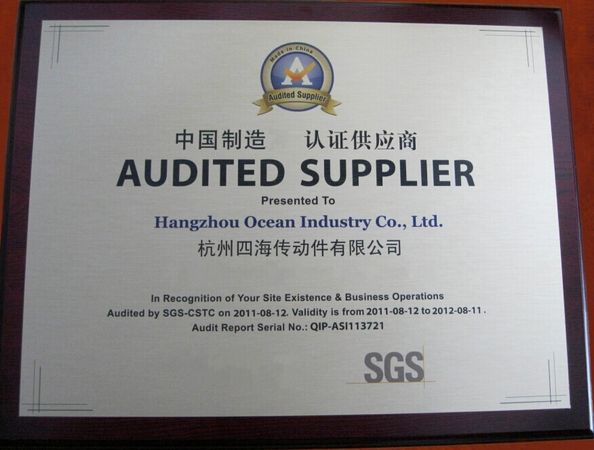
Certification

- I'm Online Chat Now
Company News
Complete Guide to Scraper Chain Industry & Technical Specifications
1. Overview of Scraper Chain
A scraper chain is a core mechanical transmission and conveying component specially designed for scraper conveyors, also universally named drag chain, flight chain or conveyor scraper chain in the global industrial field. Different from ordinary transmission chains, it is developed for continuous bulk material handling, featuring strong traction force, excellent wear resistance and high structural stability. The whole working principle relies on the cyclic reciprocating operation of the closed-loop chain system, which drives equidistantly installed scraper flights to push powdery, granular, blocky and loose bulk materials to move along the closed conveyor trough. This mechanical conveying method realizes stable, continuous and efficient material transportation without material scattering and leakage.
Scraper chains are indispensable basic components in modern bulk material handling systems, widely deployed in coal mining, underground mine transportation, thermal power plants, cement factories, chemical plants, grain storage and processing, biomass energy, metallurgy, building materials and other industrial fields. It can adapt to complex working environments such as horizontal conveying, inclined lifting conveying and small-angle vertical conveying, and can operate stably in dusty, humid, high-abrasion and low-temperature industrial scenarios, with strong environmental adaptability and industrial practicability.
2. Structural Composition and Core Manufacturing Technology
The complete scraper chain assembly adopts a modular integrated structure, mainly composed of chain plates, connecting pins, bushings, rollers, scraper flights, locking bolts and anti-loosening accessories. Each component undergoes precision machining and professional heat treatment to match heavy-duty industrial working conditions, and the structural design fully considers wear resistance, impact resistance and fatigue resistance.
2.1 Main Component Materials
High-quality industrial alloy steel is adopted for all load-bearing core components to ensure long-term stable operation. The main materials include 40Cr alloy steel, 42CrMo high-strength alloy steel and 20Mn2 high manganese steel. Among them, 42CrMo material is mostly used for heavy-duty scraper chains for mining and heavy industrial scenarios, with ultra-high tensile strength and impact toughness; 40Cr is suitable for medium-duty conventional conveying equipment; high manganese steel is applied to ultra-wear-resistant working conditions with severe material friction.
2.2 Heat Treatment and Processing Technology
All chain plates, pins and bushings undergo strict integral quenching and tempering treatment to eliminate internal material stress and improve overall structural toughness. The working surfaces of chain holes, pin shafts and contact parts are processed by high-frequency surface quenching and carburizing nitriding treatment, with the surface hardness reaching HRC55-62, which greatly enhances wear resistance and anti-extrusion ability. The scraper flights adopt integral stamping and thickening processing technology, and the welding parts are processed by full penetration welding and stress relief annealing to avoid deformation and cracking during long-term high-load operation. All matching holes are processed by precision CNC finishing to ensure assembly accuracy and reduce running friction.
2.3 Structural Characteristics
The chain body adopts a compact plate-link structure, with standardized pitch and aperture size, realizing high matching with standard sprockets. The integrated and split scraper structures are optional: the integrated scraper chain has higher overall rigidity and is not easy to deform, suitable for heavy-load and large-block material conveying; the split type is convenient for local disassembly, replacement and maintenance, reducing later maintenance costs. The pin shaft is equipped with anti-loosening circlips and double locking structures to prevent pin shaft falling off during high-speed and reciprocating operation.
3. Core Technical Parameters and Performance Standards
The performance of scraper chains is defined by a complete set of international and industrial standard parameters, which are the key basis for model selection, equipment matching and quality inspection. All products comply with ISO international chain standards, national industrial conveying equipment standards and mining equipment safety specifications.
3.1 Key Dimension Parameters
Pitch is the most core dimensional parameter of the scraper chain, determining the matching degree with the driving sprocket and the running stability. Common standard pitches include 101.6mm, 125mm, 150mm, 200mm and other conventional specifications, and non-standard customized pitches can be developed according to equipment requirements. In addition, chain inner width, chain plate thickness, pin shaft diameter, bushing outer diameter and scraper spacing are key matching dimensions, which directly affect the load-bearing capacity and conveying efficiency of the chain.
3.2 Mechanical Performance Parameters
The ultimate breaking load is the core index to measure the load-bearing performance of the scraper chain. Different specifications of chains correspond to different breaking tension ranges, which can meet the load requirements of light, medium and heavy industrial working conditions. The standard working tension is 1/5 to 1/8 of the ultimate breaking load, ensuring a safe service factor for long-term operation. The linear weight of the chain per meter affects the equipment power load, and the conventional weight range is 3.5kg/m to 18kg/m. The standard operating speed of the scraper chain is 0.4m/s - 1.2m/s; for high-efficiency conveying equipment, the customized speed can reach 1.5m/s on the premise of ensuring stability.
3.3 Environmental Adaptability Parameters
The conventional standard scraper chain is suitable for working environments with a temperature range of -20℃ to +80℃, meeting the operation requirements of most conventional industrial workshops. For special working conditions, customized high-temperature resistant chains (adaptable to 200℃ high-temperature materials such as cement clinker) and low-temperature resistant chains (suitable for alpine mining and outdoor low-temperature environments) are available. Meanwhile, anti-corrosion treated chains can adapt to humid, acidic and weak alkaline chemical working environments, effectively avoiding oxidation and corrosion failure.
4. Product Classification and Applicable Working Conditions
According to load-bearing capacity, structural form and application scenarios, scraper chains are divided into multiple types, covering all light, medium and heavy bulk material conveying scenarios in the industrial field, with clear targeted applicability.
4.1 Medium-Duty Scraper Chain
This type of chain is a conventional universal model, with moderate load-bearing capacity and cost performance. It is mainly applicable to light-abrasion, low-density bulk materials, including grain, wheat, corn, wood chips, sawdust, straw biomass particles, light fly ash and plastic particles. It is widely used in grain processing plants, biomass power plants, light industrial conveying systems and small and medium-sized environmental protection equipment. It has the advantages of light weight, stable operation, low noise and low energy consumption.
4.2 Heavy-Duty Scraper Chain
Heavy-duty scraper chains are made of high-strength alloy steel with thickened chain plates and reinforced structural design, featuring ultra-high tensile strength, impact resistance and wear resistance. They are specially used for high-abrasion, high-density and large-block materials, such as raw coal, coal gangue, mineral ore, cement clinker, slag, limestone and heavy industrial ash. They are the core supporting components of underground mining scraper conveyors, large thermal power plant ash conveying equipment and cement plant raw material conveying systems, and can adapt to long-term overload and impact working conditions.
4.3 Single-Strand and Double-Strand Scraper Chain
The single-strand scraper chain has a simple and compact structure, small occupied space and low equipment matching cost. It is suitable for narrow conveyor troughs, small conveying capacity and short-distance conveying equipment, and is mostly used for small-sized industrial auxiliary conveying lines. The double-strand scraper chain adopts two parallel synchronous operating chains, with high overall stability and large traction force. The scraper is erected between the two chains, with large conveying cross-section and high single-hour conveying capacity, which is suitable for long-distance, large-flow bulk material conveying projects and large-scale industrial production lines.
4.4 Special Customized Scraper Chain
Including high-temperature resistant, anti-corrosion, wear-resistant enhanced and ultra-heavy-duty customized chains. It is aimed at special extreme working conditions such as high-temperature hot material conveying, chemical corrosive medium conveying, ultra-large load mining transportation and outdoor wind and rain erosion environments, realizing personalized matching of non-standard equipment.
5. Core Product Advantages and Industrial Value
As a mature and efficient bulk material conveying component, scraper chains have irreplaceable advantages compared with belt conveyors and screw conveyors, and have high industrial application value in modern production systems.
First, it has super strong terrain adaptability. It can realize horizontal, inclined and multi-angle turning conveying, and can complete vertical lifting conveying within a certain angle range, solving the problem of difficult material transportation of complex terrain in industrial workshops. Second, the fully closed trough structure effectively avoids material scattering, dust flying and environmental pollution, meeting the environmental protection production standards of modern factories, and reducing material waste and workshop cleaning costs.
Third, the equipment operation is stable and reliable. The chain transmission mode has strong overload resistance, will not slip or fail due to material accumulation, and can realize 24-hour uninterrupted continuous operation, which is suitable for high-intensity industrial production lines. Fourth, the structural design is simple and standardized, with strong part versatility, convenient daily maintenance and replacement, low later operation and maintenance cost, and long overall service life.
In addition, the scraper chain has good material adaptability, which can stably convey various powdery, granular, blocky and viscous bulk materials, with no strict requirements on material particle size and density, and wide industrial coverage.
6. Common Failure Modes and Root Cause Analysis
In long-term industrial operation, scraper chains may have various failure problems due to load impact, material abrasion, environmental corrosion and improper operation. Summarizing common failure modes is conducive to daily maintenance and fault prevention.
6.1 Fatigue Fracture of Chain Plate
It is mostly caused by long-term repeated tension, impact load and alternating stress. Long-term cyclic operation will produce fatigue cracks at the stress concentration parts of the chain plate holes, which will gradually expand and eventually lead to chain plate fracture. Overload operation, frequent startup and shutdown, and unbalanced equipment load will accelerate fatigue failure.
6.2 Chain Elongation and Component Wear
The friction between pin shafts, bushings and chain plates during operation will cause gradual wear of matching gaps, resulting in overall elongation of the chain. Excessive elongation will cause inaccurate meshing with the sprocket, deviation of chain operation, vibration and noise. Severe material abrasion and insufficient lubrication are the main causes of accelerated wear.
6.3 Scraper Deformation and Damage
When conveying large-block hard materials, the scraper will bear strong impact and extrusion force, resulting in bending deformation, edge wear and even fracture. In addition, material jamming and foreign matter clamping in the conveyor trough will also cause local stress concentration of the scraper and damage the structural shape.
6.4 Corrosion and Aging Failure
In humid, rainy, chemical volatile and corrosive working environments, the chain surface will produce oxidation rust and chemical corrosion, resulting in reduced component strength, increased brittleness and shortened service life. Unprocessed raw material chains are more prone to corrosion failure in harsh environments.
6.5 Overload Broken Chain Accident
Sudden material blockage, excessive feeding instantaneous overload, and full-load startup of equipment will cause instantaneous tension exceeding the ultimate load of the chain, resulting in overall broken chain failure, which is a serious safety fault in production operation.
7. Professional Installation, Operation and Maintenance Specifications
Standardized installation and scientific daily maintenance are key factors to ensure the stable operation of the scraper chain and extend its service life. The whole process shall comply with industrial operation specifications to avoid equipment failure caused by human factors.
7.1 Installation Specifications
During installation, the chain tightness shall be adjusted reasonably, and appropriate slack shall be reserved according to the equipment length and operating speed, to avoid excessive tension leading to accelerated fatigue wear or excessive slack leading to chain deviation and stacking. The assembly of pin shafts and locking accessories shall be in place to ensure firm locking and no looseness. The parallelism and levelness of the double-chain structure shall be calibrated to ensure synchronous operation of the two chains and avoid unilateral stress concentration.
7.2 Daily Operation Management
Avoid frequent full-load startup and sudden shutdown of the equipment, and reduce instantaneous impact load on the chain. During operation, monitor the operating state of the chain in real time, check for abnormal vibration, noise and material deviation. Once material blockage occurs, stop the machine in time for cleaning, and it is strictly forbidden to operate with overload and blockage.
7.3 Regular Maintenance and Inspection
Carry out regular lubrication maintenance according to the working environment: add special industrial chain lubricating oil for conventional environments, and adopt dry lubrication and anti-dust lubrication measures for dusty working conditions. Regularly detect the elongation of the chain, and replace the chain in time when the elongation exceeds the industrial standard threshold to avoid meshing failure. Inspect the wear degree of scrapers, pin shafts and bushings regularly, replace severely worn and deformed parts in time, and fasten loose connecting bolts. For equipment working in corrosive environments, regular surface anti-rust and anti-corrosion maintenance shall be carried out.
8. Product Customization and Industry Application Trends
With the upgrading of industrial intelligent production and the diversification of working conditions, the personalized customization of scraper chains has become the mainstream development trend. Manufacturers can carry out targeted customization according to customer equipment parameters and working condition characteristics, including chain pitch, structural size, material grade, heat treatment process, surface anti-corrosion coating, high-temperature and wear-resistant enhanced treatment, etc.
At present, the global scraper chain industry is developing towards high wear resistance, high fatigue resistance, low energy consumption and intelligent matching. High-strength alloy materials and new surface strengthening processes are widely used to improve the service life of products; standardized and modular design reduces equipment matching and maintenance costs; anti-corrosion, high-temperature resistant and explosion-proof special chains are continuously optimized to adapt to more extreme industrial working conditions, providing reliable core component support for the efficient and safe operation of global bulk material conveying equipment.
Pub Time : 2026-09-29 10:20:27
>> News list
Contact Details
Hangzhou Ocean Industry Co.,Ltd
Contact Person: Mrs. Lily Mao
Tel: 008613588811830
Fax: 86-571-88844378