 |
|
|
|
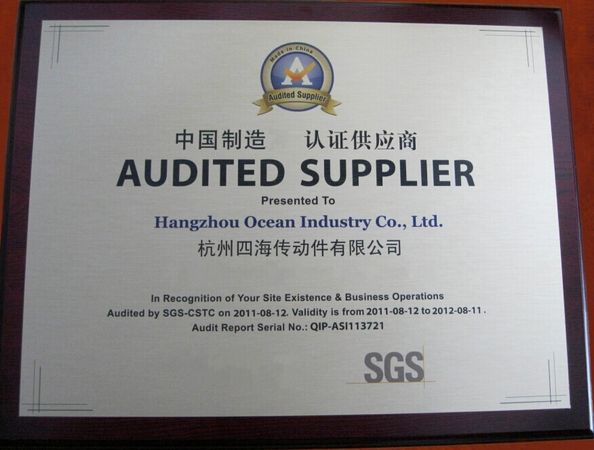
Certification

- I'm Online Chat Now
Company News
Comprehensive English Knowledge of 5 Common Metal Surface Treatments
Comprehensive English Knowledge of 5 Common Metal Surface Treatments
(Refer to the original article content, expanded and detailed, professional and easy to understand, suitable for business、document、product introduction and internal training)
1. Electroplating
Electroplating is a classic surface treatment technology based on electrolysis reaction. In a configured electrolytic solution, the base material is used as the cathode, and the corresponding metal material is used as the anode. After connecting the DC power supply, the anode metal loses electrons and dissolves into metal ions. These ions move directionally in the solution and finally deposit uniformly on the surface of the cathode workpiece, forming a dense and bonded metal coating.
This process can select different metal coatings such as zinc, nickel, chromium, copper and gold according to actual demands. It effectively improves the rust resistance, oxidation resistance and wear resistance of metal parts. Meanwhile, it can enhance surface gloss and decorative texture. Electroplating features low cost, mature process and high production efficiency. It is widely applicable to standard hardware parts, mechanical accessories, daily hardware and automotive components, meeting both functional protection and appearance upgrading demands.
2. Electroforming
Electroforming is a special precision manufacturing process extended from the electroplating principle. Different from ordinary electroplating which only forms a surface coating, electroforming takes the customized precision master mold as the carrier. Through long-term electrolytic deposition, thick metal layers are accumulated on the mold surface. After subsequent demolding, trimming and post-processing, it can form independent integrated metal parts.
It has ultra-high dimensional accuracy and ultra-fine surface reproduction ability, which can perfectly copy tiny lines, special textures and complex microstructures that cannot be processed by traditional machinery. Common electroforming materials include pure nickel, nickel-cobalt alloy and pure copper. The finished products feature thin wall, high hardness, stable structure and strong corrosion resistance. It is mainly used in high-precision fields such as precision mold inserts, micro mesh filters, printing intaglio plates, aerospace special parts and electronic precision components.
3. Electrophoretic Coating
Electrophoretic coating, short for electrophoresis, is an environment-friendly organic surface treatment technology. The workpiece is immersed in water-soluble electrophoretic paint. Under the action of DC electric field, the charged resin and pigment particles in the paint liquid produce directional movement. They are evenly deposited on the surface of metal workpieces to form a continuous, smooth and anti-corrosion paint film.
Divided into anodic electrophoresis and cathodic electrophoresis, cathodic electrophoresis is more widely used due to better anti-rust performance. The coating can fully cover dead angles, edges, holes and complex structural surfaces with no missing coating and uniform film thickness. Compared with traditional spraying, electrophoresis has stronger paint adhesion, better impact resistance and weather resistance, and low volatile pollutants. It is highly suitable for automated assembly line production, and commonly applied in automobile structural parts, engineering machinery, door and window hardware, electrical equipment shells and fastener anticorrosion treatment.
4. Sputtering Coating
Sputtering coating is a mainstream vacuum physical coating technology. The whole reaction is completed in a high vacuum closed cavity. After filling with a small amount of inert argon, high-energy ion beams are generated to bombard the solid target material at high speed. The kinetic energy instantly knocks out the atomic and molecular particles on the target surface. These particles diffuse evenly in the vacuum environment and slowly deposit on the surface of the substrate to form a nano-scale compact functional film.
Sputtering technology is not limited by materials. It can coat metals, alloys, ceramics and non-metallic materials. The processed film layer is thin, uniform, transparent and scratch-resistant, with far higher bonding force than ordinary vacuum evaporation. It will not peel or fade for a long time. It is commonly used in electronic touch panels, optical lens film layers, mobile phone metal shells, semiconductor chips, precision electronic accessories and waterproof and conductive surface functional modification.
5. Anodizing
Anodizing is a dedicated surface strengthening process for aluminum and aluminum alloy materials. Place the aluminum workpiece in a specific acidic electrolyte, use the aluminum part as the anode, and apply current for electrolysis reaction. Through artificial oxidation, a thick, dense and hard aluminum oxide film is naturally generated on the metal surface.
This oxide film is integrated with the base metal without peeling off. It fundamentally improves the natural defects of aluminum such as easy oxidation and low hardness. After anodizing, the aluminum surface has excellent wear resistance, weather resistance and corrosion resistance. In addition, the porous oxide layer can absorb dyes to realize diversified coloring such as matte, brushed and bright colors. It is widely used in aluminum alloy industrial profiles, 3C electronic shells, outdoor architectural accessories, daily aluminum products and new energy equipment parts.
Pub Time : 2026-04-28 09:54:29
>> News list
Contact Details
Hangzhou Ocean Industry Co.,Ltd
Contact Person: Mrs. Lily Mao
Tel: 008613588811830
Fax: 86-571-88844378