 |
|
|
|
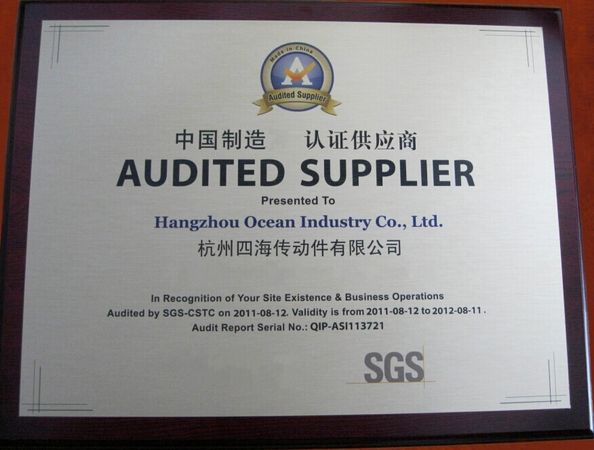
Certification

- I'm Online Chat Now
Company News
Core Industry Knowledge of Railway Bearing Sealing Systems: Sealing as the First Line of Defense for Bearing Life
Core Industry Knowledge of Railway Bearing Sealing Systems: Sealing as the First Line of Defense for Bearing Life
In the operation and maintenance system of railway equipment, bearings are the key support for core components such as bogies and traction motors. Bearing failure is often attributed to material fatigue, excessive load or insufficient lubrication, but practical engineering cases show that the failure of the sealing system is the core source of premature bearing damage. As the "protective barrier" of bearings, the sealing system directly determines the actual service life of bearings, and its importance is far underestimated by the industry. Mastering the working principle, failure causes, hazards and maintenance principles of the sealing system is the key to the reliable operation of railway equipment.
I. Severe Working Conditions of Railway Bearings: The Working Background of Sealing Systems
Railway bearings do not operate in a clean environment, but are long-term exposed to a complex harsh working condition with multiple superimposed factors. These factors interact and continuously impact the working state of bearings. The core task of the sealing system is to build a "relatively clean independent working environment" for bearings and isolate external interference:
- Solid contaminants: Track dust (hard particles with uneven sizes), brake wear particles, and impurities around the track;
- Liquid/gaseous contaminants: Rain and snow, track ponding, humid air, as well as condensed water caused by temperature differences and residual water film after cleaning;
- Composite impurities: Viscous mixtures formed by the combination of oil stains with dust and water vapor, which are easy to adhere to and invade the inside of bearings;
- Dynamic working condition interference: High rotational speed, sudden temperature change, continuous vibration and axial movement during bearing operation further increase the difficulty of sealing.
II. The Essence of Railway Bearing Sealing: Long-term Stable Isolation Under Dynamic Working Conditions
Sealing is often simply understood as "dust and water proofing" in engineering, but the sealing of railway bearings has its special requirements. It is not a static "blocking part", but a functional component that works continuously under dynamic working conditions, and its core is to achieve three major goals:
- Long-term stable isolation: Continuously block various external contaminants and prevent them from entering the inside of bearings;
- Working condition adaptability: Always maintain effective contact with the sealing surface when the bearing is at high rotational speed and the temperature changes greatly;
- Anti-disturbance failure: No failure such as sealing structure deformation and lip detachment occurs under the continuous vibration of railway operation and the axial movement of the shafting.
Once the seal cannot match the above dynamic working conditions, failure is only a matter of time even if there is no obvious abnormality in a short time.
III. Core Characteristics of Sealing Failure: No Obvious Signals in the Early Stage and Concealment
Different from the dominant failure such as bearing spalling and ablation, the early stage of sealing failure has strong concealment without obvious detectable abnormal signals, which is also the key reason why it is difficult to be found in time:
- No obvious temperature rise change: When the sealing lip is slightly worn and the elasticity decreases, the overall temperature of the bearing is consistent with the normal working condition;
- Small vibration fluctuation: No characteristic vibration caused by bearing body damage occurs, which is difficult to be identified by the existing monitoring system;
- No abnormal noise: No mechanical friction noise is generated in the initial stage of sealing failure, which is not easy to be detected by on-site inspection.
In this "quiet stage", however, contaminants have begun to slowly invade the bearing, and the cleanliness and performance of the lubricating grease are continuously damaged. When obvious abnormalities in temperature, vibration and noise occur, the bearing has entered an irreversible damage stage.
IV. Three Core Hazards of Sealing Failure: More Fatal Than Bearing Body Problems
After the sealing failure, it is not a single problem that occurs, but a chain reaction of contaminant invasion, lubricant loss and qualitative change of bearing working conditions, which fundamentally destroys the working foundation of the bearing. Moreover, some hazards are easy to be misjudged, leading to deviation in the maintenance direction:
1. Water vapor: An underestimated "invisible killer" that accelerates the early fatigue of bearings
Water vapor does not invade in the form of "direct water inflow", but more of slow penetration of humid air, condensed water and water film. Mixing with lubricating grease causes multiple problems:
- Emulsification of lubricating grease and a sharp drop in lubrication performance;
- Failure of the anti-rust film on the metal surface of the bearing and occurrence of micro-corrosion;
- Micro-pitting on raceways and rolling elements, accelerating the early fatigue of materials;
Misunderstanding: Such damage is often judged as "normal wear and tear", ignoring the core cause of water vapor invasion.
2. Dust invasion: Changing the wear mechanism, more dangerous than "oil shortage"
The hard particle characteristics of railway dust make it form abrasive slurry with lubricating grease after entering the bearing, directly changing the working mechanism of the bearing contact pair:
- Rolling contact is transformed into rolling-sliding composite wear, and the wear efficiency increases geometrically;
- Abnormal scratch on the raceway surface and aggravated wear of the cage;
- The bearing clearance increases rapidly and the operation stability decreases;
Misunderstanding: Such damage is often misjudged as "insufficient lubrication", and simple oil replenishment cannot solve the fundamental problem of abrasive wear.
3. Lubricating grease loss: Not natural consumption, but "released" by the seal
The common conclusion of "insufficient lubricating grease" in bearing failure analysis is essentially mostly non-natural loss caused by sealing failure. Abnormal contact state of the seal, lip wear or elasticity decrease are the core reasons:
- Centrifugal force generated by the high rotational speed of the bearing leads to Pub Time : 2026-03-02 08:47:19 >> News list
Contact Details
Hangzhou Ocean Industry Co.,Ltd
Contact Person: Mrs. Lily Mao
Tel: 008613588811830
Fax: 86-571-88844378