 |
|
|
|
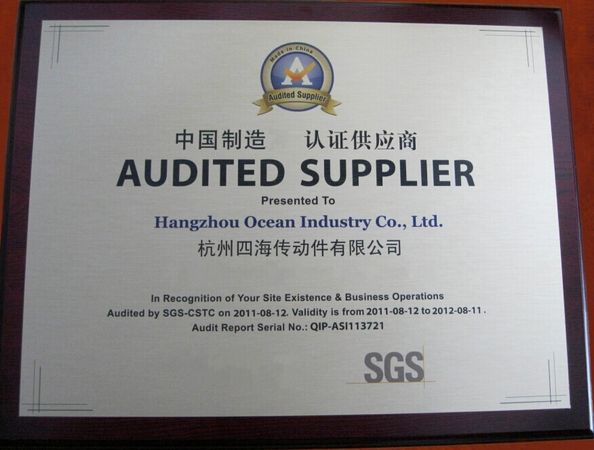
Certification

- I'm Online Chat Now
Company News
Delamination Cracking in Metallic Materials
Delamination cracking is a critical and complex phenomenon in the failure analysis and performance design of metallic materials. It can either serve as a precursor to catastrophic structural damage or be ingeniously harnessed as a means to enhance material performance. This article systematically elaborates on the types, mechanisms, influencing factors, and cutting-edge applications of delamination cracking in metallic materials, providing a comprehensive industry perspective.

1. Six Morphologies of Delamination Phenomena
Delamination, as a broad term, encompasses various internal separation modes of materials. Accurately distinguishing these modes is fundamental to in-depth analysis:
(a) Crack delamination (also known as "split"): The core research object of this article. It refers to internal separation in crack-containing components that is perpendicular to the main crack surface but parallel to the crack propagation direction, representing a typical characteristic of anisotropic fracture in metallic materials.
(b) Crack arrester delamination: The separation surface is perpendicular to both the main crack surface and the propagation direction. This type of delamination can effectively hinder the propagation of the main crack and is beneficial for improving the fracture toughness of structures under specific conditions.
(c) Lamellar tearing: A typical problem in welding engineering. It occurs in thick-plate welded joints, presenting stepped cracking along the plate thickness direction, which is closely related to the distribution of inclusions in rolled plates and welding stresses.
(d) Wear-induced delamination: A common failure mode in the field of tribology. Under sliding contact conditions, cracks are generated in the subsurface layer of materials due to cyclic shear stress, ultimately leading to material spallation.
(e) Interlaminar cracking in composite materials: The main failure mode of fiber-reinforced composite laminates, referring to interface separation between layers.
(f) Additive manufacturing delamination: An interlayer separation defect caused by thermal stress or poor fusion during metal 3D printing.
2. Process Foundation of Delamination Phenomena
Thermo-Mechanical Control Processing (TMCP) is the core technology for the production of modern high-performance steel plates. By controlling the rolling temperature, deformation amount, and cooling rate, a refined microstructure can be obtained, thereby simultaneously improving the strength and toughness of materials. However, this process is also prone to forming anisotropic characteristics in materials, including banded structures and crystallographic textures, which can become initiation points for delamination under certain conditions. The evolution of microstructures in pipeline steels from traditional ferrite-pearlite to advanced structures such as modern acicular ferrite and bainite has been observed, with different structures exhibiting varying sensitivities to delamination.
3. Macroscopic and Microscopic Observations of Delamination
3.1 Macroscopic Performance
In practical mechanical tests, delamination phenomena exhibit distinct macroscopic features. For example, the fracture surface of SE(B)-type fracture toughness specimens of DH36 steel shows separation bands perpendicular to the main fracture plane, dividing the material into several parts. In tensile tests, the fracture of round bar specimens may present a radial star pattern, while flat plate specimens show parallel lamellar fractures, reflecting the influence of specimen geometry and stress state on delamination morphology.
3.2 Microscopic Origins
Microscopic observations reveal the potential origins of delamination. Uncorroded ASTM 516 Gr. 55 steel contains elongated and fragmented silicate inclusions, which extend along the rolling direction during the rolling process, forming weak paths inside the material. The corroded structure shows a typical ferrite/pearlite banded structure. Both elongated inclusions and banded structures provide preferential nucleation and propagation sites for delamination.
4. Classification Framework of Delamination
Based on the naming rules for specimen orientations in ASTM E1823 standard (the first letter indicates the loading direction, and the second letter indicates the crack propagation direction), delamination can be classified into three categories:
Crack delamination: Corresponding to T-L and L-T oriented specimens, with the delamination surface perpendicular to the crack surface but parallel to the crack propagation direction.
Crack arrester delamination: Corresponding to T-S and L-S oriented specimens, with the delamination surface perpendicular to both the crack surface and the propagation direction.
In-plane delamination: Corresponding to S-L and S-T oriented specimens, with the delamination surface located within the main crack plane.
This classification method directly associates delamination types with standard specimen orientations, providing a unified framework for experimental design and result analysis.
5. Mechanisms of Delamination Formation: Influence of Metallurgical Factors
The intrinsic properties of materials form the basis of delamination behavior, and specific metallurgical characteristics significantly increase material sensitivity to delamination.
Banded structure: A typical feature of hot-rolled steel and an important metallurgical factor leading to delamination. Ferrite (bright areas) and pearlite (dark areas) are arranged alternately, forming a layered structure parallel to the rolling direction. The inhomogeneity of this structure results in differences in material properties in different directions, making it prone to separation along these weak interfaces when subjected to loads in specific directions.
Crystallographic texture: Another key factor affecting delamination sensitivity. Strong textures, especially when specific cleavage planes (such as {100} planes) are highly concentrated on the rolling surface, can significantly increase the brittle fracture tendency of materials in the thickness direction, thereby promoting delamination.
6. Temperature and Stress: External Triggers for Delamination
Even if potential conditions for delamination exist inside the material, specific external environments are required to actually trigger it. Temperature and stress state play crucial roles in this process.
Temperature effect: For many structural metals, especially body-centered cubic (BCC) steels, temperature has a decisive influence on their fracture behavior. The typical ductile-brittle transition curve is divided into an upper shelf region (ductile region), a transition region, and a lower shelf region (brittle region). Delamination phenomena most commonly occur in the transition region and the initial part of the upper shelf region, where the material is in a transitional state from ductile to brittle.
Stress state effect: From the perspective of fracture mechanics, specific stress components are the direct driving force for delamination propagation. For T-L/L-T oriented specimens, the through-thickness tensile stress σz is the main mechanical factor driving crack delamination; for S-L/S-T orientations, the in-plane stress σy promotes in-plane delamination. Higher stress triaxiality or constraint conditions are more conducive to the occurrence of delamination.
7. Performance and Influence of Delamination in Mechanical Tests
Standardized mechanical tests are the main means to observe and evaluate delamination behavior, with different test methods revealing different aspects of delamination:
Tensile tests: In high-anisotropy materials, round bar specimens may show star-shaped fractures, while flat plate specimens exhibit lamellar fractures, both rooted in material anisotropy.
Charpy impact tests: Under low-temperature impact conditions, a large number of separation bands perpendicular to the notch appear on the fracture surface, which change the energy absorption mechanism by releasing the stress constraint at the crack tip. For L-S oriented specimens, crack arrester delamination deflects and branches the main crack path, significantly increasing crack propagation resistance and resulting in higher impact energy absorption.
Impact on ductile-brittle transition temperature: Experimental data clearly show that specimens with delamination have a significantly reduced ductile-brittle transition temperature, verifying the "delamination toughening" effect—microscopic delamination events improve the macroscopic toughness of materials by alleviating constraints.
8. Delamination Toughening: A New Paradigm in Material Design
Modern materials science has shifted from simply avoiding defects to actively designing and utilizing specific microstructures, and delamination toughening is a successful practice of this concept. Through precise composition and process control, controlled layered structures can be constructed in materials to actively introduce the delamination toughening effect.
A variety of advanced high-strength steels have been developed that integrate delamination toughening with mechanisms such as transformation-induced plasticity (TRIP) and heterogeneous deformation-induced strengthening. These materials maintain ultra-high strength while possessing excellent fracture toughness, breaking the traditional trade-off between strength and toughness in materials. For example:
Fe-0.05C-5Mn-3Al alloy: With elongated α' and α microstructures, it achieves a yield strength of 517 MPa, a tensile strength of 807 MPa, and an impact energy absorption of 73 J through crack arrester delamination toughening (CADT) and split toughening (ST).
Fe-0.05C-5.0Mn-0.5Si-1.4Ni-0.12V alloy: Featuring ultra-fine elongated α phase and residual γ/α phases, it has a yield strength of 745 MPa, a tensile strength of 1199 MPa, and excellent low-temperature toughness through CADT.
9. Conclusions and Key Insights
Delamination phenomena are closely related to material anisotropy caused by the oriented arrangement of weak planes during the rolling process, specific temperatures, and stress triaxiality. However, due to the complexity of delamination itself, the interaction between various micromechanical factors and variables, and their randomness, establishing predictive models is extremely difficult.
Delamination (especially splitting) occurring in Charpy V-notch and Drop-Weight Tear Test (DWTT) specimens is generally not considered a key issue in material characterization, but evaluating delamination events in fracture toughness tests faces challenges due to the lack of standardized criteria and methods for the "pop-in" phenomenon of delamination.
Recent research on ductile delamination (DT) as an external toughening mechanism has changed the traditional perception that delamination events are directly equivalent to low fracture toughness and adverse effects on metal mechanical properties.
The significance of delamination events observed in laboratory tests for the structural integrity of real load-bearing components depends on the internal stress state of the components. Delamination indicates significant anisotropy of the material.
In-plane delamination (which can significantly reduce material toughness) may occur parallel to the rolling surface (i.e., S-L and S-T orientations). Therefore, in applications where structural components are subjected to large tensile stresses in the short transverse direction (thickness direction), materials prone to delamination should be avoided. In contrast, in applications such as pipelines and pressure vessels, thickness-direction stress is usually negligible, and the importance of in-plane delamination is relatively low.
The impact of delamination events in harsh environments (such as hydrogen-containing environments) remains unclear. Delamination is usually associated with reduced material ductility, induced by factors such as ductile-brittle transition temperature (DBT), hydrogen embrittlement (HE), and high-temperature damage; however, in such contexts, delamination is also interpreted as a potential toughening or beneficial phenomenon, highlighting the need for comprehensive research on the role of delamination in damage mechanics.
Pub Time : 2026-01-29 11:03:31
>> News list
Contact Details
Hangzhou Ocean Industry Co.,Ltd
Contact Person: Mrs. Lily Mao
Tel: 008613588811830
Fax: 86-571-88844378