 |
|
|
|
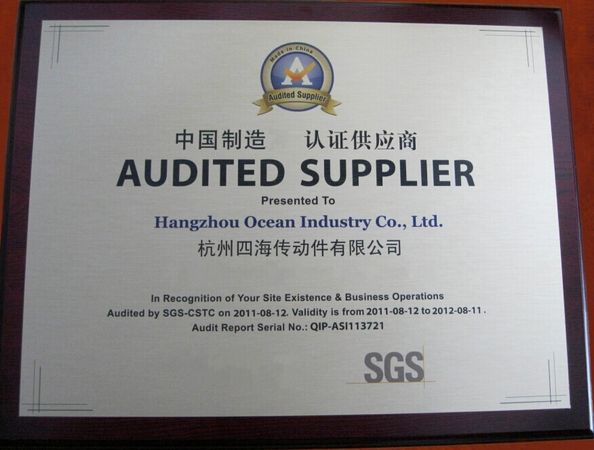
Certification

- I'm Online Chat Now
Company News
Double Pitch Roller Chain (Double Plus Chain)
Double pitch roller chain, also commonly referred to as double plus chain in conveyor automation industry, is a variant developed on the basis of standard ANSI roller chain. Compared with ordinary transmission roller chain, its pitch is doubled, while the dimensions of rollers, pins and bushings keep consistent with the matching standard single-pitch chain. This structural design makes double pitch chain more suitable for long-distance material conveying rather than high-power power transmission, so it becomes a core component for automated pallet circulation conveyor systems.
Structure and Classification
Double pitch roller chain is divided into two main categories: small roller type and large roller type. The model code usually starts with letter C, which represents conveyor chain. Odd suffix numbers stand for small roller structure, and even suffix numbers represent large roller structure.
For large roller double pitch chain, the enlarged outer diameter roller directly contacts and rolls along the conveyor guide rail. It greatly lowers sliding friction between chain and track, reduces wear of chain plates and guide rails, and cuts down driving power consumption. Small roller double pitch chain works together with additional pallet support rollers; the small roller does not bear the main rolling load on the rail, and this type is widely used for compact assembly lines with light workpieces.
There are Type A and Type B configurations in terms of pins. Type A has standard pins without extension. Type B comes with extended pins. Extended pins serve as mounting points for various attachments, fixtures, stoppers or assembly pallets. Customers can customize the length, quantity and position of extended pins according to their conveyor layout and workpiece fixing requirements.
Material & Heat Treatment
Carbon steel is the most popular raw material for standard double pitch chains. Selected 40Cr alloy steel is optional for heavy load and high-cycle working conditions. Stainless steel grades SS304 and SS316L are available for humid, corrosive, food processing or pharmaceutical production environments.
Critical components including link plates, pins, bushings and rollers receive professional heat treatment processes. Quenching and tempering improve overall toughness and reduce deformation under repeated impact loads. High-frequency quenching or nitriding treatment is applied on the surface of pins and rollers to enhance surface hardness, wear resistance and anti-fatigue performance. Proper heat treatment extends service life and lowers maintenance frequency under continuous 24-hour operation.
Core Performance Parameters
Key technical indicators include chain pitch, roller diameter, pin diameter, inner width of inner link, thickness of link plate, minimum ultimate tensile strength and allowable working load. Ultimate tensile strength reflects the maximum breaking load under static tension test, while allowable working load defines the safe load for continuous operation, taking shock load, start-stop frequency and working temperature into consideration.
Users must not operate the chain over the rated working load. Overload will cause plastic deformation of link plates, pin bending, bushing abrasion or sudden chain breakage. For long conveyor lines, elongation monitoring is necessary. Chain elongation mainly comes from wear between pin and bushing. When elongation reaches the limit value, the chain should be replaced promptly to avoid jumping teeth or pallet derailment.
Typical Application Scenarios
Double pitch roller chains are widely adopted in automated assembly workshops. The most typical usage is pallet circulation conveyors for electronics assembly, household appliance production, auto component assembly and battery manufacturing lines. It is also used in packaging machinery, sorting conveyors, light-duty material handling, warehousing transfer equipment and other low-speed continuous conveying systems.
In these production lines, double pitch chain carries pallets and workpieces to flow through different workstations for assembling, testing, gluing or labeling. Its lightweight design reduces the total weight of the whole conveyor system. The relatively long pitch saves raw material cost for long span conveying, and the simple structure makes installation, disassembly and lubrication convenient.
Installation, Lubrication & Maintenance
Correct installation directly affects chain running stability. The sprocket pair must keep coaxial, and the two sides of conveyor guide rails need to stay parallel. Improper installation will lead to side wear of chain plates, noise increase and pallet offset.
Lubrication is essential. Lubricant forms an oil film between pin and bushing to decrease friction and metal wear. The lubrication method can be manual dripping, oil bath or forced oil spraying, determined by chain speed and operating environment. In dusty workshops, regular cleaning is required to prevent dust and metal powder from entering the clearance between pins and bushings.
Regular inspection items contain chain tension, elongation, surface corrosion, crack on link plates, roller damage and sprocket tooth wear. Timely tension adjustment can prevent chain slack, vibration and jumping off the sprocket.
Product Advantages
- Optimized double-pitch structure reduces chain weight and material cost for long-distance conveying.
- Two roller types for different rail designs and load requirements.
- Multiple material choices to adapt normal, high-temperature, wet and corrosive working conditions.
- Customizable extended pins and attachments to mount pallets and custom fixtures.
- Smooth running, low noise and stable transmission at continuous low-speed operation.
- Mature heat treatment technology guarantees high wear resistance and fatigue performance.
- Easy assembly, simple maintenance and spare chain links are easy to replace on site.
Customer Guidance
When selecting double pitch conveyor chain, customers need to provide detailed information: working load, conveyor length, running speed, workpiece weight, environment temperature, whether there is dust or chemical corrosion, and requirements for extended pins or special attachments. Our engineering team can recommend suitable chain model, material and heat treatment solution to match your conveyor system and optimize service life.
We supply full series of ANSI double pitch roller chains including C2040, C2042, C2050, C2052, C2060, C2062, C2080, C2082 and other specifications. Custom non-standard double pitch chains are also available upon drawings or samples. All products can be matched with corresponding sprockets for complete conveyor drive sets.
Pub Time : 2026-09-24 09:20:31
>> News list
Contact Details
Hangzhou Ocean Industry Co.,Ltd
Contact Person: Mrs. Lily Mao
Tel: 008613588811830
Fax: 86-571-88844378