 |
|
|
|
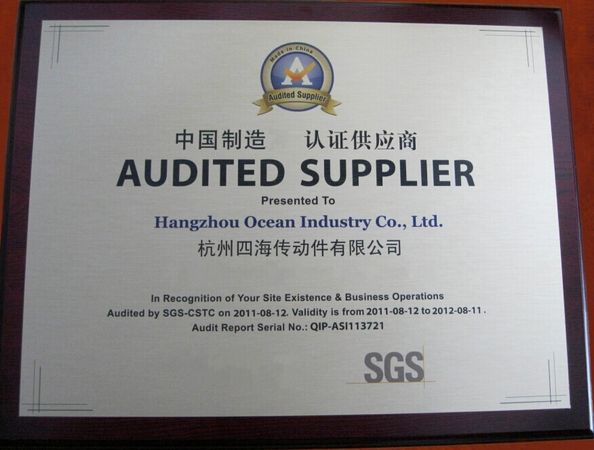
Certification

- I'm Online Chat Now
Company News
Gear Efficiency: Core Industry Knowledge for Reducer Application
Gear Efficiency: Core Industry Knowledge for Reducer Application
In the field of mechanical transmission, gear efficiency is the core indicator that determines the performance, reliability and operational cost of reducers. Many engineers focus on whether gears can transmit power, but what really distinguishes high-quality reducers from ordinary ones is the energy loss during the transmission process. Some reducers can achieve an efficiency of 98%, while others only reach around 70%—this huge gap is closely related to the principle of gear meshing, structural design and material selection. To fully understand gear efficiency, we need to start from its physical essence and explore its influencing factors, loss sources and engineering impacts.
First, it is necessary to clarify a common misunderstanding: gear meshing is not pure rolling. In fact, during the meshing process along the meshing line, gears have two types of motion at the same time: rolling and sliding. Only the midpoint of the meshing line is in a state of pure rolling; all other meshing positions are accompanied by sliding friction. This sliding friction is the fundamental reason for energy loss in gear transmission, which is similar to the difference between dragging a 100kg heavy box directly on the ground and pushing it on small wheels—sliding friction requires more force and wastes more energy, while rolling friction minimizes energy loss. This simple life example exactly explains the physical essence of gear efficiency: the lower the proportion of sliding friction, the higher the gear efficiency.
Sliding friction not only wastes energy but also brings a series of negative effects, including heating, wear and noise. The energy lost due to sliding friction is ultimately converted into heat, noise and tooth surface wear, which is the root cause of reducers heating up during operation. For engineering applications, this kind of heating and wear will directly affect the service life of the reducer and increase maintenance costs, so controlling sliding friction is the key to improving gear efficiency.
In practical engineering, 90% of the efficiency loss of gear transmission comes from three main sources, which directly determine the grade and performance of the reducer. The first is tooth surface sliding friction, which is caused by the sliding movement in the meshing area of the gear teeth, and its direct consequences are tooth surface heating and wear, which will gradually reduce the transmission efficiency and precision of the gear over time. The second is bearing friction: during gear transmission, radial force acts on the bearing, causing friction between the bearing rolling elements and the raceway, which also generates heat and consumes part of the transmission power. The third is lubricant churning: when the gear rotates at high speed, it will agitate the lubricating oil in the reducer, and the shear resistance of the oil film generated during the churning process will cause power loss, especially in high-speed transmission scenarios, this part of the loss cannot be ignored.
Different types of gears have significant differences in efficiency due to their different meshing methods. Spur gears and helical gears are two common types of gears in industrial applications, and their efficiency gaps are obvious. Spur gears adopt an instant full-face meshing method, where the entire tooth width contacts at the same time during meshing. This meshing method leads to a large proportion of sliding friction, large impact force during transmission, and an efficiency of about 95%. In contrast, helical gears adopt a progressive meshing method: the contact point of the gear teeth moves gradually from one end to the other during meshing, which greatly reduces the proportion of sliding friction, reduces the impact force, and thus achieves higher efficiency, generally between 97% and 98%. The essential advantage of helical gears is that they convert impact meshing into smooth meshing, which not only improves efficiency but also reduces noise and improves transmission precision—this is why high-end reducers in the industry almost all use helical gears.
Another important fact that is often overlooked is that the efficiency of the reducer decreases multiplicatively with the increase of the number of reduction stages. This is because each stage of gear transmission will have a certain efficiency loss, and the total efficiency of the reducer is the product of the efficiency of each stage. For example, if the efficiency of a single-stage reducer is 97%, the efficiency of a two-stage reducer will be 0.97 × 0.97 ≈ 94%, and the efficiency of a three-stage reducer will drop to about 91%. This is also the reason why the efficiency of planetary reducers decreases significantly after reaching three stages. Therefore, in the process of reducer selection, under the premise of meeting the required speed ratio, minimizing the number of reduction stages is an important measure to ensure high efficiency.
Worm gears are a special type of gear transmission, and their efficiency is much lower than that of spur gears and helical gears, usually only between 60% and 75%. The main reason is that worm gear transmission is almost a pure sliding friction transmission: the worm and the worm wheel are in large-area sliding contact during transmission, and the transmission process is not rolling meshing, but the thread of the worm pushes the tooth surface of the worm wheel to rotate. This continuous one-way sliding friction leads to serious heating of the worm gear reducer, resulting in extremely low efficiency. However, it should be noted that although the efficiency of worm gears is low, they have a self-locking function, which makes them suitable for scenarios that require position locking, such as lifting equipment. This fully reflects the principle that the physical characteristics of gears determine their application scenarios.
Low gear efficiency will bring a series of adverse engineering consequences, which is a key point that engineers must pay attention to during selection. Many engineers only focus on the torque of the reducer and ignore efficiency, which often leads to unreasonable equipment configuration. Specifically, low efficiency means that the motor needs to output more power to achieve the required output torque: for example, to obtain an output torque of 50N·m, a reducer with 98% efficiency only requires the motor to output about 51N·m, while a reducer with 70% efficiency requires the motor to output about 71N·m, which means the motor has to be upsized by one level. In addition, low efficiency will also lead to increased motor current, more serious heating of the reducer, higher energy consumption, and shorter service life of the entire transmission system, which will increase the overall operation and maintenance costs of the equipment in the long run.
It is also necessary to clarify a common misunderstanding: the heating of the reducer is not caused by excessive load, but by the energy loss caused by sliding friction. Every time the reducer operates, the sliding friction between the gear teeth, bearings and the churning of lubricating oil will generate heat, and the higher the proportion of sliding friction, the more serious the heating. From the perspective of the internal structure of the reducer, the efficiency loss path is clear: the sliding friction between the gear teeth, the rolling and sliding friction of the left and right bearings under force, and the shear resistance of the oil film in the lubricating oil area all contribute to energy loss. This also explains why high-end reducers are small in size but not easy to heat up—their structural design, gear processing precision and lubrication system are all optimized to minimize sliding friction and efficiency loss.
To sum up, the essence of gear efficiency depends on the proportion of sliding friction in the transmission process. Understanding gear efficiency helps engineers better select reducers, avoid unreasonable configuration, and reduce operation and maintenance costs. In industrial applications, we should prioritize helical gears for high-efficiency scenarios, minimize the number of reduction stages under the premise of meeting the speed ratio requirements, and comprehensively consider the balance between efficiency, cost and application scenarios. Only in this way can we give full play to the performance of the reducer and ensure the stable and efficient operation of the mechanical transmission system.
In the field of mechanical transmission, gear efficiency is the core indicator that determines the performance, reliability and operational cost of reducers. Many engineers focus on whether gears can transmit power, but what really distinguishes high-quality reducers from ordinary ones is the energy loss during the transmission process. Some reducers can achieve an efficiency of 98%, while others only reach around 70%—this huge gap is closely related to the principle of gear meshing, structural design and material selection. To fully understand gear efficiency, we need to start from its physical essence and explore its influencing factors, loss sources and engineering impacts.
First, it is necessary to clarify a common misunderstanding: gear meshing is not pure rolling. In fact, during the meshing process along the meshing line, gears have two types of motion at the same time: rolling and sliding. Only the midpoint of the meshing line is in a state of pure rolling; all other meshing positions are accompanied by sliding friction. This sliding friction is the fundamental reason for energy loss in gear transmission, which is similar to the difference between dragging a 100kg heavy box directly on the ground and pushing it on small wheels—sliding friction requires more force and wastes more energy, while rolling friction minimizes energy loss. This simple life example exactly explains the physical essence of gear efficiency: the lower the proportion of sliding friction, the higher the gear efficiency.
Sliding friction not only wastes energy but also brings a series of negative effects, including heating, wear and noise. The energy lost due to sliding friction is ultimately converted into heat, noise and tooth surface wear, which is the root cause of reducers heating up during operation. For engineering applications, this kind of heating and wear will directly affect the service life of the reducer and increase maintenance costs, so controlling sliding friction is the key to improving gear efficiency.
In practical engineering, 90% of the efficiency loss of gear transmission comes from three main sources, which directly determine the grade and performance of the reducer. The first is tooth surface sliding friction, which is caused by the sliding movement in the meshing area of the gear teeth, and its direct consequences are tooth surface heating and wear, which will gradually reduce the transmission efficiency and precision of the gear over time. The second is bearing friction: during gear transmission, radial force acts on the bearing, causing friction between the bearing rolling elements and the raceway, which also generates heat and consumes part of the transmission power. The third is lubricant churning: when the gear rotates at high speed, it will agitate the lubricating oil in the reducer, and the shear resistance of the oil film generated during the churning process will cause power loss, especially in high-speed transmission scenarios, this part of the loss cannot be ignored.
Different types of gears have significant differences in efficiency due to their different meshing methods. Spur gears and helical gears are two common types of gears in industrial applications, and their efficiency gaps are obvious. Spur gears adopt an instant full-face meshing method, where the entire tooth width contacts at the same time during meshing. This meshing method leads to a large proportion of sliding friction, large impact force during transmission, and an efficiency of about 95%. In contrast, helical gears adopt a progressive meshing method: the contact point of the gear teeth moves gradually from one end to the other during meshing, which greatly reduces the proportion of sliding friction, reduces the impact force, and thus achieves higher efficiency, generally between 97% and 98%. The essential advantage of helical gears is that they convert impact meshing into smooth meshing, which not only improves efficiency but also reduces noise and improves transmission precision—this is why high-end reducers in the industry almost all use helical gears.
Another important fact that is often overlooked is that the efficiency of the reducer decreases multiplicatively with the increase of the number of reduction stages. This is because each stage of gear transmission will have a certain efficiency loss, and the total efficiency of the reducer is the product of the efficiency of each stage. For example, if the efficiency of a single-stage reducer is 97%, the efficiency of a two-stage reducer will be 0.97 × 0.97 ≈ 94%, and the efficiency of a three-stage reducer will drop to about 91%. This is also the reason why the efficiency of planetary reducers decreases significantly after reaching three stages. Therefore, in the process of reducer selection, under the premise of meeting the required speed ratio, minimizing the number of reduction stages is an important measure to ensure high efficiency.
Worm gears are a special type of gear transmission, and their efficiency is much lower than that of spur gears and helical gears, usually only between 60% and 75%. The main reason is that worm gear transmission is almost a pure sliding friction transmission: the worm and the worm wheel are in large-area sliding contact during transmission, and the transmission process is not rolling meshing, but the thread of the worm pushes the tooth surface of the worm wheel to rotate. This continuous one-way sliding friction leads to serious heating of the worm gear reducer, resulting in extremely low efficiency. However, it should be noted that although the efficiency of worm gears is low, they have a self-locking function, which makes them suitable for scenarios that require position locking, such as lifting equipment. This fully reflects the principle that the physical characteristics of gears determine their application scenarios.
Low gear efficiency will bring a series of adverse engineering consequences, which is a key point that engineers must pay attention to during selection. Many engineers only focus on the torque of the reducer and ignore efficiency, which often leads to unreasonable equipment configuration. Specifically, low efficiency means that the motor needs to output more power to achieve the required output torque: for example, to obtain an output torque of 50N·m, a reducer with 98% efficiency only requires the motor to output about 51N·m, while a reducer with 70% efficiency requires the motor to output about 71N·m, which means the motor has to be upsized by one level. In addition, low efficiency will also lead to increased motor current, more serious heating of the reducer, higher energy consumption, and shorter service life of the entire transmission system, which will increase the overall operation and maintenance costs of the equipment in the long run.
It is also necessary to clarify a common misunderstanding: the heating of the reducer is not caused by excessive load, but by the energy loss caused by sliding friction. Every time the reducer operates, the sliding friction between the gear teeth, bearings and the churning of lubricating oil will generate heat, and the higher the proportion of sliding friction, the more serious the heating. From the perspective of the internal structure of the reducer, the efficiency loss path is clear: the sliding friction between the gear teeth, the rolling and sliding friction of the left and right bearings under force, and the shear resistance of the oil film in the lubricating oil area all contribute to energy loss. This also explains why high-end reducers are small in size but not easy to heat up—their structural design, gear processing precision and lubrication system are all optimized to minimize sliding friction and efficiency loss.
To sum up, the essence of gear efficiency depends on the proportion of sliding friction in the transmission process. Understanding gear efficiency helps engineers better select reducers, avoid unreasonable configuration, and reduce operation and maintenance costs. In industrial applications, we should prioritize helical gears for high-efficiency scenarios, minimize the number of reduction stages under the premise of meeting the speed ratio requirements, and comprehensively consider the balance between efficiency, cost and application scenarios. Only in this way can we give full play to the performance of the reducer and ensure the stable and efficient operation of the mechanical transmission system.
Pub Time : 2026-04-22 10:02:13
>> News list
Contact Details
Hangzhou Ocean Industry Co.,Ltd
Contact Person: Mrs. Lily Mao
Tel: 008613588811830
Fax: 86-571-88844378