 |
|
|
|
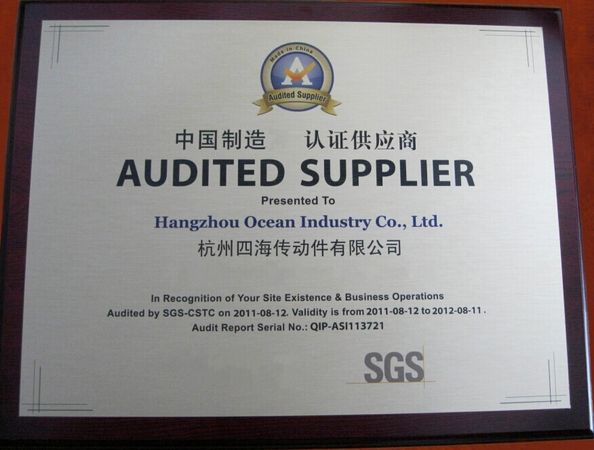
Certification

- I'm Online Chat Now
Company News
Gear Heat Treatment Process Matching & Verification Guide
Series: Gear Heat Treatment Selection (Chapter 2/3)
Published: July 23, 2026 | Original Author: Markov Chain | Gear AGI, Shanghai
Preface
The previous chapter focused on working condition definition. This chapter elaborates on mainstream heat treatment processes for gears. Process selection should not rely on marketing descriptions alone; engineers must clarify the performance merits, inherent limitations, and mandatory verification benchmarks of each technology. A heat treatment route is never an isolated choice—it represents a full set of verifiable performance commitments for production.
1. Induction Surface Hardening
Core Advantages
Enables localized surface hardening while maintaining a tough core matrix. It delivers high production cycle efficiency and enables well-controlled part distortion with optimized process parameters. Ideal for medium-to-high load components requiring selective hardening and mass production throughput.
Key Limitations
Uneven hardening pattern coverage across tooth profiles; hardness discrepancies may exist between adjacent gear teeth. Hardening consistency is susceptible to deviations in coil layout, scanning trajectories, and quenching stability.
Mandatory Verification Items
- Hardness distribution and case depth inspection at peak stress zones
- Distortion measurement before and after precision finishing
2. Carburizing, Quenching & Tempering (Conventional Case Hardening)
Core Advantages
Delivers outstanding contact fatigue resistance when case depth and hardness gradient align with component stress fields, paired with a ductile core. The primary solution for heavy-load, long-service-life gears with strict durability requirements.
Key Limitations
Wide dispersion of heat treatment distortion; complex coordination with subsequent finishing processes, including machining allowance correction and surface integrity risks after grinding.
Mandatory Verification Items
- Effective case depth and hardness gradient testing
- Metallographic microstructure & core hardness inspection
- Statistical distortion analysis per furnace batch
- Surface integrity assessment post high-risk grinding operations
3. Nitriding
Core Advantages
Low processing temperature leads to minimal dimensional distortion, making it the top choice for components with strict dimensional stability requirements. It effectively mitigates abrasive wear and scuffing risks for high-speed transmission parts.
Key Limitations
Shallow hardened case; precise control of diffusion layer and compound white layer is required. The base material core must possess sufficient inherent strength prior to nitriding.
Mandatory Verification Items
- Nitrided case depth and near-surface Vickers (HV) hardness
- Metallographic characterization of nitride layer structures
- Geometric variation comparison pre- and post-heat treatment
4. Quenching & Tempering (Through-Hardening / Modulation Treatment)
Core Advantages
Cost-effective bulk hardening process that delivers uniform overall mechanical strength. Suitable for auxiliary gears and low-contact-stress designs that do not require deep surface hardening layers.
Key Limitations
Inferior surface contact fatigue and wear resistance compared to carburizing or induction hardening; performance highly sensitive to lubrication conditions during operation.
Mandatory Verification Items
- Bulk component hardness and microstructure evaluation
- Dimensional stability & surface roughness inspection
5. Normalizing
Core Positioning
Predominantly a pre-heat treatment process rather than a final hardening solution. It relieves residual stress, refines grain microstructure, stabilizes cutting consistency, and delivers predictable performance for downstream hardening procedures. Normalizing alone cannot satisfy heavy-load service demands without follow-up surface hardening.
Mandatory Verification Items
- Consistent hardness range across batches
- Uniform grain microstructure
- Dimensional stability before secondary processing
Pub Time : 2026-08-11 09:29:46
>> News list
Contact Details
Hangzhou Ocean Industry Co.,Ltd
Contact Person: Mrs. Lily Mao
Tel: 008613588811830
Fax: 86-571-88844378