 |
|
|
|
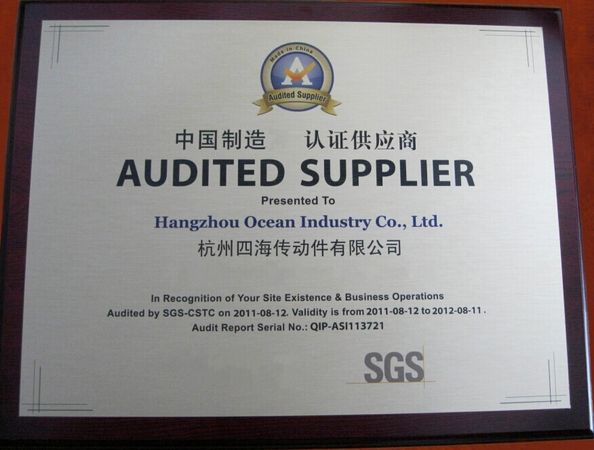
Certification

- I'm Online Chat Now
Company News
Gear Materials and Heat Treatment: Fundamental Knowledge for Design and Application
Gear Materials and Heat Treatment: Fundamental Knowledge for Design and Application
Gears serve as the core components of mechanical transmission, whose performance directly determines the reliability, efficiency and service life of transmission systems. Statistics show that about 70% of gear failure cases are related to improper material selection and heat treatment. With the development of modern equipment towards high speed, heavy load, precision and long service life, unprecedented challenges have been posed to gear material and heat treatment technologies. Scientific design and precise control have become the core competitiveness of gear manufacturing.
1. Scientific Fundamentals of Gear Materials
1.1 Performance Requirement Matrix of Gear Materials
Performance Index Specific Requirements Influencing Factors
Strength High bending fatigue strength, high contact fatigue strength Alloying elements, purity, microstructural uniformity
Toughness Sufficient impact toughness (≥40J/cm²) Grain size, inclusion control, tempering process
Wear Resistance High surface hardness (58-64HRC) Carbon content, carbide distribution, surface treatment
Processability Good machinability, controllable heat treatment deformation Sulfur and phosphorus content, hardenability bandwidth
Economy Controllable cost, available resources Selection of alloying elements, process complexity
1.2 Classification and Characteristics of Commonly Used Gear Materials
Carburizing Steels (Surface-Hardening Steels)
Low-carbon alloy steels: 20CrMnTi, 20CrMo, 20CrNi2Mo
Characteristics: Good core toughness (30-45HRC), surface can be hardened to 58-64HRC.
Applications: Automobile gearboxes, wind power gearboxes, heavy-duty gears.
High-quality carburizing steels: SAE 8620H, 9310, 18CrNiMo7-6
Characteristics: Narrow hardenability bandwidth (Jominy band difference ≤4HRC), high purity.
Applications: Aviation gears, high-speed gears, precision gears.
Quenched and Tempered Steels (Through-Hardened Steels)
Medium-carbon alloy steels: 42CrMo, 40CrNiMo, 34CrNiMo6
Characteristics: Overall hardness of 28-35HRC, excellent comprehensive mechanical properties.
Applications: Large low-speed gears, rolling mill gears.
Nitriding Steels
Typical grades: 38CrMoAl, 31CrMoV9
Characteristics: Surface hardness can reach 1000-1200HV after nitriding.
Applications: High-speed light-load gears, precision gears without gear grinding.
Special-Purpose Materials
Stainless steel gear materials: 17-4PH, AISI 440C
Applications: Food machinery, chemical equipment, medical devices.
High-temperature gear materials: Inconel 718, Waspaloy
Applications: Aero-engines, gas turbines.
Non-metallic gear materials: POM, PA66+GF, PEEK
Applications: Light-load, low-noise, corrosion-resistant occasions.
1.3 Material Selection Decision Tree
Load conditions
High speed & heavy load → Carburizing steels (20CrMnTi, etc.)
Medium speed & medium load → Quenched and tempered steels (42CrMo, etc.)
High speed & light load → Nitriding steels (38CrMoAl, etc.)
Precision requirements
High precision (Grade 3-4) → Materials with narrow hardenability bandwidth
General precision (Grade 6-7) → Conventional materials
Batch size
Mass production → Free-cutting steels (sulfur content 0.02-0.04%)
Small batch production → General-purpose materials
Cost constraints
High cost sensitivity → Carbon steels or low-alloy steels
Performance priority → High-quality alloy steels
2. Technical System of Gear Heat Treatment
2.1 Carburizing and Quenching Technology (Most Widely Used)
Process Principle
Carbon atoms diffuse into the steel surface in a carbon-rich atmosphere at 900-950℃ to form a high-carbon layer of 0.5-2.0mm, followed by quenching to obtain martensitic structure.
Key Technical Parameter Control
Carburized layer depth: Empirical formula d = K√t (K is carburizing coefficient, t is time); practical formula: Layer depth ≈ module × (0.15-0.25).
Automobile gears: 0.8-1.2mm
Wind power gears: 1.5-2.5mm
Aviation gears: 0.5-0.8mm
Carbon concentration gradient control
Surface carbon content: 0.75-0.85% (optimal range)
Gentle transition zone: Carbon content decreases gradually from surface to core
Avoid network carbides: Control carbon potential below 0.9%
Development of Modern Carburizing Technology
Low-pressure vacuum carburizing: No internal oxidation, small deformation, environmental protection; Pressure: 1-10mbar, Temperature: 950-1050℃, Layer depth uniformity: ±0.05mm.
Plasma carburizing: Low temperature and fast speed (850℃), energy saving by 30%.
Controlled atmosphere carburizing: Mature and stable, low cost.
Quenching Process Optimization
Direct quenching: Quenching immediately after carburizing, energy-saving but with large deformation.
Reheating quenching: Cooling to room temperature after carburizing, then reheating and quenching, small deformation.
Press quenching: Quenching under pressure in a mold to control deformation; Ellipticity can be controlled within 0.02mm, tooth direction deformation ≤0.01mm.
2.2 Induction Hardening Technology
Process Characteristics
Rapid heating (in seconds), energy-saving and efficient; minimal deformation, suitable for precision gears; local quenching available, high flexibility.
Technical Key Points
Frequency selection
High frequency (100-500kHz): Hardened layer 0.5-2mm
Medium frequency (1-10kHz): Hardened layer 2-6mm
Ultra-audio frequency (20-100kHz): Balancing depth and uniformity
Tooth-by-tooth scanning quenching: Ensure tooth root hardening.
Dual-frequency quenching: Preheating with low frequency first, then quenching with high frequency to obtain an ideal hardness gradient.
2.3 Nitriding Treatment Technology
Comparison of Process Types
Process Type Temperature (℃) Layer Depth (mm) Hardness (HV) Deformation Applications
Gas Nitriding 500-580 0.1-0.6 800-1100 Minimal Precision gears
Plasma Nitriding 350-580 0.1-0.3 900-1200 Minimal High-speed gears
Salt Bath Nitriding 560-580 0.1-0.3 500-800 Small General gears
Advantages of Nitrided Gears
Minimal deformation, ready for use after nitriding; high surface hardness and good wear resistance; excellent anti-seizure performance; improved corrosion resistance.
2.4 Isothermal Quenching (Bainitic Quenching)
Process Characteristics
Isothermal transformation in salt bath at 250-400℃ to obtain lower bainite structure.
Performance Advantages
High strength and hardness (45-52HRC); good toughness and low notch sensitivity; small deformation and dimensional stability.Application: Large gears (module >10).
3. Collaborative Design of Materials and Heat Treatment
3.1 Hardness Gradient Design Principles
Ideal hardness gradient curve:
Surface hardness: 58-64HRC (carburizing) or 1000-1200HV (nitriding);
Transition zone: Hardness decreases gently without sudden change;
Core hardness: 30-45HRC (to ensure toughness).
Effective case depth (CHD) calculation: CHD (mm) ≈ 0.2 × module (m) + 0.5 (CHD refers to the distance from the surface to the position of 550HV).
3.2 Residual Stress Optimization Design
Surface compressive stress can improve fatigue strength by 30-50%:
Carburizing and quenching: -300 to -500MPa;
Shot peening: -400 to -800MPa;
Roll hardening: -600 to -1000MPa.
Stress distribution requirements:
The maximum compressive stress is at 0.1-0.3mm below the surface;
The depth of the compressive stress layer is ≥1.5 times the depth of the hardened layer.
4. Quality Control and Inspection
4.1 Incoming Material Inspection
Chemical composition analysis: Direct-reading spectrometer, precision 0.001%.
Purity evaluation: In accordance with ASTM E45 or GB/T 10561; Class A (sulfides) ≤2.5 grade, Class B (alumina) ≤2.0 grade, Class D (spherical oxides) ≤2.0 grade.
Hardenability test: Jominy Test; Excellent hardenability bandwidth: Hardness difference between J5 and J25 ≤4HRC.
4.2 Heat Treatment Process Monitoring
Temperature recording: Multi-channel paperless recorder, precision ±1℃.
Atmosphere monitoring: Oxygen probe life management (replaced every 6 months).
Process curve compliance: Real-time comparison with standard process window.
4.3 Post-Heat Treatment Inspection
Hardness testing:
Surface hardness: Rockwell hardness tester (HRC);
Gradient hardness: Vickers hardness tester (HV0.5-HV10);
Core hardness: Brinell hardness tester (HBW).
Metallographic inspection:
Carburized layer depth: Corrosion with 4% nitric acid alcohol;
Structure rating: Martensite/retained austenite grade (Grade 1-5);
Carbide rating: In accordance with GB/T 25744.
Deformation measurement:
Gear inspection center: Tooth profile and tooth direction error;
Coordinate measuring machine: 3D geometric tolerance;
Special inspection tools: Runout of gear ring, end face runout.
4.4 Non-Destructive Testing
Magnetic particle inspection: Detect surface cracks, sensitivity 0.05mm in depth.
Ultrasonic inspection: Detect internal defects, detectable equivalent Φ0.5mm.
X-ray stress measurement: Residual stress distribution.
5. Typical Application Case Analysis
Case 1: Heat Treatment Optimization of Planetary Gears for Wind Power Gearboxes
Original scheme: 20CrMnTi, conventional carburizing and quenching; Problem: Insufficient tooth root fatigue strength, service life only 50,000 hours.
Optimization scheme: Upgrade material to 18CrNiMo7-6 for higher purity; adopt low-pressure vacuum carburizing + high-pressure gas quenching; conduct tooth root shot peening (300% coverage).
Effects: Bending fatigue limit increased by 40%; contact fatigue life extended to more than 100,000 hours; deformation reduced by 60%.
Case 2: Precision Heat Treatment of Gears for Automobile Automatic Transmissions
Challenge: Module 2.5, precision requirement DIN Grade 5, strict deformation control.
Solution: Select SAE 8620H with hardenability bandwidth of 3HRC; adopt low-pressure vacuum carburizing + press quenching; optimize clamping method by finite element simulation.
Results: Tooth profile error ≤6μm, tooth direction error ≤8μm; no gear grinding needed, direct honing available; reject rate reduced from 8% to 0.5%.
Case 3: Heat Treatment Innovation of Gearboxes for High-Speed Trains
Special requirements: High reliability, low noise, maintenance-free.
Technical scheme: Custom steel grade with trace Nb and V added; composite treatment of carburizing quenching + low-temperature plasma nitriding; surface integrity guaranteed by superfinishing + surface texture control.
Performance indicators: Noise reduced by 3-5dB; design service life increased from 2.4 million kilometers to 4.8 million kilometers; maintenance cycle doubled.
6. Design and Selection Guide
6.1 Four-Step Selection Method
Working condition analysis: Load spectrum → stress level → failure mode identification.
Preliminary material selection: Select material category according to stress level; consider special requirements such as corrosion and temperature.
Heat treatment scheme: Select process according to precision, batch and cost; determine hardened layer depth and hardness gradient.
Verification and optimization: Trial production verification → bench test → process solidification.
6.2 Cost-Performance Balance Strategy
Low-cost scheme: Carbon steel/low-alloy steel + induction hardening.
Cost-effective scheme: Mid-range alloy steel + gas carburizing.
High-performance scheme: High-quality alloy steel + vacuum carburizing + strengthening treatment.
Ultimate performance scheme: Custom material + composite heat treatment + surface engineering.
7. Summary
Gear material and heat treatment is a multidisciplinary systematic engineering that requires the in-depth integration of materials science, mechanical design, manufacturing processes and quality control. Modern gear manufacturing is developing towards refinement, intellectualization and greenization:
High purification of materials: Oxygen content ≤10ppm and titanium content ≤20ppm have become new standards.
Process precision: Carburized layer depth control accuracy reaches ±0.05mm, and hardness gradient can be designed.
Intelligent control: Process optimization and quality control based on big data and AI.
Performance customization: Customized material and heat treatment schemes according to specific working conditions.
Future gear engineers need to master the full-chain knowledge from atomic scale to macroscopic performance. Through the collaborative innovation of materials and heat treatment, they can manufacture lighter, stronger and more durable gears to support the upgrading and development of the high-end equipment manufacturing industry. Only by combining scientific material design, precise heat treatment control and strict quality management can gear products that truly meet the challenges of the 21st century be manufactured.
Pub Time : 2026-03-24 10:19:20
>> News list
Contact Details
Hangzhou Ocean Industry Co.,Ltd
Contact Person: Mrs. Lily Mao
Tel: 008613588811830
Fax: 86-571-88844378