 |
|
|
|
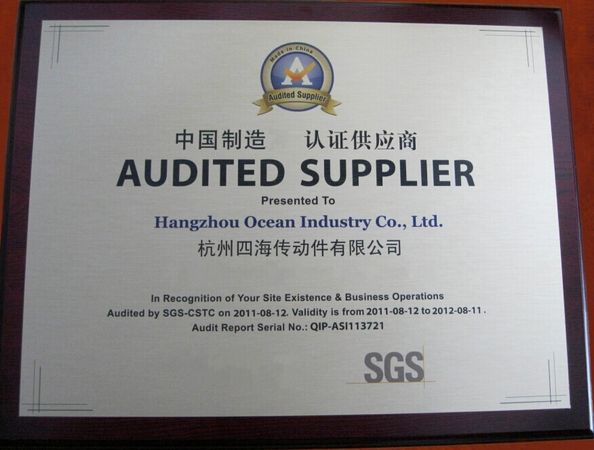
Certification

- I'm Online Chat Now
Company News
Gear NVH Control Technology: Industry Knowledge of Reducing Gear Noise
Gear NVH Control Technology: Industry Knowledge of Reducing Gear Noise
1. The Essence and Sources of Gear Noise
Gear noise, the core issue of NVH (Noise, Vibration, and Harshness) in transmission systems, is essentially the sound radiation generated by structural resonance. Periodic excitation forces produced during gear meshing are transmitted to the gear box through shafts and bearings, causing the box to resonate and emit sound waves. The sources of gear noise can be divided into three categories:
1.1 Design Excitation (Root Cause)
Meshing stiffness variation: The number of meshing tooth pairs changes instantaneously (e.g., the contact ratio shifts from 1 to 2) when gears engage and disengage, leading to stiffness mutation and impact vibration.
Tooth profile error: Deviations between the theoretical involute and the actual machined tooth profile result in fluctuations in the instantaneous transmission ratio, triggering unstable vibration.
Resonance: When the gear meshing frequency coincides with the natural frequency of the box or shaft, the vibration effect is amplified, significantly increasing noise.
1.2 Manufacturing Errors (Amplifying Factor)
Cumulative pitch error: Causes uneven rotation of gears and generates low-frequency noise.
Tooth surface roughness: Rough surfaces produce high-frequency whistling due to friction during high-speed operation.
Dynamic unbalance: Unbalanced high-speed gears generate centrifugal force, leading to severe vibration and noise.
1.3 Assembly and Lubrication (Inducing Factor)
Center distance deviation: Excessively tight assembly causes interference noise, while loose assembly leads to impact noise between gears.
Improper lubrication: Overly viscous grease causes churning loss noise, while insufficient viscosity results in boundary lubrication noise due to direct metal-to-metal contact.
2. Design Optimization: Reducing Excitation from the Source
Design optimization is the most critical link in gear noise control, as it can eliminate 70% of noise risks at the drawing stage. The core optimization strategies are as follows:
2.1 Tooth Profile Modification
It is the core method for noise reduction, which can avoid tooth interference caused by load deformation of standard gears:
Tip relief: Remove a small amount of material from the tooth tip to eliminate engagement impact.
Root undercut: Prevent disengagement interference between gear teeth.
Crowning: Make the tooth width slightly convex to compensate for uneven load caused by shaft deformation.
Tool recommendation: Use professional software such as Kisssoft or Romax, input the load spectrum to automatically generate the optimal modification amount. A 0.01mm-level tip relief can reduce noise by up to 8dB in practical projects.
2.2 Contact Ratio Optimization
Increasing the contact ratio enables more tooth pairs to mesh simultaneously, achieving uniform load distribution and reducing vibration:
Core strategies: Appropriately increase the addendum coefficient or adopt helical gears. Helical gears have a higher contact ratio than spur gears, and their gradual meshing process inherently reduces noise.
Note: Helical gears generate axial force, requiring the design of thrust bearings or thrust structures, which increases structural complexity.
2.3 Balance of Module and Number of Teeth
Under the premise of meeting strength requirements, the principle of "small module, more teeth" is conducive to noise reduction. More teeth make the base circle closer to the reference circle, resulting in a flatter tooth profile and more stable meshing. For example, reducing the module of a vacuum cleaner robot's walking wheel from 1.0 to 0.8 and increasing the number of teeth from 20 to 25 not only significantly reduces noise but also shortens the injection molding cycle and lowers costs due to thinner tooth thickness.
3. Material Selection: Trade-off Between Metal and Plastic Gears
The damping characteristics of materials directly determine the vibration energy absorption capacity, and the rational selection of materials is the key to noise reduction. The performance, applicable scenarios and optimization skills of metal and plastic gears are as follows:
3.1 Plastic Gears (POM/PA/PEEK)
Advantages: High inherent damping for effective vibration energy absorption; self-lubricating without additional grease; low manufacturing cost.
Disadvantages: Low strength, poor thermal conductivity, and poor dimensional stability affected by temperature and humidity.
Applicable scenarios: Low-speed, light-load applications with extreme noise sensitivity, such as household appliances and office automation equipment.
Optimization skills: Adopt the pairing of steel shaft + plastic gear to utilize plastic's high-frequency noise absorption performance.
3.2 Metal Gears (Stainless Steel/Alloy Steel)
Advantages: High strength, high precision, and long service life, suitable for high-load transmission.
Disadvantages: High rigidity leads to easy vibration transmission and sharp, harsh noise.
Applicable scenarios: High-speed, heavy-load, high-precision transmission systems, such as robot joints and medical surgical tools.
Optimization skills: Use powder metallurgy technology (the internal micropores provide certain damping) or shot peening (introduce surface compressive stress to reduce vibration) for manufacturing.
3.3 Hybrid Transmission
Adopt plastic gears for the first stage to reduce noise and metal gears for the second stage to transmit torque. This "soft-hard combination" scheme is widely used in consumer electronics, balancing noise reduction effects and transmission efficiency.
4. Assembly and Lubrication: The Final Critical Link
Excellent design needs precise assembly and scientific lubrication to realize noise reduction effects, which is the "last mile" of gear NVH control:
4.1 Center Distance Control
Strictly control the tolerance of the gear box bearing position; H7/k6 fit is recommended for high-precision transmission to ensure center distance stability. Use special jigs during assembly to avoid shaft bending caused by forced press-fitting, which prevents center distance deviation and subsequent noise.
4.2 Grease Selection
Scientific grease selection is the key to reducing friction noise, and the selection principles are as follows:
Viscosity: Select low-viscosity grease (base oil viscosity ≤100cSt) for high-speed operation and high-viscosity grease for low-speed operation.
Consistency: NLGI Grade 2 is the most commonly used; NLGI Grade 1 can be used for ultra-high speed to reduce churning resistance.
Additives: Grease containing molybdenum disulfide or PTFE can reduce friction noise, but attention should be paid to material compatibility to avoid plastic corrosion.
Coating amount: Fill 30%-50% of the tooth surface space; excessive grease will cause churning heating and increased noise.
4.3 Gear Box Resonance Avoidance
The gear box shell is the main noise radiation source, and resonance avoidance can be achieved through the following measures:
Reinforcing ribs: Design reinforcing ribs on the inner wall of the shell to increase the natural frequency and avoid overlapping with the gear meshing frequency.
Damping materials: Add rubber gaskets at the shell fitting to block the vibration transmission path.
Simulation verification: Use the ANSYS Modal module to analyze the box modal, ensuring that the first 6 natural frequencies are not within the operating speed range.
5. Practical Case: Silent Gearbox Development for Vacuum Cleaner Robots
5.1 Project Background
The walking mechanism of a vacuum cleaner robot had excessive noise (described as "tractor-like" by users), leading to a large number of customer complaints.
5.2 Problem Analysis
Unmodified spur gears made of POM material with severe meshing impact;
Motor speed of 10000rpm, resulting in high gear linear speed after deceleration;
Thin-walled ABS gear box with obvious resonance and strong noise radiation.
5.3 Optimization Scheme
Tooth profile: Change to helical gears with a helix angle of 15°, increasing the contact ratio to 1.6;
Modification: Calculate by Kisssoft and perform 0.02mm tip relief;
Material: Replace gears with PA66+30%GF to improve strength and allow module reduction;
Structure: Increase the gear box wall thickness by 0.5mm and add cross reinforcing ribs;
Lubrication: Select low-viscosity synthetic grease with a filling amount of 40%.
5.4 Optimization Result
The noise of the walking mechanism was reduced from 75dB to 62dB, reaching the industry-leading level, and the project was successfully mass-produced.
6. Core Principles and Industry Insights
Gear noise control is a system engineering involving acoustics, materials science, mechanics and other disciplines, and there is no one-size-fits-all "silver bullet" solution.
The core of high-quality transmission product development is the closed loop of "simulation prediction + experimental verification", which can eliminate noise problems before mold opening and reduce R&D costs.
Silent performance is an important embodiment of product premium. For consumer electronics, medical equipment and other products close to users, noise control is the key to improving user experience and reducing customer complaints.
The future development direction of gear noise control lies in the precise matching of multi-link technologies, such as the application of new damping materials, AI-driven parameter optimization, and additive manufacturing of complex damping structures.
Pub Time : 2026-03-09 09:52:59
>> News list
Contact Details
Hangzhou Ocean Industry Co.,Ltd
Contact Person: Mrs. Lily Mao
Tel: 008613588811830
Fax: 86-571-88844378