 |
|
|
|
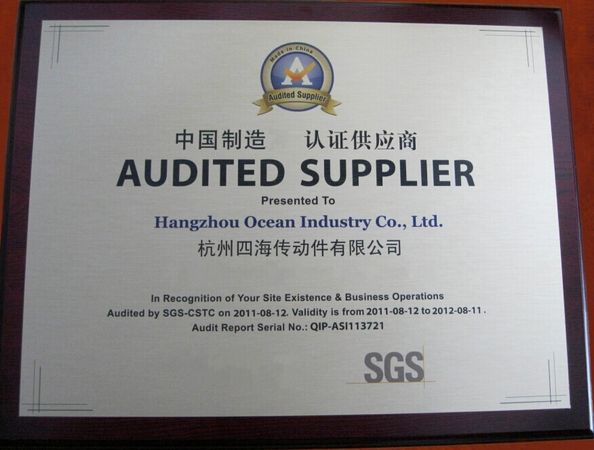
Certification

- I'm Online Chat Now
Company News
Gear Tooth Surface Hardness: Design, Testing and Wear Mechanism
Gear Tooth Surface Hardness: Design, Testing and Wear Mechanism
Tooth surface hardness is the core parameter determining the load-bearing capacity, wear resistance and service life of gears. This article elaborates on the design principles, testing methods of tooth surface hardness and its interaction mechanism with tooth surface wear, providing theoretical guidance for gear design and maintenance.
1. Importance and Design Principles of Tooth Surface Hardness
1.1 Definition and Classification of Hardness
Macro hardness: Brinell (HB), Rockwell (HRC), Vickers (HV), etc.
Micro hardness: Applied to the analysis of surface hardened layers
Gradient hardness: Hardness distribution from the surface to the core
1.2 Design Principles and Selection
Effective hardened layer depth: Usually 0.2-0.3 times the module
Transition zone design: The hardness decreases gently to avoid stress concentration
Core hardness: Maintain sufficient toughness (usually 28-45 HRC)
Optimization of Hardness Difference for Mating Gears
Hard-soft pairing: Hardness difference of 4-6 HRC to improve anti-scuffing capacity
Equal hardness pairing: Requires precision machining and is suitable for high-precision transmission
Special pairing: Such as bronze-steel pairing for worm gears and worms
2. Hardness Testing Technology and Standards
2.1 Conventional Testing Methods
Surface Hardness Testing
Brinell (HB): Large indentation, precision of ±3%
Rockwell (HRC): Load over 10kgf, rapid testing with precision of ±1.5 HRC
Vickers (HV): High precision of ±1%
Micro Vickers: For measuring hardened layer gradient with load less than 1kgf (micro hardness)
Knoop hardness: Applicable to the detection of thin hardened layers and brittle materials
Hardened Layer Depth Testing
Metallographic method: Measured under a microscope after corrosion (ISO 2639 standard)
Hardness gradient method: Point-by-point section testing (the most accurate)
Ultrasonic method: Non-destructive testing, suitable for batch online testing
2.2 Advanced Testing Technology
Non-destructive Testing Technology
Barkhausen noise analysis: Evaluate residual stress state
Eddy current testing: Rapid sorting of surface hardness
Laser ultrasonic: Detection of deep hardness distribution
Online Monitoring System
Hardness-temperature correlation model: Inference of hardness changes through temperature rise
Vibration spectrum analysis: Identification of stiffness changes caused by hardness reduction
Acoustic emission technology: Monitoring of microcrack initiation
2.3 Testing Standard System
International standards: ISO 6336 (load capacity calculation), ISO 1328 (precision grade)
American standards: AGMA 2001, ASTM E384
Chinese standards: GB/T 3480, GB/T 3077
3. Tooth Surface Wear Mechanism and Its Relationship with Hardness
3.1 Classification of Wear Types
Adhesive Wear (Scuffing)
Mechanism: Local high temperature leads to material transfer
Influence of hardness: High hardness reduces adhesion tendency; excessively large hardness difference accelerates wear; the optimal hardness combination is that the driving gear is 2-3 HRC harder than the driven gear
Abrasive Wear
Mechanism: Cutting action of hard particles
Hardness protection measures: Surface hardness should be more than 1.3 times the hardness of abrasive particles; use carbide-forming elements (Cr, Mo, V); surface roughness Ra < 0.4μm to reduce wear
Fatigue Wear (Pitting)
Mechanism: Subsurface cracks caused by alternating stress
Hardness optimization: Surface hardness of 58-62 HRC is the best for anti-pitting; core hardness > 35 HRC to support the surface layer; residual compressive stress > 400MPa to delay fatigue
Corrosive Wear
Mechanism: Synergistic effect of chemical corrosion and mechanical wear
Protection strategies: Improve material corrosion resistance (add Ni, Cr); adopt surface treatments such as chrome plating, nitriding and PVD coating
3.2 Quantitative Relationship between Hardness and Wear
Wear Rate Model
W=K×(Pn)/Hm
W: Wear rate
P: Contact pressure
H: Material hardness
K,n,m: Material constants (for steel: n=1, m=2-3)
Concept of Critical Hardness
Economic hardness: The most cost-effective hardness range
Safe hardness: The minimum hardness without sudden failure
Ultimate hardness: The maximum hardness achievable by the material
4. Engineering Cases of Hardness Design
4.1 Wind Turbine Gearbox Design
Working condition characteristics: Variable load, low speed, heavy load and long service life requirements
Hardness scheme: Planet gear: surface 60-62 HRC, core 38-42 HRC; hardened layer depth: module × 0.25 + 0.5mm; retained austenite: <15%
Testing requirements: 100% ultrasonic flaw detection + full inspection of tooth surface hardness
4.2 Automobile Gearbox Gear Design
Design challenges: Lightweight, high speed and low noise
Innovative scheme: Vacuum carburizing with hardness uniformity of ±1.5 HRC; laser quenching for selective hardening with small deformation; composite treatment of carburizing + shot peening to improve fatigue life by 30%
4.3 Harmonic Gear of Robot Reducer
Special requirements: Zero backlash and high precision retention
Hardness strategy: Flexspline: 50-52 HRC (balancing elasticity and wear resistance); circular spline: 58-60 HRC; wave generator: 60-62 HRC with surface DLC coating
5. Summary
Design Phase
Clarify the working condition load spectrum and select the hardness targetedly
Consider the influence of manufacturing processes on hardness
Reserve the hardness testing datum plane
Manufacturing Control
Monitor the heat treatment process: temperature uniformity of ±5℃, time control of ±1%
Conduct full hardness inspection on the first piece and statistical process control for batch production
Establish a hardness-performance corresponding database
Operation and Maintenance
Conduct regular random hardness inspection and establish a degradation curve
Avoid overloading and poor lubrication
Inspect hardness changes first in case of abnormal wear
Failure Analysis Process
Core Key Points
Hardness design needs to systematically consider the matching of materials, heat treatment, processing and working conditions
Advanced testing technologies transform hardness control from result inspection to process prevention
There is a non-linear relationship between hardness and wear, and an optimal hardness interval exists
Intelligent hardness monitoring and life prediction are the development directions of reliability engineering
Remanufacturing technology provides a new approach for hardness recovery and performance improvement
Pub Time : 2026-03-12 10:10:30
>> News list
Contact Details
Hangzhou Ocean Industry Co.,Ltd
Contact Person: Mrs. Lily Mao
Tel: 008613588811830
Fax: 86-571-88844378