 |
|
|
|
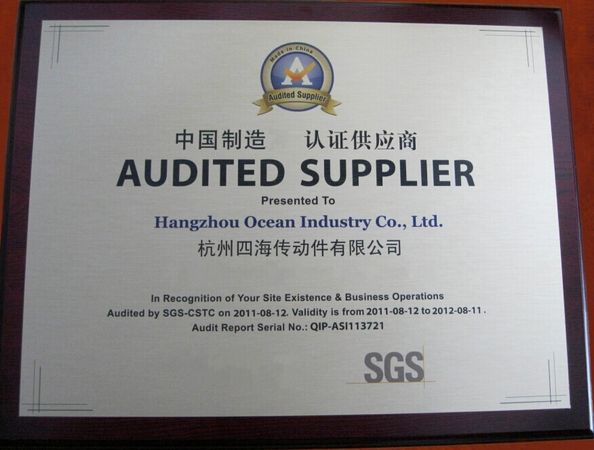
Certification

- I'm Online Chat Now
Company News
Heat Treatment and Steel Strength: Why Austenitic Stainless Steel Cannot Be Hardened by Heat
This is a common question in metallurgy and materials engineering exams: "Which of the following materials cannot have its strength improved through heat treatment?"
Understanding which steels respond to heat treatment—and which don't—is crucial for engineers, metallurgists, and anyone working with stainless steel in industrial applications.
The correct answer might surprise you: C. 022Cr19Ni10 (304L austenitic stainless steel) cannot be strengthened by conventional heat treatment methods.
But why? Let's dive deep into the metallurgy behind this phenomenon.
Understanding the Four Steel Types
Before explaining why one cannot be heat-treated, let's identify what each option represents:
Option New Designation Old Designation Common Name Steel Type
A 06Cr13 1Cr13 — Martensitic stainless steel
B 12Cr13 2Cr13 — Martensitic stainless steel (used for knives and scissors)
C 022Cr19Ni10 — 304L Ultra-low carbon austenitic stainless steel
D 022Cr23Ni5Mo2N — 2205 Duplex stainless steel
What Do These Steel Types Mean?
Martensitic stainless steels (06Cr13, 12Cr13): These are magnetic and can be hardened through heat treatment, similar to carbon steels.
Austenitic stainless steels (022Cr19Ni10/304L): These are non-magnetic and known for excellent corrosion resistance. They are the most common stainless steels used in food processing, medical devices, and chemical industries.
Duplex stainless steels (022Cr23Ni5Mo2N/2205): These combine austenite and ferrite phases, offering a balance of strength and corrosion resistance.
The Fundamental Principle: Why Heat Treatment Works
The Key Requirement: Phase Transformation
For any metal to become harder through "heating and quenching" (the classic heat treatment method), the material's internal crystal structure must be able to undergo a phase transformation.
Heat treatment fundamentally works by:
Heating the steel above its critical temperature (Ac1 or Ac3)
Rapid cooling (quenching) to trap the microstructure in a harder phase
Tempering (optional) to achieve the desired balance of hardness and toughness
Without a phase transformation capability, heat treatment simply won't work.
Martensitic Steel: The Steel That Responds to Heat Treatment
How Martensite Forms
12Cr13 (Martensite) is like a lump of raw dough.
Put it in the oven (heat it), and take it out (quench it)
The crystal structure transforms from austenite to martensite
The result: a hard, rigid biscuit
The Verdict: Martensitic steels can achieve significant strength increases through heat treatment (quenching and tempering).
Typical Mechanical Properties
Property Before Heat Treatment After Quenching + Tempering
Hardness ~180 HB HRC 45-55
Tensile Strength ~480 MPa ~850-1000 MPa
Ductility Good Moderate
Austenitic Steel: The Steel That Cannot Be Hardened by Heat
Why Austenite Doesn't Transform
022Cr19Ni10 (Austenite, 304L type) behaves fundamentally differently.
From high temperature to room temperature, austenitic stainless steel maintains its austenite crystal structure. It simply does not undergo phase transformation.
The Verdict: Conventional quenching and tempering cannot harden austenitic stainless steel. In fact, solution treatment (a form of heat treatment) actually softens it and restores ductility.
The Analogy
Austenitic steel is like someone who "eats soft food but refuses hard food." Fire doesn't help—it only responds to being "beaten" (cold work)!
So How Do You Harden Austenitic Steel?
Austenitic stainless steels can be strengthened, but not through heat treatment. Instead, they rely on a different mechanism:
Cold Working (Work Hardening)
When austenitic stainless steel is mechanically deformed at room temperature (cold rolling, drawing, pressing), its strength increases significantly through a process called strain-induced martensite transformation and dislocation strengthening.
Method Effect on Austenitic Steel
Heat treatment (quenching) ❌ No hardening effect
Cold working (cold rolling, drawing) ✅ Significant strength increase
Cold Work Strength Increase Example (304L)
Condition Yield Strength Tensile Strength
Annealed (soft) ~205 MPa ~515 MPa
50% Cold Worked ~760 MPa ~860 MPa
75% Cold Worked ~1035 MPa ~1100 MPa
Why the Other Options CAN Be Heat Treated
Option A: 06Cr13 (Martensitic)
While 06Cr13 has very low carbon content (0.06%), it can still form a small amount of martensite during quenching, allowing for marginal strength improvement through heat treatment.
Option D: 2205 Duplex Stainless Steel
2205 contains approximately 50% austenite and 50% ferrite. As a duplex stainless steel, it can be strengthened through heat treatment by adjusting the phase ratio between austenite and ferrite.
Quick Reference: Steel Heat Treatment Capabilities
Material Type Can Be Strengthened by Heat Treatment? Alternative Strengthening Method
06Cr13 (1Cr13) Martensitic ✅ Yes (limited) —
12Cr13 (2Cr13) Martensitic ✅ Yes (significant) —
022Cr19Ni10 (304L) Austenitic ❌ No Cold working (work hardening)
022Cr23Ni5Mo2N (2205) Duplex ✅ Yes —
Exam Tips: The "Lightning Round" Strategy
When facing similar questions on exams, use these quick identification techniques:
Tip 1: Look for "Ni" (Nickel)
Austenitic stainless steels contain both chromium AND nickel (Cr...Ni...). If you see a designation like "Cr...Ni..." in the steel grade, it's likely an austenitic stainless steel that cannot be heat-treated.
Tip 2: Identify the "Soft Option"
Once you recognize austenitic stainless steels (304, 304L, 316, 316L), apply this label:
❌ Cannot be heat-strengthened
❌ Non-magnetic
✅ Excellent corrosion resistance
Tip 3: The Quick Selection Rule
When the question asks "Which cannot be heat-treated?", find the steel grade with the most digits that contains "Ni" — it's almost certainly the austenitic (non-heat-treatable) option.
Memory Aid
Steel Type Heat Treatable? Magnetism Key Identifier
Martensite ✅ Yes Magnetic "Cr" only (no Ni)
Austenite ❌ No Non-magnetic "Cr...Ni..."
Ferrite ❌ No Magnetic "Cr" only (no Ni)
Duplex ✅ Yes Slightly magnetic Contains Mo, N
Summary
The answer to our question is clearly C. 022Cr19Ni10 (304L).
Key Takeaways:
Martensitic stainless steels (12Cr13, 06Cr13) can be significantly strengthened through heat treatment (quenching + tempering)
Austenitic stainless steels (022Cr19Ni10/304L) cannot be hardened by heat treatment because they do not undergo phase transformation
Austenitic steels can only be strengthened through cold working (work hardening)
Duplex stainless steels (2205) can be strengthened through heat treatment by adjusting the phase balance
Quick identification: Look for "Cr...Ni..." pattern (austenitic = not heat-treatable)
Understanding these fundamentals is essential for proper material selection in engineering applications. Always match the material and its strengthening method to the specific service requirements.
Pub Time : 2026-05-15 09:58:53
>> News list
Contact Details
Hangzhou Ocean Industry Co.,Ltd
Contact Person: Mrs. Lily Mao
Tel: 008613588811830
Fax: 86-571-88844378