 |
|
|
|
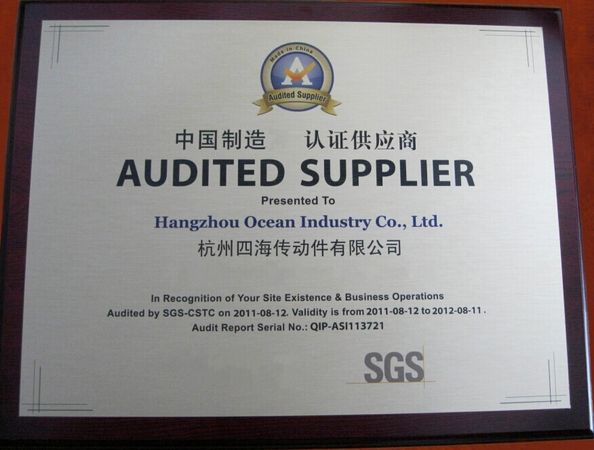
Certification

- I'm Online Chat Now
Company News
Hot-Dip Galvanized Workpiece Passivation Industry Knowledge
Hot-Dip Galvanized Workpiece Passivation Industry Knowledge
1. Is passivation mandatory for hot-dip galvanized parts?
Passivation is not a mandatory process for hot-dip galvanized workpieces, yet it is highly recommended, especially for products with strict requirements on corrosion resistance, surface appearance and environmental compliance.
Its core function is to form a dense chemical conversion film on the zinc layer, filling pores on the zinc coating and slowing down corrosion.
- Unpassivated zinc coating: Salt spray resistance lasts about 200 hours
- Trivalent chromium passivation: Salt spray resistance exceeds 1000 hours
It delays the formation of white rust (zinc corrosion products) and optimizes surface finish to silver-white, iridescent and other appearances.
2. Types of Passivation & Their Differences
- Hexavalent Chromate Passivation
Mature process with low cost, but highly toxic and environmentally unfriendly. Only applicable to non-export and non-environmental-restricted products.
- Trivalent Chromium Passivation
Environmentally friendly with superior anti-corrosion performance, the mainstream process in the industry, salt spray resistance over 1000 hours.
- Chromium-Free Passivation
Adopts silane, zirconium salt and other systems, fully compliant with RoHS standards. Suitable for export, food and medical industries. Slightly higher cost, and its corrosion resistance is slightly inferior to trivalent chromium passivation.
3. Applicable Scenarios
Passivation is Mandatory
Outdoor steel structures (bridges, photovoltaic brackets), coastal/high-humidity/industrial corrosive environments, automotive & home appliance components, precision fasteners, export products.
Passivation is Optional
Indoor dry-environment parts, short-term turnover workpieces, parts to be painted later (passivation improves coating adhesion).
Passivation is Not Required
Buried components (isolated from air by soil, self-protection of zinc layer suffices), high-temperature service parts (passivation film decomposes and fails easily under high heat).
4. Key Operation Notes
- Thoroughly remove oil and impurities on the zinc surface before passivation, otherwise the adhesion of conversion film will be impaired.
- Fully dry workpieces after passivation to avoid residual liquid causing surface corrosion.
- Select thin passivation films for subsequent painting workpieces to prevent weak binding force between coating and substrate.
- Combine with sealing treatment (epoxy/polyurethane coating) to extend salt spray resistance to over 2000 hours, ideal for extreme corrosive environments.
5. Summary of Process Selection
- Ordinary outdoor structural parts: Trivalent chromium passivation is preferred.
- Export-compliant products: Adopt chromium-free passivation.
- Indoor dry-use & buried parts: Passivation can be omitted.
- Extreme corrosion environments: Match passivation with post-sealing treatment.
Pub Time : 2026-06-22 10:35:34
>> News list
Contact Details
Hangzhou Ocean Industry Co.,Ltd
Contact Person: Mrs. Lily Mao
Tel: 008613588811830
Fax: 86-571-88844378