 |
|
|
|
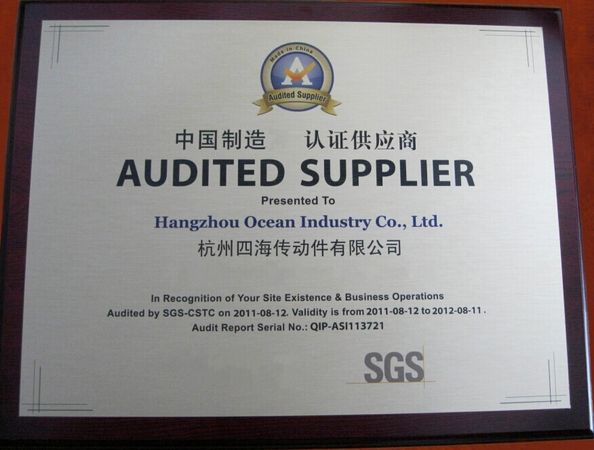
Certification

- I'm Online Chat Now
Company News
Industry Knowledge about Bearing Cage Failures
Industry Knowledge about Bearing Cage Failures
Introduction
The bearing cage is an indispensable core component of rolling bearings, tasked with separating rolling elements, evenly distributing clearance between balls or rollers and storing lubricating grease. Statistically, cage failures occupy a relatively low percentage of overall bearing breakdowns in industrial practice. Nevertheless, once damage emerges, it instantly triggers unexpected sudden shutdown of complete equipment and further brings about cascading damage to rolling elements and bearing rings. In actual after-sales maintenance, cage damage is frequently misjudged as inferior bearing raw material quality, while the real triggers mostly originate from inappropriate product selection, flawed installation procedures, inadequate lubrication or harsh service conditions. In general, cage failures are sorted into four core categories: fracture, abrasive wear, plastic or metallic deformation, and loose rivet failure.
1. Cage Fracture: The Most Dangerous Failure Mode
Visual Characteristics
Visible penetrating cracks across the cage body, complete splitting into multiple fragments, fallen-out rivets, or ruptured cross beams between adjacent pockets of the cage.
Root Failure Causes & Applicable Working Scenarios
First, excessive instantaneous impact load surpasses the ultimate allowable material stress of cages, commonly found on crushing equipment, punching machinery and devices starting and stopping frequently. Second, insufficient or deteriorated lubricant leads to rolling element jamming inside pockets; powerful inertial pulling force tears apart the cage, which frequently occurs in high-speed running bearings lacking effective oil supply. Third, persistent violent vibration from unbalanced rotors or misaligned shaft systems accumulates fatigue damage and eventually causes fatigue fracture over long running hours. Fourth, eccentric installation and inclined bearing assembly create irregular sharp impacts between rolling bodies and pocket edges due to deformed housing holes or poor centering during mounting. Fifth, inferior raw materials contain hidden defects such as casting pores for metal cages or bonding seams for injection-molded plastic cages, easily initiating crack expansion under normal load.
Practical Improvement Countermeasures
For equipment bearing frequent impact loads, replace conventional stamped steel or nylon cages with solid brass or solid steel cages with higher mechanical strength. Strictly inspect the whole lubrication pipeline to ensure continuous and sufficient grease or oil supply. Implement dynamic balance correction for rotating parts and precision alignment for matched shafts. Standardize mounting operations by adopting installation sleeves and hot fitting techniques to avoid assembly deflection.
2. Cage Abrasive Wear: Easily Overlooked Hidden Fault
Visual Characteristics
The marginal area of cage pockets is worn into sharp knife edges; distinct polishing friction marks form on contact surfaces between cages and rolling bodies; continuous bright friction belts appear on inner or outer guiding surfaces of the cage.
Root Failure Causes & Applicable Working Scenarios
Solid granular contaminants like sand grains and scrap metal invade the bearing interior via damaged seals and continuously grind contact surfaces between cages and rolling elements, typical for mining machines and construction engineering equipment. Insufficient lubrication fails to form intact protective oil film, resulting in direct dry friction between contact pairs, which easily emerges under high-speed light-load running or when lubricant ages and loses viscosity. Improperly designed guiding clearance either too small or mismatched with thermal expansion coefficient causes persistent rubbing during temperature fluctuation. Under ultra-high rotating speed, strong centrifugal force slightly deforms the whole cage and makes the cage rub against inner or outer bearing rings.
Practical Improvement Countermeasures
Optimize bearing sealing configuration by adding extra dust shields or labyrinth seal structures to block external impurity ingress. Choose high-viscosity base oil or lubricants blended with extreme-pressure additives to strengthen oil film bearing capacity. Recheck and revise guiding clearance design; switch to self-lubricating nylon or PEEK cages if necessary. For ultra-high-speed operating conditions, select lightweight nylon or aluminum alloy cages to lower centrifugal deformation tendency.
3. Cage Deformation: Typical Shortcoming of Nylon Polymer Cages
Visual Characteristics
Polymer nylon cages present obvious bending, warping, enlarged pocket dimension or partial melting deformation under excessive heat; metal cages show irreversible torsional distortion under abnormal force.
Root Failure Causes
Excessive operating temperature above 120℃ softens nylon material and induces permanent deformation. Certain chemical additives inside incompatible lubricants or cleaning solvents gradually erode polymer cage structures. Nylon 66 material absorbs ambient moisture in humid working environments, leading to volume expansion and subsequent internal jamming inside bearing space. Strong centrifugal force at high rotational speed triggers radial expansion of nylon cages and creates physical interference with bearing raceways.
Practical Improvement Countermeasures
Monitor real-time bearing operating temperature; replace existing nylon cages with high-temperature resistant PEEK or all-metal cages once working temperature exceeds 120℃. Cross-check chemical compatibility between selected lubricants and cage materials referring to official supplier parameter datasheets. Deploy low hygroscopic PEEK or specially modified anti-water-absorption nylon for devices working in damp surroundings. Complete mechanical strength calculation and properly enlarge guiding clearance before applying cages on high-speed equipment.
4. Loose Rivets: Common Defect of Two-Piece Stamped Cages
Visual Characteristics
Partial or complete loss of rivet heads, separation of two split cage halves, or loose wobbling rivets inside prefabricated assembly holes.
Root Failure Causes
Unqualified riveting processing including insufficient pressing force and mismatched rivet length during production; long-term alternating bidirectional axial load generates repeated tensile stress on each rivet; sustained equipment vibration accumulates fatigue and loosens fixed rivets gradually.
Practical Improvement Countermeasures
Prioritize integrated monolithic cage structure instead of traditional riveted split cages wherever possible. Upgrade riveting craftwork to increase rivet locking tightness. Avoid adopting wave-shaped two-piece riveted cages on equipment enduring large alternating axial load.
Complete Preventive Control System across Four Stages
Design Phase
Select appropriate cage material and structural form according to actual load magnitude, rated rotating speed and maximum working temperature; formulate reasonable guiding clearance referring to official technical recommendations from bearing manufacturers; carry out targeted strength verification calculation for cages used in high-speed bearings.
Installation Phase
Use dedicated professional assembly tools and prohibit random hammer knocking on cage components; guarantee precise centering between shafts and bearing housing; thoroughly clean all bearing parts and inner cavity of housing to eliminate residual machining scraps and foreign dirt before assembly.
Operation Phase
Set regular monitoring for bearing running temperature and vibration data; strictly restrict over-speed operation and long-term continuous overload running of equipment.
Daily Maintenance Phase
Follow fixed maintenance cycle to replenish or replace expired lubricants; regularly inspect sealing integrity of bearings; carefully observe the surface condition of cages during periodic equipment disassembly and routine inspection.
Pub Time : 2026-06-03 11:04:53
>> News list
Contact Details
Hangzhou Ocean Industry Co.,Ltd
Contact Person: Mrs. Lily Mao
Tel: 008613588811830
Fax: 86-571-88844378