 |
|
|
|
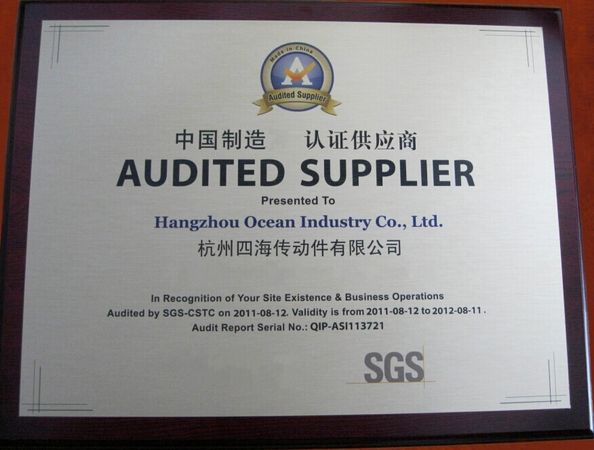
Certification

- I'm Online Chat Now
Company News
Industry Knowledge of Industrial Chain and Sprocket
1. Basic Overview
Industrial chains and sprockets are core transmission and conveying components extensively applied in various industrial sectors. They play an indispensable role in power transmission, material conveying, and equipment operation, serving as vital parts for the stable functioning of machinery in manufacturing, logistics, automation, and other industries. The matching degree between chains and sprockets directly influences the efficiency, stability, and service life of the entire equipment system.
2. Key Factors Affecting Service Life
2.1 Matching Accuracy
The compatibility between the chain and the sprocket is the primary factor. Discrepancies in tooth profile, pitch, and modulus will result in uneven stress during operation, accelerating wear and tear. It is essential to select chain and sprocket combinations that fully align with the equipment's design parameters to ensure smooth power transmission.
2.2 Installation Quality
Improper installation, such as incorrect center alignment, inappropriate tension, or faulty connection of chain links, will cause additional friction and impact during operation. For instance, excessive tension increases the load on the chain and bearings, while insufficient tension may lead to chain slack and skipping. Professional installation guidance, including center deviation adjustment and tension calibration, is crucial for extending service life.
2.3 Maintenance and Lubrication
Scientific maintenance and lubrication are key to reducing wear. Choosing the right lubricating oil and adopting correct oiling methods can form an effective oil film between the moving parts of the chain and sprocket, minimizing metal-to-metal contact. Regular cleaning, inspection, and lubrication can prevent rust, corrosion, and excessive wear, significantly prolonging the service life of the components.
2.4 Operating Environment and Load
Harsh operating environments—such as high temperatures, humidity, dust, or corrosive media—will accelerate the aging and damage of chains and sprockets. Additionally, long-term operation under overload or variable load conditions can lead to fatigue damage of the chain, increasing the risk of fracture. Gaining a clear understanding of the actual operating conditions is critical for selecting suitable products and formulating maintenance plans.
3. Common Faults and Cause Analysis
3.1 Chain Wear and Elongation
Long-term use causes wear on chain pins, bushings, and rollers, resulting in chain elongation. This is mainly due to insufficient lubrication, improper load bearing, or the presence of abrasive particles in the operating environment. Elongated chains may lead to poor meshing with sprockets, affecting transmission accuracy.
3.2 Sprocket Tooth Wear
Uneven wear, tooth tip rounding, or tooth surface pitting of sprockets often stems from mismatched chains and sprockets, excessive load, or inadequate lubrication. Severe tooth wear will cause unstable transmission, increased noise, and even chain detachment.
3.3 Chain Fracture
Chain fracture is a serious fault, usually caused by fatigue damage from long-term overload operation, material defects, improper heat treatment, or sudden impact loads. Fractures may also occur due to neglected wear and tear that exceeds the safe operating limit.
3.4 Corrosion and Rust
Corrosion and rust are common in humid, corrosive, or poorly ventilated environments. They damage the surface structure of chains and sprockets, reducing their mechanical strength and accelerating fatigue failure.
4. Professional Inspection and Maintenance Methods
4.1 On-site Inspection Services
- Conduct on-site physical measurements using tools such as calipers and convexity gauges, and make comprehensive judgments based on measured values, appearance, and operating conditions.
- Synchronously report the operating status of related components and provide countermeasures when problems are detected.
- Generate reports on important dimensional changes, displaying wear conditions through time-series charts to accurately predict replacement timings.
4.2 Factory Inspection Services for Mailed Products
- Disassemble the product, conduct appearance inspections and dimensional measurements of each component to clarify damage conditions.
- Perform metal structure and material analysis to determine the material and heat treatment method.
- Infer the cause of faults through macro-observation of fracture surfaces and provide targeted countermeasures; for inspected production lines, specific suggestions such as fault cause identification can be offered.
4.3 Installation and Maintenance Guidance
- Impart maintenance skills based on the actual conditions of the customer's equipment.
- Provide guidance on lubricating oil selection and oiling methods.
- Teach chain cutting and connection techniques.
- Offer installation guidance for conveying accessories such as sliders and guide rails.
- Provide instructions on chain tension adjustment and center deviation correction.
5. Selection Tips
- Clarify the equipment's operating parameters (such as speed, load, and operating temperature) to select chains and sprockets with appropriate specifications and material grades.
- Prioritize products that meet industry standards to ensure reliability and interchangeability.
- Consider the compatibility of accessories (such as sliders and guide rails) to ensure the overall stability of the transmission system.
- Choose products with corresponding corrosion resistance, wear resistance, or high-temperature resistance according to the operating environment.
Pub Time : 2026-02-02 10:09:14
>> News list
Contact Details
Hangzhou Ocean Industry Co.,Ltd
Contact Person: Mrs. Lily Mao
Tel: 008613588811830
Fax: 86-571-88844378