 |
|
|
|
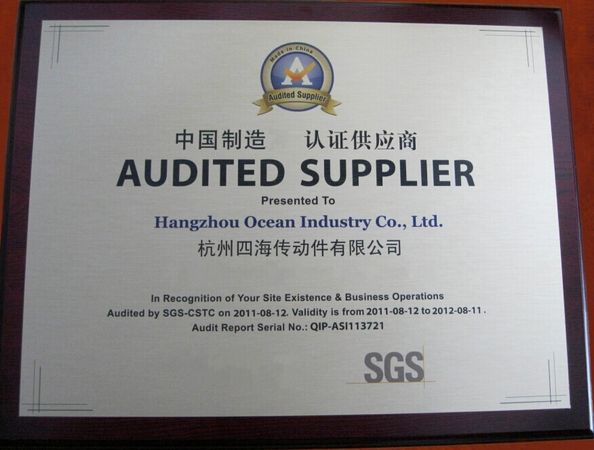
Certification

- I'm Online Chat Now
Company News
Inspection & Maintenance of Diaphragm Couplings
Core Overview
The core of diaphragm coupling maintenance lies in preventive maintenance, focusing on three critical points: alignment accuracy, fastener condition, and diaphragm fatigue. Based on practical experience from numerous equipment engineers, most failures of diaphragm couplings (such as fractured diaphragms and damaged bolts) stem from improper installation, misalignment, or long-term overload rather than manufacturing defects. Therefore, maintenance specifications must be implemented throughout installation, operation and fault troubleshooting.
1. Key Inspection Points During Installation
Installation is the primary checkpoint of maintenance with standardized procedures to follow:
1.1 Strictly Control Shaft Alignment Accuracy
The radial, angular and axial deviations of two shafts must be kept within the allowable range of the coupling. A practical rule: control shaft misalignment within 1/3 of the allowable value to extend service life; if multiple deviations coexist, the allowable tolerance shall be halved.
1.2 Common Alignment Methods
Single dial indicator method, double dial indicator method and triple dial indicator method are widely used on site. The single dial indicator method is more suitable for long-distance or large-diameter couplings.
1.3 Standard Bolt Tightening Procedures
Loose or broken bolts are common faults. A torque wrench must be adopted to tighten bolts per specified torque values.
- Adopt diagonal step-by-step tightening sequence:
- Pre-tighten to 1/4 of rated torque;
- Re-tighten to 1/2 of rated torque;
- Lock sequentially along the circumference up to full rated torque.
1.4 Surface Cleaning & Protection
Thoroughly clean shaft end faces and coupling inner bores before installation, then apply a thin layer of lubricant.
Note: Diaphragm edges are sharp; wear thick gloves during operation to avoid cuts.
2. Routine Inspection & Maintenance During Operation
After commissioning, daily maintenance relies on three approaches: listening, observing and measuring.
- Initial re-tightening inspection: Shut down the machine and retighten all bolts after the first 8-hour shift of operation. Repeat this process several times to eliminate bolt loosening during the running-in period.
- Abnormal condition monitoring:
- Sound check: Periodic severe vibration or sharp metal friction noise usually indicates cracked diaphragms or worn bolts.
- Visual check: Blackened, warped diaphragms or scattered metal fragments around the coupling are typical precursors of fatigue fracture.
- Periodic comprehensive inspection: For high-frequency operating equipment, conduct full inspection every 3–6 months, focusing on microcracks near bolt holes at diaphragm roots.
3. Common Failure Modes & Troubleshooting Logic
Locate root causes rapidly according to abnormal phenomena:
- Diaphragm fracture near bolt holes: Caused by installation misalignment and long-term alternating stress. Recheck alignment data and verify foundation settlement.
- Diaphragm fracture at mid-beam: Resulted from instantaneous overload or excessive impact torque. Confirm whether actual working torque exceeds design rating and install torque limiting devices if necessary.
- Recurrent loose/broken bolts: Insufficient pre-torque or excessive impact load. Retighten with torque wrench and inspect abnormal equipment vibration.
- Abnormal operating noise: Excessive axial clearance between two coupling halves (axial force bearing) or excessive angular deviation. Adjust axial spacing and realign shafts.
4. Long-Term Maintenance Recommendations
- Reduce fretting wear: Coat solid lubricants like molybdenum disulfide between diaphragm layers to prevent microcracks at bolt holes under high-speed rotation.
- Avoid overload operation: Prohibit long-term overload. Reserve sufficient torque margin during coupling model selection.
Summary
Diaphragm coupling maintenance emphasizes source control. Strictly control alignment accuracy and bolt torque during installation, and stick to regular patrol inspection during operation. Severe coupling failures can be largely avoided with standardized maintenance practices.
Pub Time : 2026-07-02 09:08:55
>> News list
Contact Details
Hangzhou Ocean Industry Co.,Ltd
Contact Person: Mrs. Lily Mao
Tel: 008613588811830
Fax: 86-571-88844378