 |
|
|
|
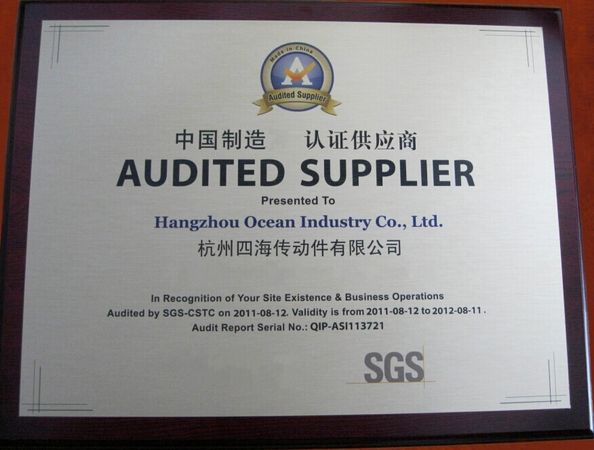
Certification

- I'm Online Chat Now
Company News
Mechanical Component Fracture Failure and Full-Cycle Anti-Fracture Control Technology
In the full-scenario operation, design and manufacturing link of industrial mechanical equipment, various structural parts, load-bearing core components and transmission key parts will inevitably face diversified failure risks in the whole service cycle. Common conventional failure forms include surface abrasive wear, electrochemical corrosion of metal matrix, plastic creep deformation under long-term static load, low-cycle fatigue aging of joint parts and local gap loosening of assembly structures. Different from these mild, progressive and early-warning identifiable conventional failures, structural fracture of mechanical parts is unanimously defined by the mechanical design industry as the most dangerous, most destructive and consequence irreversible extreme failure mode, which is also the core hidden danger that all front-line equipment operation and maintenance engineers, mechanical structural designers and process manufacturing technicians focus on preventing and controlling throughout the whole working process.
Mechanical fracture refers to the overall separation or local cracking and breaking of metal materials, alloy structural parts and non-metal high-strength mechanical components under the combined action of cyclic alternating load, instantaneous impact load, extreme temperature difference environment, internal material residual stress and external chemical erosion. The prominent characteristic of this failure mode is sudden outbreak without obvious early warning signs in the early stage. Most brittle fracture and high-load instantaneous overload fracture will occur in a few seconds. There is no gradual aging change of component surface and no gradual decline of equipment operating parameters, so it is difficult to capture and judge in advance through daily equipment routing inspection, conventional parameter monitoring and simple manual detection means. Once the fracture failure occurs in the core operating link of mechanical equipment, it will directly lead to the overall shutdown and functional paralysis of the complete mechanical unit. On-site supporting transmission structures, connecting support components and power output accessories will be linked to fail in a large area, triggering secondary equipment collision, structural extrusion and mechanical component falling accidents on the industrial production site.
From the perspective of industrial safety production and engineering economic benefit assessment, the hazard chain caused by mechanical fracture failure covers multiple dimensions of personnel safety, property loss, production efficiency and follow-up maintenance cost. In terms of on-site safety protection, sudden fracture of large-scale load-bearing mechanical parts is extremely easy to induce major safety accidents such as equipment collapse, component splashing and operating mechanism runaway, which directly endangers the personal life safety of on-site operators, patrol supervisors and post maintenance personnel, and brings irreversible personal injury risks to the front-line working team. In terms of industrial operation benefits, unplanned shutdown caused by fracture failure will interrupt the continuous production rhythm of automated assembly lines, intelligent processing workshops and heavy industrial production units, resulting in a large number of semi-finished product scrapping, production task delay and order delivery delay. At the same time, fractured core components cannot be repaired and reused, and all of them need to be replaced with new customized parts. Combined with the subsequent equipment debugging, mechanical calibration, stress detection and trial operation links, the overall later-stage rectification and maintenance cost is far higher than the daily maintenance cost of conventional wear and tear failures.
At present, in the standardized system of modern mechanical design engineering, anti-fracture systematic design has been listed as the primary core design index parallel to structural strength verification, rigidity optimization and stability calibration, and runs through the whole closed-loop link of mechanical product preliminary scheme demonstration, three-dimensional structural modeling, finite element stress simulation analysis, prototype trial production and processing, performance bench test, factory delivery inspection and later-stage on-site operation tracking. In view of the complex mechanism of mechanical fracture, professional engineers need to carry out targeted optimization and control from multiple key links. In the material selection stage of components, it is necessary to prefer high-toughness alloy materials with excellent internal compactness, low impurity content and strong resistance to crack propagation, and strictly screen raw materials to avoid using inferior metal blanks with natural internal micro-cracks and structural defects. In the structural optimization design stage, all sharp right-angle transitions, abrupt cross-section changes and local stress concentration grooves in the force-bearing area are optimized with rounded corner transition and streamlined integration design, so as to evenly disperse the local high stress of the components and avoid stress accumulation-induced delayed fracture under long-term cyclic load.
In the mechanical processing and manufacturing stage, standardized precision turning, milling and grinding processes are adopted, combined with professional heat treatment processes such as overall quenching and local tempering, to eliminate welding residual stress and cutting machining stress inside the components, improve the overall structural uniformity of materials, and block the initial germination conditions of internal micro-fractures. In the daily operation and post-maintenance management stage of equipment, equip on-site key equipment with professional non-destructive testing instruments such as ultrasonic flaw detectors and magnetic particle inspection equipment, regularly carry out internal crack hidden danger detection for high-risk load-bearing parts, record stress change data of components in real time, reasonably control the upper limit of equipment operating load and continuous working time, and avoid overload operation and long-term fatigue service of mechanical units.
In the field of domestic mechanical anti-fracture professional technology, a classic professional monograph with strong practical guidance and enduring technical value has been widely used in industrial design institutes, mechanical manufacturing enterprises and vocational skills training colleges for a long time. The professional book Anti-Fracture Design, compiled by senior mechanical engineering expert Wu Qingke and officially published by China Machine Press in the 1980s, focuses on the actual working conditions of various industrial mechanical equipment, systematically sorts out the internal mechanical mechanism of different types of fracture such as brittle fracture, fatigue fracture, overload fracture and temperature difference fracture, summarizes a complete set of practical anti-fracture structural design formulas, material performance screening standards and on-site fault prevention operation specifications. Although the book has been published for decades, the core basic theories, on-site practical design methods and engineering prevention experience summarized in it are completely compatible with the current intelligent mechanical equipment design and heavy industrial equipment operation scenarios, and are still essential reference materials for every professional mechanical designer and equipment safety management personnel to carry out anti-fracture optimization work.
To sum up, mechanical component fracture is the top hidden danger threatening the safe and stable operation of industrial mechanical equipment. All enterprises and engineering teams must attach great importance to anti-fracture full-cycle management work, rely on standardized design specifications, high-quality raw material guarantee, precise processing technology control and scientific daily inspection and maintenance, fully eliminate the risk of fracture failure, effectively protect the life safety of on-site employees, stabilize the continuous and efficient production order of industrial workshops, and reduce unnecessary equipment maintenance and property loss, so as to lay a solid safe technical foundation for the long-term stable operation of the whole industrial mechanical system.
Pub Time : 2026-05-18 09:10:37
>> News list
Contact Details
Hangzhou Ocean Industry Co.,Ltd
Contact Person: Mrs. Lily Mao
Tel: 008613588811830
Fax: 86-571-88844378