 |
|
|
|
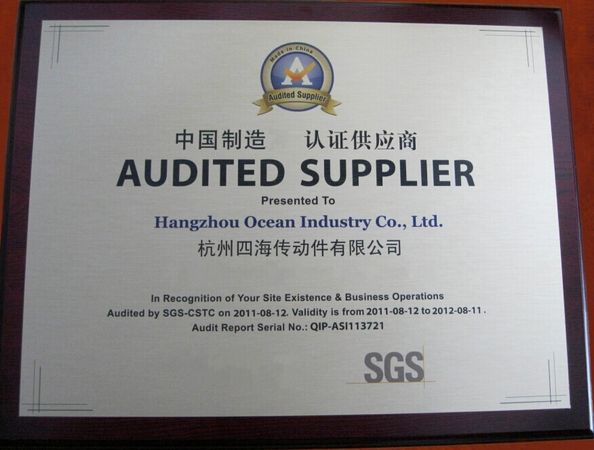
Certification

- I'm Online Chat Now
Company News
NVH Sources and Systematic Mitigation Strategies for High-Speed Gearboxes
NVH Sources and Systematic Mitigation Strategies for High-Speed Gearboxes
High-speed gearboxes, defined as those with a linear speed exceeding 25m/s or a rotational speed of several thousand RPM, serve as the core power transmission component in high-speed industrial fields such as energy, aerospace and high-speed locomotives. Their noise, vibration and harshness (NVH) performance directly determines the reliability, service life and overall performance of the entire equipment. The NVH issues of high-speed gearboxes are prominent due to complex dynamic behaviors and multi-physical field coupling effects. To address these challenges, it is essential to thoroughly understand the excitation sources and implement systematic avoidance and optimization strategies.
1 Core Sources of Noise and Vibration in High-Speed Gearboxes
The excitation sources leading to noise and vibration in high-speed gearboxes can be categorized into two main types: internal excitations and external excitations and system responses, with internal excitations being the primary cause of vibration and noise.
1.1 Internal Excitations: The Primary Source of Vibration and Noise
Internal excitations refer to the dynamic forces generated by gear pairs during meshing, which are the fundamental drivers of NVH problems in high-speed gearboxes.
- Stiffness Excitation (Meshing Impact)
It stems from the time-varying meshing stiffness of gear pairs. The periodic change in the number of meshing teeth (alternating between single-tooth and double-tooth meshing) leads to periodic fluctuations in the comprehensive meshing stiffness. Even perfectly manufactured gears will generate vibration due to this phenomenon, and the periodic change is drastically amplified at high speeds.Characteristics: Generates vibration and noise at the Gear Mesh Frequency (GMF = number of teeth × rotational speed) and its higher harmonics (2×GMF, 3×GMF, etc.), which is the main source of the typical "whining" sound of high-speed gears.
- Error Excitation (Manufacturing and Installation Errors)
Perfect manufacturing and installation of gears are practically impossible. Key errors include pitch deviation, tooth profile/lead error and tooth surface roughness. Pitch deviation causes minor acceleration impacts during each meshing switch; tooth profile/lead error disrupts the ideal involute meshing, leading to meshing-in and meshing-out impacts and uneven load distribution; tooth surface roughness damages the oil film, resulting in high-frequency friction noise.Characteristics: Modulates stiffness excitation and generates sidebands around GMF and its harmonics (frequency: GMF ± n×shaft rotational speed). This presents a "comb-like" structure in the frequency spectrum and causes unsteady, "jittery" noise.
- Thermo-Elastic Deformation Excitation
At high speeds, substantial frictional heat and meshing power loss cause temperature rise and thermal deformation of gears. Meanwhile, huge centrifugal force leads to elastic deformation of gear geometry. These deformations alter the theoretical meshing position of gears and introduce additional dynamic excitations.
1.2 External Excitations and System Responses
External excitations are derived from the gearbox system and its connected components, while structural resonance acts as an amplifier of various excitations, further exacerbating NVH issues.
- Unbalance and Misalignment
Mass unbalance in high-speed rotating shafts and gears generates periodic centrifugal force; poor alignment between the motor and gearbox, as well as between the gearbox and load, produces additional bending moments and shear forces.Characteristics: Induces vibration at the shaft rotational speed and its multiples, which is the main source of low-frequency "rumbling" noise and jitter. Even minor unbalance can generate enormous centrifugal force at high speeds.
- Bearing Excitation
The periodic rolling of bearing elements on raceways, combined with manufacturing errors (e.g., waviness, roughness) and stiffness nonlinearity of bearings, generates a series of characteristic frequencies (e.g., cage frequency, rolling element passing frequency).Characteristics: Serves as a high-frequency vibration source with complex frequency components. It may couple with the gear meshing frequency, resulting in harsh, piercing noise.
- Lubricant Excitation
Severe churning loss occurs at high speeds. Lubricant is carried into the meshing zone by gear teeth, and the incompressibility of oil leads to the oil hammer effect and impact forces. Additionally, friction between oil and the high-speed rotating gear surface generates hydraulic noise.Characteristics: Produces broadband "hissing" or "roaring" noise.
- Structural Resonance
It is not an independent excitation source but an amplifier. Resonance occurs when the frequency of any excitation coincides with the natural frequency of gears, shafting or the gearbox housing, causing a dramatic amplification of vibration and noise amplitude by tens or even hundreds of times.Characteristics: A sudden sharp increase in vibration and noise levels at specific rotational speeds.
2 Systematic Mitigation and Optimization Strategies
Solving the NVH problems of high-speed gearboxes requires full-chain systematic control throughout the design, manufacturing, assembly, and operation & maintenance stages. Only by integrating measures across all stages can the adverse effects of various excitations be fundamentally reduced.
2.1 Design Stage: Root Cause Avoidance
The design stage is the key to minimizing NVH excitations, and core measures include macro-parameter optimization, precision gear modification, dynamic system design and structural optimization of the housing and supports.
- Macro-Parameter Optimization
- Contact Ratio: Maximize the transverse and axial contact ratios (for helical gears). A higher contact ratio means more teeth participate in meshing simultaneously and more stable meshing, effectively reducing the fluctuation amplitude of stiffness excitation (target: contact ratio > 2).
- Pressure Angle and Module: Adopt a smaller module and larger pressure angle (within strength limits) to increase tooth thickness, improve meshing stiffness and reduce deformation.
- Profile Shift Coefficient: Select a reasonable profile shift coefficient to optimize the sliding ratio, avoid undercutting and improve meshing performance.
- Gear Modification – The Most Critical Technology
It is the core method to compensate for errors and deformations and achieve smooth meshing, with two key types:
- Tooth Profile Modification: Slightly thin the tooth tip and root to compensate for bending deformation caused by loads and installation errors, realize a smooth transition from single-tooth to double-tooth meshing, and significantly reduce meshing-in and meshing-out impacts.
- Tooth Lead Modification (Crowning): Slightly convex the middle of the tooth width to compensate for shaft bending, torsional deformation and installation misalignment, ensure uniform load distribution in the middle of the tooth width and avoid edge contact due to stress concentration.
The precise calculation of modification amount and curve relies on advanced gear design software and accurate prediction of actual working condition loads.
- Pub Time : 2026-02-14 09:08:44 >> News list
Contact Details
Hangzhou Ocean Industry Co.,Ltd
Contact Person: Mrs. Lily Mao
Tel: 008613588811830
Fax: 86-571-88844378