 |
|
All Products
Transmission Spare Parts
(160)
Gear Racks
(161)
Conveyor Chains
(152)
Spiral Bevel Gear
(108)
Conveyor Parts
(113)
Gears and Pinions
(117)
Crown Wheel and Pinion
(113)
Automobile Spare Parts
(138)
Gearbox reducer
(127)
Sliding Gate Hardware
(127)
Sliding Gate Gear Rack
(324)
Industrial Sprockets
(170)
Motorcycle Sprockets
(106)
Motorcycle Chains
(110)
Belt Pulleys
(125)
Taper Lock Bush and Hub
(101)
Flexible Couplings
(107)
Rigid Couplings
(102)
Power Transmission Belts
(127)
Keyless Locking Assembly
(108)
PTO Drive Shafts
(115)
Adjustable Motor Base
(100)
Locking Shaft Collar
(10)
Car Bearings
(12)
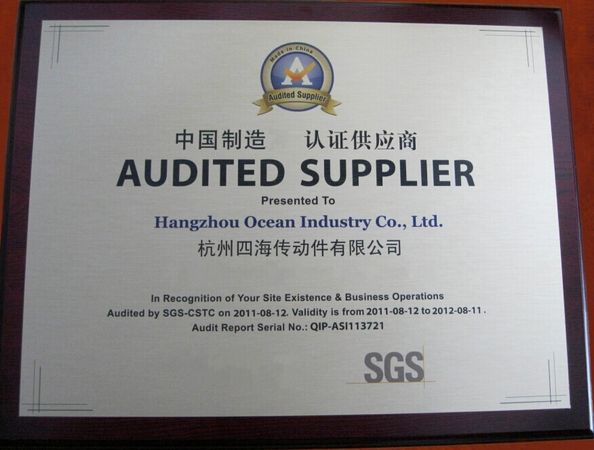
Certification

I am very satisfied with the services. Happy to create long term business relationship with your company.
—— Ashley Scott---USA
Thanks for the good quality, good design with reasonable price
—— Anna Diop---United Kingdom
Company News
Power Skiving: An Advanced Gear Machining Technology
In the field of gear manufacturing, traditional processes like hobbing, shaping, and grinding have long been dominant. However, power skiving, an innovative yet time-tested machining method, is gaining increasing traction in modern precision manufacturing due to its unique working principle and outstanding efficiency.
Core Machining Principle
Power skiving is a continuous indexing generative machining process. Its fundamental principle can be understood as: when a helical gear meshes closely with an internal gear (or another helical gear), continuous scraping is performed through additional cutting movements and high-speed rotation. Each tooth of the tool acts like a planer, gradually removing excess material from the workpiece blank during the continuous "meshing" process to form precise gear tooth profiles. This technology achieves machining accuracy of GB 5-6 grade or DIN 7 grade, with an efficiency more than twice that of hobbing and four times that of shaping.
Key kinematic elements include:
- Generative motion: A strict speed ratio is maintained between the workpiece and the tool, determined by their number of teeth (ωw/ωc = Ztool/Zworkpiece), ensuring the formation of correct tooth profiles.
- Cutting motion: High-speed rotation of the tool itself, serving as the main power source for metal removal.
- Axial feed motion: The tool moves along the workpiece's axis to machine the full tooth width.
- Radial feed motion: Used to control the cutting depth, typically removing the allowance from roughing to finishing in a single clamping.
- Shaft angle Σ: The angle between the tool axis and the workpiece axis, a critical parameter calculated as Σ = β₁ ± β₂ (β₁ = tool helix angle, β₂ = workpiece helix angle). For external gear machining, use "+" if the helix directions are the same and "-" if opposite; the sign rule is reversed for internal gear machining.
Tool Characteristics
Power skiving tools resemble shaping tools in appearance but differ entirely in design principle and tooth profile, requiring customization based on the machining mechanism.
- Precision requirements: High precision is mandatory, with tooth profile accuracy up to 2μm per DIN 1829 Class AA, and even 1.6μm for the industry-standard DIN AAA (not defined in DIN 1829).
- Materials: High-speed steel (HSS) is the mainstream choice, offering excellent toughness, wear resistance, regrindability, and cost-effectiveness. Cemented carbide is used for high-speed, high-efficiency machining (e.g., cast iron, powder metallurgy materials, or hard gear skiving) due to its longer tool life, though it comes with higher costs and manufacturing complexity.
- Coatings: Typically coated with wear-resistant and high-temperature-resistant PVD coatings such as TiAlN and AlCrN to significantly extend tool life and cutting speed.
- Structure: Solid tools are common for small to medium sizes, providing high rigidity and precision.
Machining Equipment
Power skiving requires specialized power skiving machines, essentially high-precision, high-dynamic-response CNC hobbing machines or dedicated machining centers. Core equipment requirements include:
- High synchronization: Extremely precise electronic synchronization between all machine axes (workpiece spindle C-axis, tool spindle B-axis, feed axes X/Y/Z) to ensure accurate generative motion.
- High rigidity: The machine structure must possess exceptional rigidity to suppress vibrations caused by continuous cutting and rapid cutting force changes, guaranteeing machining accuracy and surface quality.
- High spindle speed: Skiving tools require high cutting speeds (usually several hundred to several thousand meters per minute), demanding high-speed capabilities from the tool spindle.
Modern advanced power skiving machines often integrate multiple functions such as skiving, hobbing, shaving, and measurement, serving as multi-tasking machining centers.
Process Advantages and Challenges
Advantages
- Exceptional efficiency: Continuous cutting enables much higher material removal rates than shaping and hobbing.
- High precision: Consistently achieves GB/T 10095 5-6 grade accuracy or higher, with excellent tooth profile and lead accuracy.
- Flexibility: Quick adaptation to different gear specifications by changing tools and adjusting NC programs, ideal for multi-variety, small-batch production.
- Multi-process integration: On multi-tasking machines, processes like turning (outer diameter, end face), drilling, and skiving can be completed in a single clamping, reducing setup times and improving positioning accuracy and overall efficiency.
- Superior surface quality: Continuous scraping cutting delivers better surface roughness.
- Specialized for complex gears: Particularly suitable for machining multi-stage gears, stepped gears, and internal gears. In scenarios where shaping tools face spatial interference, skiving tools excel due to their compact structure.
Challenges
- High equipment investment: Specialized CNC power skiving machines are costly.
- High tool costs and complex design: Skiving tools involve intricate design and manufacturing processes, resulting in higher costs than standard hobs and shaping tools.
- Complex process debugging: Requires precise calculation and setup of numerous parameters (e.g., shaft angle, speed ratio, feed rate), demanding skilled programmers and operators.
- Strict machine stability requirements: Minor vibrations or synchronization errors directly affect tooth profile accuracy and tool life.
Application Scenarios
Leveraging its efficiency, precision, and flexibility, power skiving offers irreplaceable advantages in the following areas:
- Transmission gears: Classic applications include ring gears in planetary gear systems.
- New energy vehicle reducer gears: As a preferred process for internal gears and multi-stage gears in reducers, meeting high efficiency and lightweight requirements.
- Multi-stage and stepped gears: The only (or optimal) high-efficiency solution when axial space between gears is extremely limited, preventing access by other tools.
- High-precision internal gears: Gradually replacing shaping and broaching in high-precision, high-surface-quality internal gear applications such as high-end hydraulic pumps and aerospace transmission systems.
Pub Time : 2025-11-21 08:58:42
>> News list
Privacy Policy | China automatic gearbox Supplier. Copyright © 2014 - 2026 Hangzhou Ocean Industry Co.,Ltd. All Rights Reserved. Developed by ECER