 |
|
|
|
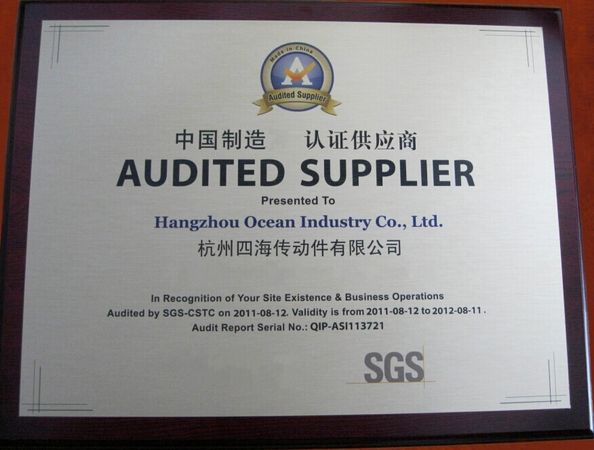
Certification

- I'm Online Chat Now
Company News
Power Skiving: The Core Technology Reshaping Gear Manufacturing Industry
Gears are the core components of mechanical transmission systems, known as the "skeleton and joint" of the industrial field. From small precision gears in household appliances to large heavy-duty gears in aerospace equipment, their machining precision, surface quality and production efficiency directly determine the performance, service life and operational stability of the entire mechanical system. In recent years, with the rapid development of high-end manufacturing industries such as new energy vehicles, industrial robots, and aerospace, the demand for high-precision, high-efficiency, and low-cost gear machining has become increasingly urgent. Against this background, Power Skiving (also referred to as skiving gear cutting) has emerged as a revolutionary high-speed continuous generating machining technology, overturning the long-term dominance of traditional gear machining methods such as gear hobbing, gear shaping, and gear grinding, and becoming a leading technology that drives the upgrading of the gear manufacturing industry.
1. Definition and Core Position of Power Skiving
Power Skiving is a advanced CNC gear cutting process that integrates high-speed cutting, precise motion control, and generating machining principles. It is essentially a continuous generating cutting method that uses a special skiving tool (similar to a hob but with a more optimized tooth profile and cutting angle) to machine gear teeth through synchronous and coordinated motion between the tool and the workpiece. Unlike traditional intermittent cutting technologies, power skiving achieves continuous meshing cutting, which not only improves machining efficiency but also ensures the consistency of gear profile accuracy and surface quality. As a key technology to realize "high efficiency, high precision, and low cost" in gear manufacturing, it has become an indispensable core process in the production of high-end gears, and is gradually replacing traditional processes in many fields.
2. Core Principle and Key Technical Parameters
The core of power skiving lies in the generating method and the precise synchronous control of multi-axis motion. The entire machining process relies on the electronic gearbox (EGB) of the CNC machine tool to realize the strict synchronous rotation of the cutting tool and the workpiece, while the tool performs axial feeding along the workpiece to complete the continuous cutting of the gear profile. Specifically, the principle can be broken down into the following key links:
2.1 Key Motion Axes and Their Functions
Power skiving requires a CNC machine tool with at least 5 linkage axes, and each axis undertakes a crucial role in ensuring machining accuracy and efficiency:
- C-axis: It is used to control the rotation and precise indexing of the workpiece. During the machining process, the C-axis needs to rotate synchronously with the B-axis (tool rotation axis) according to a strict transmission ratio, which directly determines the number of teeth of the machined gear and the accuracy of the tooth pitch.
- B-axis: Drives the skiving tool to rotate at high speed for cutting. The rotation speed of the B-axis is usually between 3000–10000 rpm, and the high-speed rotation ensures the continuity and sharpness of cutting, while reducing cutting force and tool wear.
- X-axis: Controls the radial feed of the tool, which is used to adjust the distance between the tool and the workpiece, and determine the tooth thickness and modulus of the gear. The precision of the X-axis feed directly affects the dimensional accuracy of the gear.
- Y-axis: Responsible for the lateral feed of the tool, which is mainly used to adjust the meshing position between the tool and the workpiece, ensuring the symmetry of the gear profile and avoiding tooth profile deviation.
- Z-axis: Realizes the axial feed of the tool along the workpiece. The feed speed of the Z-axis is usually between 50–200 mm/min, and the uniform axial feed ensures the consistency of the gear lead and crowning, and completes the machining of the entire gear tooth width.
2.2 Machining Process Details
In the actual power skiving process, the tool and the workpiece are in a state of continuous meshing like two meshing gears. Each cutting edge of the skiving tool scrapes the surface of the workpiece blank layer by layer, and the cutting chips are continuously discharged along the tool groove, forming a theoretically accurate involute gear profile. The key to the process lies in the precise matching of the transmission ratio between the B-axis and the C-axis: the transmission ratio is determined by the number of teeth of the tool and the number of teeth of the workpiece, and the CNC system controls the two axes to rotate synchronously through the electronic gearbox, ensuring that each tooth of the workpiece is accurately machined.
In addition, the selection of cutting parameters also has a crucial impact on the machining effect. Common key parameters include: cutting speed (usually 150–300 m/min), feed rate per tooth (0.05–0.2 mm/tooth), radial cutting depth (0.1–0.5 mm), and axial feed speed. Reasonable parameter setting can balance machining efficiency and surface quality, reduce tool wear, and improve production stability.
3. Unmatched Advantages Compared with Traditional Gear Machining Technologies
Compared with traditional gear machining methods such as gear hobbing, gear shaping, and gear grinding, power skiving has obvious advantages in efficiency, precision, process adaptability, and cost control, which is the core reason for its rapid popularization. The specific advantages are as follows:
3.1 Ultra-high Machining Efficiency
The biggest advantage of power skiving is its continuous cutting mode without idle stroke. Unlike gear shaping (intermittent cutting with reciprocating motion) and gear hobbing (semi-continuous cutting with intermittent indexing), power skiving realizes continuous meshing cutting between the tool and the workpiece, which greatly reduces the non-cutting time. In practical applications, the machining efficiency of power skiving is 5–10 times higher than that of gear shaping and 2–3 times higher than that of traditional gear hobbing. For example, machining a small internal gear with a modulus of 2 and a number of teeth of 30 takes about 10–15 minutes by gear shaping, while only 1–2 minutes by power skiving, which greatly shortens the production cycle.
3.2 High Machining Precision and Stable Quality
Power skiving adopts CNC multi-axis linkage control and electronic gearbox synchronous drive, which avoids the errors caused by mechanical transmission in traditional processes. The machined gear can stably reach DIN 5 accuracy level (equivalent to GB 5级), and the tooth profile error, tooth pitch error, and lead error are all controlled within a very small range. In some high-precision application scenarios, power skiving can even directly replace high-precision gear grinding, eliminating the grinding process and reducing the influence of grinding on gear surface quality (such as grinding burns).
3.3 Capable of Hardened Gear Finishing
One of the major breakthroughs of power skiving is its ability to directly machine hardened gear surfaces. After heat treatment, the hardness of the gear blank can reach HRC 58–62, and traditional gear shaping and hobbing cannot process such hardened workpieces, which can only be finished by gear grinding. However, power skiving can use special hardened steel cutting tools to directly perform finishing on hardened gears, realizing the process of "turning instead of grinding". This not only shortens the process flow by 30%–50% (eliminating the grinding process and related auxiliary processes), but also reduces the production cost by 20%–40% (saving grinding equipment investment and grinding tool consumption).
3.4 Strong Adaptability to Complex Gear Structures
Power skiving has strong adaptability to the structure of the workpiece, and can machine a variety of gears in one clamping, including internal gears, external gears, spur gears, helical gears, crowned gears, stepped gears, and multi-stage gears. Especially for closed/semi-closed internal gears without undercut grooves, traditional gear shaping and hobbing have insurmountable defects (the tool cannot enter the closed space for cutting), while power skiving can use a slender skiving tool to extend into the closed space for continuous cutting, solving the technical difficulty of machining complex internal gears. This advantage makes power skiving widely used in the machining of gearboxes for new energy vehicles and industrial robots.
3.5 Low Tool Wear and Long Service Life
The skiving tool used in power skiving has a special tooth profile design and is made of high-hardness materials (such as cemented carbide, CBN, etc.), which has good wear resistance. At the same time, the continuous cutting mode reduces the impact force on the tool, avoids the intermittent impact wear of traditional tools, and the service life of the tool is 2–3 times that of traditional gear shaping tools and hobbing tools. In addition, the tool change frequency is reduced, which further improves the production efficiency and reduces the tool cost.
4. Process Upgrade and Industrial Value of Power Skiving
The popularization and application of power skiving have not only changed the traditional gear machining process but also brought profound changes to the entire gear manufacturing industry, creating significant industrial value.
4.1 Process Flow Optimization
The traditional gear machining process is usually "rough machining (gear hobbing/gear shaping) → heat treatment → gear grinding → finishing". This process has the problems of long flow, high cost, and low efficiency. Power skiving optimizes the process into "rough machining (gear hobbing) → heat treatment → power skiving finishing", directly eliminating the gear grinding process. This not only shortens the process cycle but also reduces the energy consumption and equipment investment required for grinding, and avoids the quality problems such as grinding burns and cracks caused by grinding, improving the qualification rate of products.
4.2 Promoting the Upgrading of High-end Manufacturing
With the development of high-end equipment such as new energy vehicles, industrial robots, and aerospace engines, the requirements for gears are getting higher and higher—higher precision, higher strength, and lighter weight. Power skiving, driven by high-rigidity machine tool structure, direct-drive technology, and high-precision CNC control system, can adapt to the heavy-load cutting of hardened tooth surfaces and meet the high-precision requirements of high-end equipment. For example, in the field of new energy vehicles, the gearbox gear requires high precision and high efficiency to reduce energy loss and improve driving comfort; power skiving can perfectly meet these requirements, becoming a core process for the production of new energy vehicle gearboxes.
4.3 Reducing Production Costs and Improving Market Competitiveness
By optimizing the process flow, improving machining efficiency, and reducing tool consumption, power skiving can significantly reduce the production cost of gears. For enterprises, reducing production costs while ensuring product quality can greatly improve their market competitiveness. Especially in the global gear market with fierce competition, power skiving has become an important means for enterprises to gain competitive advantages. At the same time, the popularization of power skiving also promotes the upgrading of related supporting industries, such as the development of high-precision skiving tools, high-rigidity CNC machine tools, and advanced cutting fluids.
5. Application Fields and Future Development Trends
5.1 Main Application Fields
At present, power skiving has been widely used in various high-end manufacturing fields, and its application scope is still expanding. The main application fields include:
- New Energy Vehicles: Machining of gearbox gears, drive motor gears, and reducer gears. The high efficiency and high precision of power skiving can meet the mass production needs of new energy vehicles and the requirements of energy conservation and emission reduction.
- Industrial Robots: Machining of precision gears in robot joints and reducers (such as harmonic reducers, RV reducers). The high precision and good surface quality of power skiving can ensure the flexibility and positioning accuracy of robot movement.
- Aerospace: Machining of small and medium-sized precision gears in aero-engines, aircraft landing gear, and other components. Power skiving can meet the high precision and high reliability requirements of aerospace gears.
- Industrial Machinery: Machining of gears in machine tools, reducers, pumps, and valves. The strong adaptability of power skiving to complex structures can solve the machining problems of various special gears.
- Medical Equipment: Machining of precision gears in medical devices (such as medical robots, diagnostic equipment). The high precision and clean cutting of power skiving can meet the strict requirements of medical equipment.
5.2 Future Development Trends
With the continuous progress of CNC technology, material science, and cutting tool technology, power skiving will continue to develop in the direction of higher precision, higher efficiency, and more intelligence, and its application fields will be further expanded. The main development trends are as follows:
- High-precision and Ultra-high-speed Development: With the improvement of CNC machine tool rigidity and motion control precision, the machining accuracy of power skiving will be further improved to DIN 4 or even higher levels, and the cutting speed will be increased to 500 m/min or more, further improving machining efficiency.
- Intelligent Development: Integrating technologies such as industrial Internet, big data, and artificial intelligence, realizing real-time monitoring of cutting parameters, tool wear, and workpiece quality during the power skiving process, and automatically adjusting parameters to optimize the machining process, improve production stability, and reduce manual intervention.
- Expansion of Application Scope: With the development of cutting tool materials and process technology, power skiving will gradually be applied to the machining of large gears (with a diameter of more than 1 meter) and special materials (such as titanium alloys, high-temperature alloys), breaking through the current application limitations.
- Integration of Multiple Processes: Integrating power skiving with other processes (such as turning, milling, drilling) on a single machine tool, realizing "one-stop" machining of gear parts, further shortening the production cycle and improving production efficiency.
6. Conclusion
Power skiving, as a revolutionary gear machining technology, has overturned the traditional gear manufacturing mode with its ultra-high efficiency, high precision, strong adaptability, and cost advantages. It has become the core technology driving the upgrading of the gear manufacturing industry and plays an important role in promoting the development of high-end manufacturing fields such as new energy vehicles, industrial robots, and aerospace. With the continuous progress of related technologies, power skiving will continue to develop and innovate, and its application will become more and more extensive, defining the future development direction of the gear manufacturing industry.
Pub Time : 2026-04-02 10:00:33
>> News list
Contact Details
Hangzhou Ocean Industry Co.,Ltd
Contact Person: Mrs. Lily Mao
Tel: 008613588811830
Fax: 86-571-88844378