 |
|
|
|
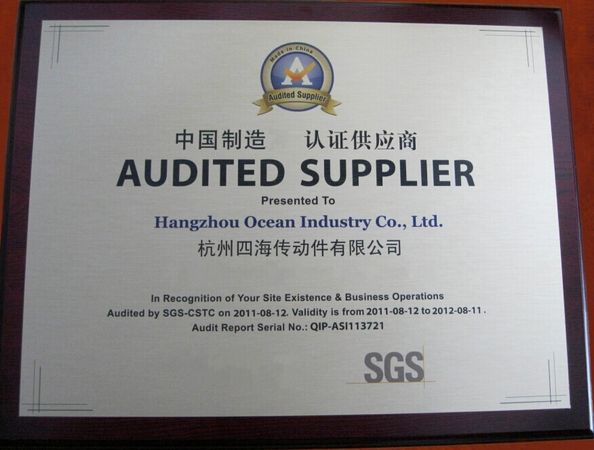
Certification

- I'm Online Chat Now
Company News
Quenching and Tempering: How Heat Treatment Determines Gear Life and Performance
In the world of mechanical transmission, gears are undoubtedly the "powerhouse soul." From precision timepieces to giant wind turbines, from high-speed automotive gearboxes to heavy-duty mining machinery, the reliability and service life of gears directly dictate the performance and operational cycle of the entire equipment. The core secret to endowing gears with high strength, wear resistance, and long service life lies in their final heat treatment process.
Heat treatment is not a simple "heating-cooling" procedure; it is a precise science that modifies the internal crystalline structure (metallographic structure) of steel by accurately controlling temperature, time, and medium to achieve desired properties. This article details several mainstream heat treatment methods, their process parameters, specific impacts on gear life, and application selection in engineering.

01 Core Heat Treatment Mechanisms Affecting Gear Life
Gear failure primarily manifests as pitting corrosion, scuffing, bending fatigue fracture at the root, and wear. Excellent heat treatment processes target these failure modes by enhancing key gear properties to extend service life:
- Tooth surface contact fatigue strength: Resistance to pitting (pockmarks) and spalling under cyclic contact stress.
- Tooth root bending fatigue strength: Resistance to fatigue cracking and fracture at the root under cyclic bending stress.
- Surface hardness and wear resistance: Ability to resist material loss on the tooth surface under sliding and rolling friction.
- Core toughness and strength: Providing tough support for the hard surface layer to prevent tooth crushing or fracture under heavy loads.
Below is a detailed analysis of several key heat treatment processes:
1. Quenching and Tempering (Modulation Treatment)
- Process: Quenching + high-temperature tempering.
- Mechanism: Primarily targets core properties of gears, producing a tempered sorbite structure that balances high strength and good toughness. A strong, tough core acts like a building's foundation, providing solid support for subsequent surface hardening layers. Insufficient core strength can lead to plastic deformation of the hard surface layer under heavy loads, causing surface cracking or indentation.
- Contribution to life: Improves overall gear strength and toughness, especially tooth root bending fatigue strength, enabling gears to withstand significant impact loads. It is typically a pre-heat treatment (applied to blanks) for carburized and nitrided gears.
2. Surface Hardening (e.g., Induction Hardening, Flame Hardening)
- Process: Rapidly heats the gear surface to austenitizing temperature, followed by quick cooling to harden the surface while retaining the original core structure and properties.
- Mechanism: Forms a high-hardness martensite layer on the gear surface, significantly improving surface hardness and wear resistance. Induction hardening is widely used due to its fast heating rate, minimal deformation, and high efficiency.
- Contribution to life:
- Markedly enhances tooth surface contact fatigue strength and wear resistance, effectively resisting pitting and wear.
- Maintains core toughness, allowing gears to withstand moderate impact.
- Limitation: Steep hardness gradient with stress concentration at the interface between the hardened layer and core, potentially causing spalling of the hardened layer under extreme heavy loads.
3. Carburizing and Quenching
- Process: Heats and holds low-carbon steel gears (e.g., 20CrMnTi) in a carbon-rich medium to diffuse carbon atoms into the surface, followed by quenching and low-temperature tempering.
- Mechanism: The most widely used and comprehensive gear strengthening process, achieving the perfect combination of "hard surface and tough core":
- Surface layer: High-carbon martensite structure with exceptional hardness (HRC 58-62), wear resistance, and contact fatigue strength.
- Core: Low-carbon martensite or sorbite structure with high strength and good toughness.
- Significant residual compressive stress in the surface layer offsets tensile stress from external loads, greatly improving bending fatigue strength.
- Contribution to life: Comprehensively extends gear service life, especially suitable for high-load, high-impact, and severe friction applications (e.g., automotive gearboxes, rear axle gears). It is one of the most reliable processes for ensuring long gear life.
4. Nitriding
- Process: Heats gears (500-580℃) in a nitrogen-rich medium to diffuse nitrogen atoms into the surface, forming an extremely hard nitride layer.
- Mechanism:
- Ultra-high surface hardness (HV 800-1200) with excellent wear resistance and anti-scuffing performance.
- Minimal thermal deformation due to low processing temperature and no need for quenching.
- Improves fatigue strength and corrosion resistance.
- Contribution to life: Particularly suitable for precision gears, gears operating under high-wear, moderate-impact conditions, and those in high-temperature or corrosive environments.
- Limitation: Thin nitrided layer (0.1-0.8mm) results in lower load-bearing capacity than carburized gears, with poor impact resistance.
5. Carbonitriding
- Process: Simultaneously diffuses carbon and nitrogen atoms, combining the advantages of carburizing and nitriding.
- Mechanism: Integrates benefits of both processes: higher wear resistance and fatigue strength than carburizing, lower processing temperature with minimal deformation; deeper diffusion layer and better load-bearing capacity than nitriding.
- Contribution to life: An excellent alternative to carburizing, especially for medium-low carbon steel gears under moderate loads requiring wear resistance, fatigue resistance, and controlled deformation.
Pub Time : 2026-01-15 10:03:40
>> News list
Contact Details
Hangzhou Ocean Industry Co.,Ltd
Contact Person: Mrs. Lily Mao
Tel: 008613588811830
Fax: 86-571-88844378