 |
|
|
|
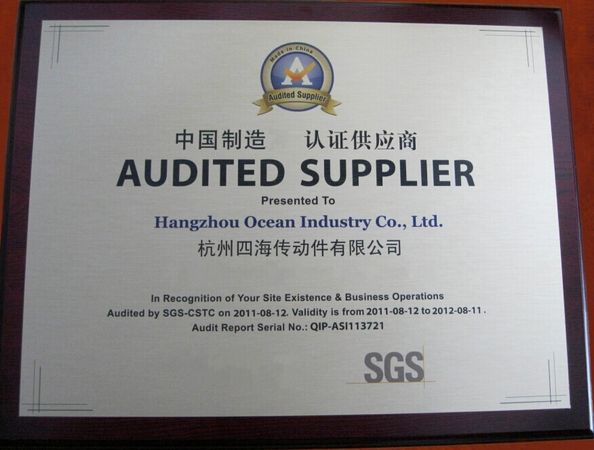
Certification

- I'm Online Chat Now
Company News
Solution Treatment vs. Annealing: A Comprehensive Guide to Heat Treatment for Austenitic Stainless Steel Bars
Solution Treatment vs. Annealing: A Comprehensive Guide to Heat Treatment for Austenitic Stainless Steel Bars
In the manufacturing and application of austenitic stainless steel bars, including mainstream grades such as 304, 316L and 321, heat treatment acts as a core procedure that directly determines the material’s microstructure, mechanical performance and service life. Among all commonly adopted thermal processes, solution treatment and annealing are frequently confused by manufacturers, purchasers and on-site operators. Many people mistakenly regard these two processes as interchangeable heat treatment methods for stainless steel. In fact, they differ fundamentally in heating parameters, cooling regimes, metallurgical mechanisms, final material properties and applicable working scenarios. Improper substitution between them will lead to severe performance degradation, premature failure of finished components and massive economic losses. This article elaborates on the two processes in detail from basic definitions, working principles, technical parameters, practical failure cases, core distinctions, common confusion causes and professional procurement inspection standards, aiming to help industry practitioners fully understand and correctly apply these two critical heat treatment technologies.
1. Overview and Core Working Principles
Austenitic stainless steel features a stable face-centered cubic (FCC) austenite structure at room temperature. It cannot be hardened via conventional quenching and tempering like carbon steel, so heat treatment for this material mainly focuses on regulating internal precipitates, relieving residual stress, adjusting hardness and optimizing corrosion resistance. Solution treatment and annealing serve completely different functional goals and follow distinct metallurgical rules.
1.1 Solution Treatment
Solution treatment, also known as solution annealing, is the standard and mandatory heat treatment for austenitic stainless steel products that require excellent corrosion resistance. Its core metallurgical principle is to fully dissolve chromium carbide precipitates, which are inevitably generated during hot rolling, cold working, welding and other production procedures, back into the uniform austenite matrix through high-temperature heating. Subsequent rapid cooling locks this homogeneous solid solution structure permanently, preventing chromium carbides from re-precipitating during the cooling stage.
Standard process flow and detailed parameters:
Workpieces are heated uniformly to a high temperature range of 1050°C to 1150°C. The holding time is determined by the thickness of stainless steel bars: the industry standard is 30 minutes for every 25 mm of material thickness. Sufficient holding time guarantees thorough dissolution of chromium carbides and uniform distribution of alloy elements including chromium and carbon inside the metal. Once the heat preservation phase is completed, the workpieces must be immediately transferred to the water tank for forced water quenching. The cooling rate is strictly required to reach 50°C per second or higher.
After standard solution treatment, the stainless steel bar presents a stable single-phase austenite microstructure. Its surface hardness is maintained at HRC 18 to HRC 22. Since chromium elements are evenly distributed in the matrix without local chromium depletion caused by carbide precipitation, the material achieves optimal overall corrosion resistance, effectively resisting pitting corrosion, intergranular corrosion and chemical erosion. Meanwhile, qualified solution-treated austenitic stainless steel is non-magnetic or weakly magnetic, which meets the usage requirements of most industrial equipment. This process is tailor-made for finished stainless steel components that are directly put into service.
1.2 Annealing for Stainless Steel
Annealing is a general term for a series of low-to-medium temperature heat treatment processes, which is mainly designed to soften metal materials and eliminate internal residual stress. For stainless steel production, it is divided into two mainstream types: full annealing and stress relief annealing, with separate process parameters and application directions.
-
Full AnnealingThis is the most easily confused process with solution treatment. The heating temperature is controlled at 850°C to 900°C, far lower than the temperature required for solution treatment. After heat preservation, workpieces are retained inside the heating furnace for natural slow cooling, with the cooling speed strictly limited to 50°C per hour or below. The primary purpose of full annealing is to reduce the hardness of stainless steel (final hardness ranges from HRC 15 to HRC 18), significantly improve ductility and plasticity, and remove work hardening generated during cold processing. It prepares semi-finished stainless steel bars for subsequent deep processing such as cold drawing, cold heading, stamping and bending.The biggest hidden danger of full annealing lies in its slow cooling process. The temperature range of 450°C to 850°C is defined as the sensitization temperature zone for austenitic stainless steel. When the material cools slowly across this interval, chromium carbides will have sufficient time to precipitate and accumulate along grain boundaries. This phenomenon leads to severe chromium depletion in the areas surrounding grain boundaries, greatly weakening the material’s ability to resist corrosion and resulting in a high risk of intergranular corrosion.
-
Stress Relief AnnealingAs a low-temperature annealing process, its heating temperature is only 300°C to 400°C. After short-time heat preservation, workpieces are cooled naturally in the air. This process does not change the basic hardness and microstructure of stainless steel. Its core function is to eliminate residual stress produced by mechanical cutting, welding, assembly and other procedures, so as to prevent finished parts from deforming, warping or cracking during long-term service. Stress relief annealing will not cause obvious carbide precipitation and has a relatively minor impact on corrosion resistance.
2. Practical Failure Case Caused by Misused Heat Treatment
The consequences of replacing solution treatment with full annealing are extremely severe for stainless steel applied in corrosive environments. A typical industrial failure case fully reflects the risks of non-standard heat treatment:
A manufacturing enterprise purchased 5 tons of 304 stainless steel hexagonal bars and processed them into fasteners for chemical pipeline systems. In actual operation, these fasteners failed completely in less than two months, accompanied by extensive pitting on the surface and obvious intergranular cracks inside the structure. After professional inspection and analysis, the root cause was confirmed: the raw material supplier adopted full annealing at 850°C with furnace cooling instead of the required solution treatment above 1050°C with water quenching.
During the slow cooling of full annealing, a large number of chromium carbides precipitated along the grain boundaries of the 304 stainless steel bars. The chromium-poor zones near grain boundaries lost corrosion resistance rapidly under the erosion of chemical media in the pipeline. The entire batch of 5 tons of stainless steel bars and processed fasteners had to be scrapped, bringing a direct economic loss of more than 60,000 RMB to the purchaser. This case is a typical warning for the industry: for 304 and 316L austenitic stainless steel used in chemical, marine, food and other high-corrosion scenarios, the two heat treatment processes cannot be substituted arbitrarily.
3. Detailed Comparative Analysis of Two Heat Treatment Processes
The table below summarizes the differences between solution treatment and full annealing from multiple key dimensions, presenting their distinctions more intuitively:
| Comparison Items | Solution Treatment | Full Annealing |
|---|---|---|
| Heating Temperature | 1050°C – 1150°C | 850°C – 900°C |
| Cooling Method | Water quenching (rapid cooling) | Furnace cooling (ultra-slow cooling) |
| Standard Cooling Rate | ≥ 50°C/s |
Pub Time : 2026-06-15 10:31:21
>> News list
Contact Details
Hangzhou Ocean Industry Co.,Ltd
Contact Person: Mrs. Lily Mao Tel: 008613588811830 Fax: 86-571-88844378 |