 |
|
|
|
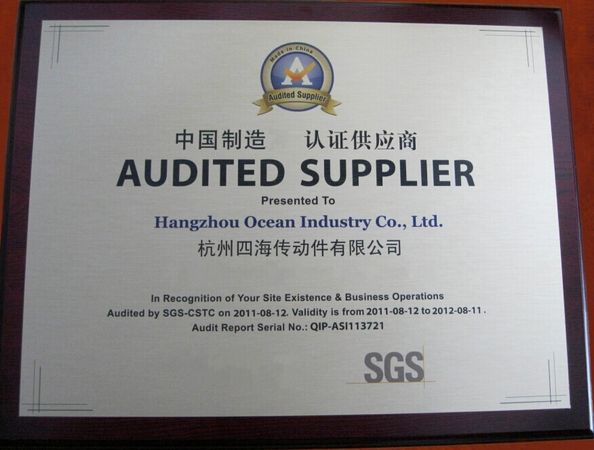
Certification

- I'm Online Chat Now
Company News
Splash Lubrication Analysis for High-Speed Gear Transmissions Under Cryogenic Conditions Source
Low-temperature environments (≤-20°C, or -40°C to -60°C in extreme conditions) present significant challenges for high-speed gear transmission lubrication. Under these conditions, lubricating oil viscosity increases dramatically, while high-speed gears generate intense centrifugal forces and strong air flow disturbances. These combined factors degrade the core characteristics of splash lubrication, making gear tooth surface failure likely.
This article provides a comprehensive technical analysis covering the fundamental mechanisms, key parameters, analytical methods, and practical engineering optimizations for cryogenic splash lubrication systems.
Part 1: Core Characteristics and Mechanisms
The Fundamental Problem
The core issue in cryogenic splash lubrication is the coupling imbalance between high-viscosity lubricating oil and the hydrodynamic characteristics of high-speed gears. This manifests through several interconnected mechanisms.
1. Viscosity-Temperature Sensitivity and Oil Film Impact
Lubricating oil viscosity follows the Arrhenius equation. At -40°C, viscosity increases by 10 to 100 times compared to room temperature (25°C), and some oils may even solidify or separate.
Negative Impacts:
Dramatic reduction in flowability — Oil becomes difficult to splash and atomize, leading to oil starvation and dry friction on gear tooth surfaces
Uneven oil film formation — Under high centrifugal forces, thick and uneven oil films on tooth surfaces are easily torn apart, preventing stable elastohydrodynamic lubrication and accelerating contact fatigue
2. Flow Field Distortion and Two-Phase Flow Problems
High-speed gears (line velocity > 20 m/s) generate strong air flow barriers that combine with high-viscosity oil to create complex gas-liquid two-phase flow:
Problem Mechanism Consequence
Air barrier effect Air flow prevents oil spread Thin and uneven oil film on tooth surfaces
Bubble entrainment Oil splashing entrains air bubbles Bubble collapse in meshing zone causes cavitation, reducing oil film load capacity
Vortex formation Oil flow lag at tooth tip and root Eddy currents reduce lubrication efficiency
3. Churning Torque and Power Loss Surge
Low temperature and high viscosity cause dramatic increases in oil churning resistance and viscous losses:
Condition Power Loss Increase
Churning torque at cryogenic temps 2 to 5 times compared to room temperature
Speed range: 5000-15000 r/min Total loss increase of 100% to 200%
The Vicious Cycle:
Low Temperature → High Viscosity → Increased Power Loss → Oil Temperature Fluctuation → Unstable Lubrication → Startup Difficulty / Gearbox Overheating
4. Oil Film Failure Mechanism Under Cryogenic Conditions
Unlike room temperature scenarios, the failure mechanism at low temperatures differs fundamentally:
Failure Mode Mechanism
Supply mismatch Oil flow lag prevents adequate oil supply to meshing zone; elastohydrodynamic oil film struggles to form and collapses easily
Centrifugal-viscous force imbalance Higher speed increases centrifugal force proportion; oil film becomes thin with reduced coverage area, leading to metal-to-metal contact and adhesive wear
Part 2: Quantified Key Parameter Effects
Based on CFD simulations and cryogenic experiments (-40°C to 0°C, 5000-15000 r/min, immersion depth 0.5-2.5 times module), the following parameter effects have been quantified:
Parameter Impact Summary
Parameter Tooth Surface Oil Volume Fraction Churning Torque Loss Core Mechanism
Gear Speed ↑ -30% to -60% +50% to +200% Centrifugal force and air barrier intensify; viscous drag force increases with speed squared
Immersion Depth ↑ +10% to +30% +5% to +20% Increased oil supply but slight viscosity drag increase; effect weaker than speed
Oil Temperature ↓ -40% to -70% +100% to +300% Viscosity increases exponentially; flowability and lubricity deteriorate
Oil Viscosity ↑ First increases, then decreases (optimal range exists) Continuously increases Optimal viscosity at -40°C: 1000-5000 mm²/s — Low viscosity oil is easily thrown off; high viscosity oil has poor flowability
Gear Module ↑ +5% to +15% +10% to +30% Improved splash capacity but increased contact area and drag
Key Conclusions
Speed is the dominant factor. Oil viscosity must be matched to low-temperature operating conditions — more is not always better.
Part 3: Analysis Methods
1. Numerical Simulation (Primary Method)
Core Models and Techniques
Technique Application Notes
VOF (Volume of Fluid) Multi-phase Model Tracks gas-liquid interface, captures oil film and bubbles Combine with realizable k-ε turbulence model for improved accuracy
Dynamic Mesh Technology Sliding/overset grids simulate gear rotation Enhances calculation precision
MPS/SPH Particle Methods Handles strong nonlinear free surface flows MPS method shows better accuracy for churning torque prediction at high speeds
Viscosity-Temperature Coupling Model Incorporates Arrhenius equation Matches actual operating conditions
Simulation Workflow
Geometric Modeling → Mesh Generation → Boundary Condition Setup → Coupling Configuration → Computation → Post-processing (oil film thickness, torque, etc.)
2. Cryogenic Experimental Verification
Test System Components
Component Specification
Cryogenic Chamber -40°C to 0°C, ±1°C accuracy
High-Speed Gear Test Rig Variable speed, precise torque measurement
Measurement & Data Acquisition High-speed cameras (≥1000 fps), torque sensors, temperature probes
Core Testing Procedure
System Setup — Gear module: 2-5 mm; select cryogenic-grade oil
Measurement Parameters — Oil film thickness (±0.1 μm), high-speed video (≥1000 fps), torque, oil temperature
Testing Protocol — Orthogonal + single-factor experiments for simulation validation
Data Processing — Noise reduction and curve fitting; model deviation target: ≤10%
Part 4: Engineering Optimization Measures
1. Lubrication System Optimization
Lubricant Selection
Requirement Specification
Pour Point ≤ -40°C
Viscosity Index (VI) ≥ 140
Oil Type Synthetic oil recommended
Recommended Grades Aviation oils 4109/4050, polyalphaolefin (PAO) based
Optimal Viscosity at -40°C 1000-5000 mm²/s
Alternative ISO VG 68 or lower viscosity grades for cryogenic service
Additives Anti-foaming, anti-wear additives
⚠️ Warning Avoid GL-5 grade oils (may corrode copper alloys)
Immersion Depth and Speed Control
Parameter Recommended Value
Immersion Depth 1.5 to 2.0 times module
Startup Strategy Avoid full-speed cold start; implement graded speed ramp
Baffle Structures
Honeycomb-inspired Baffle Design achieves:
Tooth surface oil volume fraction increase: +68.46%
Churning torque reduction: 15% to 25%
2. Gear Structure and Surface Optimization
Oleophobic Coatings
Coating Type Effect
PTFE (Polytetrafluoroethylene) Churning torque reduction: 31.7% to 48.5%
DLC (Diamond-Like Carbon) Improved flowability, reduced drag
Tooth Surface Micro-textures
Micro-grooves or dimples: 50-100 μm width, 5-10 μm depth
Optimized tooth tip fillet radius — reduces bubble entrainment and impact losses
Flow Channel Optimization
Internal wall guide grooves — directs oil flow
Enlarged vent holes — reduces vortex formation and bubble retention, prevents cavitation
3. Operating Strategy Adjustments
Warm-Up Startup Procedure
Step Requirement
Initial Phase No-load or light-load operation
Speed Limit < 3000 r/min
Duration 5-10 minutes
Load Addition Only when oil temperature ≥ 0°C
Speed Derating Under Extreme Cold
Ambient Temperature Speed Reduction
Below -30°C 20% to 30% derating
All cryogenic conditions Avoid sudden load application
Maintenance and Monitoring
Item Frequency / Action
Oil Change Interval 1/2 to 2/3 of normal temperature interval
Oil Testing Regular viscosity and contamination checks
Gear Inspection Periodic tooth surface wear examination
Key Data Summary
Parameter Value / Range
Cryogenic Definition ≤ -20°C; extreme: -40°C to -60°C
Viscosity Increase at -40°C 10-100× compared to 25°C
High-Speed Gear Line Velocity Threshold > 20 m/s
Test Speed Range 5000-15000 r/min
Churning Torque Loss vs Room Temp 2-5×
Power Loss Increase 100%-200%
Optimal Viscosity at -40°C 1000-5000 mm²/s
Optimal Immersion Depth 1.5-2.0× module
Honeycomb Baffle Effect Oil volume +68.46%; torque -15% to -25%
PTFE/DLC Coating Effect Torque reduction 31.7%-48.5%
Warm-up Speed Limit < 3000 r/min
Warm-up Duration 5-10 minutes
Target Warm-up Oil Temperature ≥ 0°C
Speed Derating Below -30°C 20%-30%
Cryogenic Oil Change Interval 1/2 to 2/3 of normal interval
Conclusion
Cryogenic splash lubrication for high-speed gear transmissions requires careful consideration of the unique challenges posed by low temperatures. The fundamental issue is the coupling imbalance between dramatically increased oil viscosity and the hydrodynamic demands of high-speed operation.
Key Takeaways for Engineers:
Understand the mechanisms — Viscosity changes, flow field distortion, and power losses create interconnected challenges
Control the dominant factors — Speed is the primary driver of lubrication degradation; viscosity optimization is critical
Select appropriate lubricants — Low pour point, high viscosity index synthetic oils are essential
Implement proper startup procedures — Gradual warm-up prevents damage and extends equipment life
Consider structural modifications — Baffles, coatings, and optimized geometry significantly improve performance
Maintain vigilance — Shortened oil change intervals and regular monitoring are non-negotiable in cryogenic service
By applying these principles, engineers can design and operate high-speed gear systems that perform reliably even in the most demanding cryogenic environments.
Pub Time : 2026-05-14 08:53:26
>> News list
Contact Details
Hangzhou Ocean Industry Co.,Ltd
Contact Person: Mrs. Lily Mao
Tel: 008613588811830
Fax: 86-571-88844378