 |
|
|
|
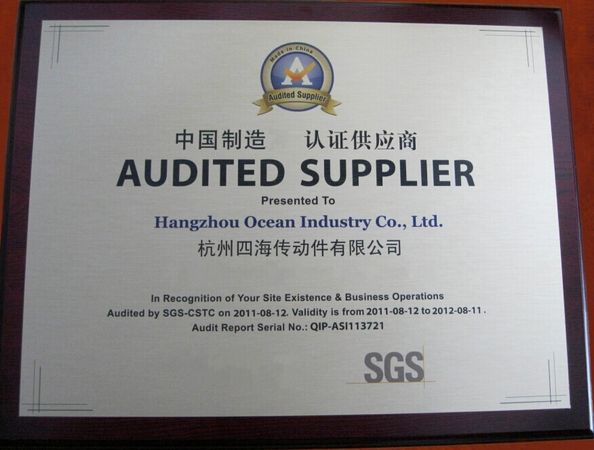
Certification

- I'm Online Chat Now
Company News
Structural Stress (Transformation Stress) of Steel
1. Definition
Structural stress, also named transformation stress, is a type of internal stress generated during steel heat treatment, especially quenching. It arises from asynchronous phase transformation and specific volume differences among microstructures. Mutual restriction of volume changes in different workpiece sections makes it a core cause of heat treatment deformation and cracking.
2. Essence & Generation Mechanism
Core Causes
Different phases in steel have distinct specific volume (volume per unit mass):
Austenite (γ) < Ferrite (α) < Pearlite < Bainite < Martensite (M)
The transformation from austenite to martensite brings a significant volume expansion of 3%~5%.
The surface and core of workpieces have inconsistent cooling rates, leading to asynchronous phase transformation and uncoordinated volume variation, which eventually induces structural stress.
Typical Quenching Process
Early cooling stage (Above Ms point)
The surface cools faster and reaches the Ms temperature first, transforming from austenite to martensite with volume expansion. The core remains austenite without expansion. Constrained by the core, the surface bears compressive stress while the core bears tensile stress.
Late cooling stage (Below Ms point)
The core cools down to the Ms point and transforms into martensite with volume expansion. The surface has become hard and brittle with limited deformation capacity. The expanding core squeezes the surface, causing stress reversal.
Final stress distribution: Surface tensile stress, Core compressive stress (opposite to thermal stress).
3. Main Influencing Factors of Structural Stress
Chemical Composition
Higher carbon content enlarges the specific volume difference of martensite and increases structural stress.
Alloy elements such as Cr, Ni and Mo lower the Ms temperature, expand the phase transformation temperature difference, improve hardenability, and intensify non-uniform section transformation, thus raising structural stress.
Workpiece Size & Shape
Larger section size, uneven thickness, more sharp corners and grooves aggravate asynchronous phase transformation, increasing structural stress and stress concentration. Small workpieces are dominated by structural stress, while large ones are dominated by thermal stress.
Process Parameters
Higher quenching temperature homogenizes austenite composition and coarsens grains, amplifying the volume effect of phase transformation and stress. Faster cooling rate below Ms and higher hardenability expand the phase transformation time difference and martensite transformation gradient, further boosting structural stress.
Initial Microstructure
Lamellar pearlite and banded structure cause uneven phase transformation and higher stress. Spheroidized annealing microstructure enables uniform phase transformation and reduces structural stress.
4. Summary
Structural stress is an inevitable result of asynchronous phase transformation and specific volume difference, featured by surface tension and core compression. It is the primary inducement of quenching deformation and cracking.
Control measures: Reduce the cooling rate in the Ms region, homogenize phase transformation, conduct timely tempering, and optimize workpiece structure and material selection. In production, it is necessary to balance structural stress and thermal stress to reconcile performance, deformation and cracking risks.
Pub Time : 2026-05-27 10:03:16
>> News list
Contact Details
Hangzhou Ocean Industry Co.,Ltd
Contact Person: Mrs. Lily Mao
Tel: 008613588811830
Fax: 86-571-88844378