 |
|
|
|
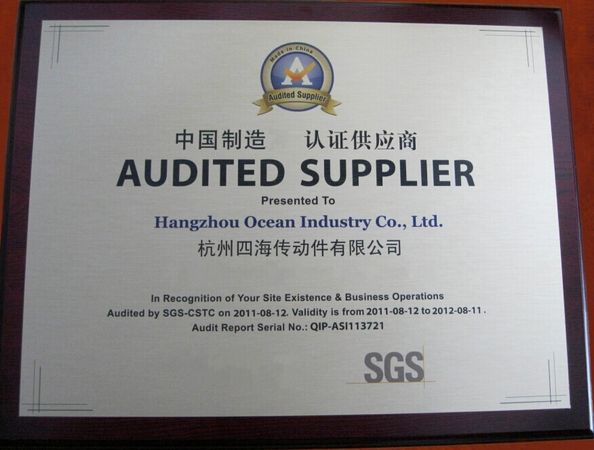
Certification

- I'm Online Chat Now
Company News
Three Core Functions of Reducers: Solve Motor Overheating & Equipment Shock Problems for Smooth Commissioning
Meta Description
What are the three core functions of industrial reducers? This professional guide explains speed reduction, torque amplification and shock buffering of gear reducers, with practical application cases for conveyor, lifting and automation machinery.
1. Introduction to Industrial Reducers
Industrial reducers are essential matching transmission components for motors, widely applied in assembly lines, lifting machinery, hydraulic transmission systems and automated rotary equipment. Most minor transmission failures on production lines stem from mismatched reducer models or speed ratios. This article simplifies complex theoretical formulas and combines real workshop cases to elaborate three irreplaceable core roles of reducers, assisting technicians in equipment selection, on-site commissioning and fault troubleshooting.
2. Three Key Functions of Industrial Reducers
2.1 Reduce Motor Rotational Speed to Match Working Conditions
Standard three-phase asynchronous motors come with fixed high rated speeds: 2-pole motors run at roughly 2800 r/min, while 4-pole models operate at about 1440 r/min. Directly driving loads with such high speeds will trigger many malfunctions, including material splashing out of conveyors, out-of-control start-stop actions, and dimensional errors in machining workpieces.
Reducers adopt multi-stage gear meshing structures to lower output speed stably, perfectly matching the low-speed operation demands of conveying, lifting and indexing equipment.
Comparison with frequency conversion speed regulation
Frequency converters reduce motor speed by adjusting power frequency, which will significantly weaken output torque under low-speed heavy-load conditions. By contrast, reducers realize mechanical hard speed reduction, maintaining stable torque at low speeds, which is why nearly all heavy-duty industrial equipment is equipped with reducers.
Practical Case
A 1440 r/min motor matched with a reducer with a 60:1 speed ratio delivers a final output speed of only 24 r/min, meeting the slow rotation requirement of heavy-duty turntables.
2.2 Amplify Output Torque for Heavy Load Operations
Under fixed power output, rotational speed and torque are inversely proportional. When a reducer cuts down output speed, it multiplies the output torque accordingly; larger speed ratios bring stronger load-bearing capacity.
The inherent torque of standalone motors is limited, which cannot support heavy conveying and lifting loads. Replacing the reducer with a higher speed ratio (without upgrading the motor) can effectively solve common issues such as stalling under load and abnormal overload noise of motors. The article cites a practical case of improper lifting machine selection to verify this core advantage.
2.3 Absorb Impact & Isolate Vibration to Protect Entire Machine Components
Instant impact loads will be generated during equipment startup, shutdown and forward-reverse switching. If the motor is directly connected to the load, vibration and torque fluctuations will be transmitted straight to the motor shaft, bearings and gears, leading to frequent component damage.
Internal gears and bearings inside the reducer can absorb instantaneous impact force layer by layer and block reverse vibration from transferring to the motor, greatly extending the service life of the whole set of equipment.
Practical Case
A rotary turntable with frequent forward-reverse switching suffered bearing damage every 3 months when directly connected to a motor. After installing a matched reducer, the bearings ran stably for over 2 years without replacement.
3. Suitable & Unsuitable Working Conditions for Reducers
3.1 Scenarios Where Reducers Are Mandatory
- Equipment requiring continuous low-speed operation
- Heavy-load transmission equipment
- Machinery with frequent start-stop and forward-reverse switching cycles
3.2 Scenarios Where Reducers Are Unnecessary
High-speed, light-load equipment with rare start-stop actions can adopt direct motor connection without additional reducers to cut procurement and maintenance costs.
4. On-site Troubleshooting Tips
When encountering common faults including abnormal rotating speed, insufficient power, excessive vibration and fast component wear, technicians should first check whether the reducer’s model and speed ratio match the actual working conditions, instead of disassembling the motor blindly for inspection.
Postscript
This guide focuses on practical workshop experience rather than obscure theoretical formulas, aiming to provide easy-to-use technical references for mechanical practitioners. Subsequent articles will cover reducer selection skills, abnormal noise troubleshooting, overheating fault handling and speed ratio matching methods. Follow us for more industrial machinery knowledge.
Pub Time : 2026-06-29 10:37:38
>> News list
Contact Details
Hangzhou Ocean Industry Co.,Ltd
Contact Person: Mrs. Lily Mao
Tel: 008613588811830
Fax: 86-571-88844378