 |
|
|
|
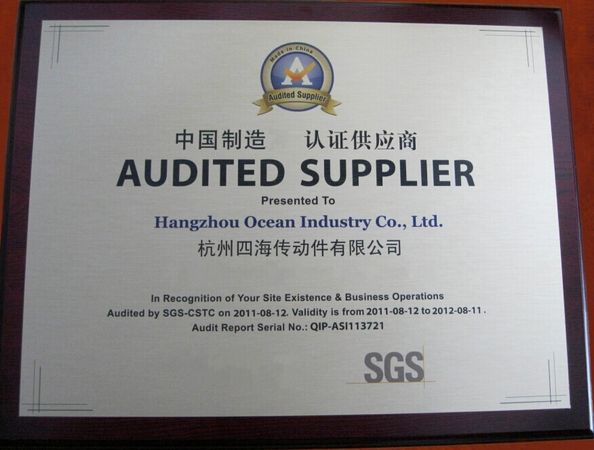
Certification

- I'm Online Chat Now
Company News
Two Pillars of Gear Surface Hardening: Carburizing Quenching vs Carbonitriding
Two Pillars of Gear Surface Hardening: Carburizing Quenching vs Carbonitriding
Gears serve as the core power transmission components in modern mechanical industry, widely applied in automotive gearboxes, wind turbines, construction machinery and other key equipment. Their performance directly determines the reliability, efficiency and service life of the entire mechanical system. Tooth surface wear and pitting are the most common failure modes of gears. To address these challenges, carburizing quenching and carbonitriding have become the two most important chemical heat treatment technologies for gear surface hardening, creating the ideal "hard surface and tough core" structure for gears and significantly enhancing their mechanical properties. This article deeply analyzes the principles, performance impacts and application selection of these two processes, providing a professional reference for the gear manufacturing industry.
Core Principles: The Art of Atomic Penetration
Carburizing Quenching
Carburizing quenching is a classic surface hardening process for low-carbon steel or low-carbon alloy steel gears (such as 20CrMnTi). The gear is placed in a carbon-rich medium (gas, solid or liquid) and heated to the austenitization temperature (typically 900-950℃). At such high temperatures, active carbon atoms diffuse into the gear surface, forming a high-carbon surface layer with a carbon concentration of 0.8%-1.2%, while the core remains the original low-carbon composition. After carburizing, the gear undergoes quenching treatment: the high-carbon austenite in the surface layer transforms into high-hardness martensite, and the low-carbon austenite in the core forms tough low-carbon martensite, bainite or pearlite. The final gear achieves a perfect structure with high surface hardness, excellent wear resistance, high core toughness and strong impact resistance.
Carbonitriding
Carbonitriding is an optimized process based on carburizing, which introduces nitrogen-containing substances (such as ammonia gas) into the treatment medium. The process is carried out at a relatively low austenitization temperature (820-880℃), where carbon and nitrogen atoms co-penetrate the gear surface. The addition of nitrogen brings two key synergistic effects: first, it expands the austenite region and lowers the phase transition point, enabling austenitization at lower temperatures and effectively reducing gear deformation during heat treatment; second, it inhibits the growth of austenite grains, refining the microstructure and forming fine nitrogen-containing martensite in the surface layer. Like carburizing quenching, carbonitriding also achieves the "hard surface and tough core" structure, but the surface layer is nitrogen-containing martensite with unique performance characteristics different from carbon martensite.
Impacts on Gear Tooth Surface Hardness
Hardness is the primary index for gears to resist plastic deformation and wear, and both processes can impart ultra-high surface hardness to gears, but there are significant differences in hardness gradient and hardening mechanism.
Surface Hardness and Gradient
Both carburizing quenching and carbonitriding can achieve a high surface hardness of 58-63 HRC, and the hardness of carbonitrided surface may be slightly higher in some cases. The key difference lies in the hardness gradient and hardening layer depth: the carburized layer is deep (0.5-2.0 mm) with a gentle hardness gradient, and the hardness transitions smoothly from the high-hardness surface layer to the core; the carbonitrided layer is relatively shallow (0.1-0.8 mm) with a steep gradient, and the hardness decreases rapidly from the surface to the core.
Essential Hardening Mechanisms
The hardness of carburized quenched gears mainly comes from high-carbon martensite formed by carbon diffusion and quenching. For carbonitrided gears, nitrogen atoms produce a solid solution strengthening effect on the martensite matrix while forming nitrogen-containing martensite, which not only ensures high hardness but also significantly improves the anti-temper softening performance of the surface layer. Even at a certain temperature, the carbonitrided layer can maintain high hardness, which is an obvious advantage over the carburized layer.
In practical applications, carburizing quenching is suitable for heavy-duty gears that require a deep hardening layer to withstand extreme contact stress and bending stress; carbonitriding, with its excellent anti-temper softening performance and high hardness, is more suitable for medium and light load gears with high precision and low deformation requirements.
Impacts on Gear Wear Resistance
Gear wear is a complex process including abrasive wear, adhesive wear and contact fatigue wear (pitting). The two surface hardening processes show different advantages in resisting different wear forms due to their structural characteristics.
Abrasive Wear Resistance
Abrasive wear is caused by the sliding of hard particles on the contact surface, and hardness is the key factor to resist this wear. Since both processes can achieve similar high surface hardness, their performance in pure abrasive wear conditions is comparable. However, the deep hardening layer of carburized quenched gears provides a more durable protective effect, so their service life is longer in harsh abrasive wear environments with severe surface material loss.
Adhesive Wear Resistance
Adhesive wear occurs when micro-protrusions on two contact surfaces form "cold welding" under pressure and then tear during relative movement. Carbonitriding has obvious advantages in resisting this wear: the nitrogen element in the carbonitrided layer significantly improves the anti-temper softening ability of the steel. During gear meshing, the tooth surface will generate instantaneous temperature rise due to friction, which may cause slight softening of the carburized layer and increase the tendency of material transfer and adhesion; the carbonitrided layer can maintain high hardness at this temperature, effectively reducing adhesive wear and anti-seizure performance.
Contact Fatigue Wear Resistance (Pitting Resistance)
Pitting is the most common failure mode of gears, manifested as pitting or spalling on the tooth surface, which is caused by the initiation and propagation of microcracks in the maximum shear stress zone under the surface layer. Carburizing quenching has unparalleled advantages in this aspect: its deep and gentle hardness gradient can effectively support the maximum shear stress inside the tough hardening layer, preventing microcracks from initiating and propagating at the interface between the hard and brittle surface layer and the soft core. For carbonitrided gears, the shallow hardening layer may cause the maximum shear stress to fall into the relatively soft area under the hardening layer when subjected to heavy load, leading to early spalling of the tooth surface.
Comprehensive Comparison and Application Selection
The performance characteristics of carburizing quenching and carbonitriding determine their different application scenarios. The following table comprehensively compares the key properties of the two processes:
|
Characteristics
|
Carburizing Quenching
|
Carbonitriding
|
|---|---|---|
|
Treatment Temperature
|
High (900-950℃)
|
Relatively low (820-880℃)
|
|
Main Penetrating Elements
|
Carbon (C)
|
Carbon (C) + Nitrogen (N)
|
|
Hardening Layer Depth
|
Deep (0.5-2.0 mm)
|
Shallow (0.1-0.8 mm)
|
|
Tooth Surface Hardness
|
58-63 HRC, high hardness
|
58-63 HRC, slightly higher hardness with better anti-temper softening performance
|
|
Deformation Control
|
Poor, large deformation
|
Good, small deformation
|
|
Wear Resistance Characteristics
|
Excellent contact fatigue (pitting) resistance, suitable for heavy load
|
Excellent adhesive wear resistance, good abrasive wear resistance
|
|
Core Performance
|
High toughness, strong impact resistance
|
Relatively low core strength due to low treatment temperature
|
|
Typical Applications
|
Automotive gearbox gears, heavy truck axle gears, wind power gears, large industrial gearboxes
|
Automotive synchronizer rings, motorcycle gears, machine tool gearbox gears, lightweight household appliance gears
|
Selection of Carburizing Quenching
Choose carburizing quenching when the gear is in the following working conditions: bearing extreme bending and contact loads (such as heavy-duty trucks and construction machinery); having extremely high requirements for pitting resistance; with large size that requires a deep hardening layer to ensure performance; and the heat treatment deformation can be corrected by subsequent gear grinding processes. At present, carburizing quenching is used in about 80% of gear production, especially in the manufacturing of heavy-duty and large-modulus gears, and the emerging vacuum carburizing technology further optimizes its performance by solving the problems of internal oxidation and uneven carburized layer.
Selection of Carbonitriding
Carbonitriding is the optimal choice for gears with the following characteristics: medium and light load but high rotational speed; strict requirements for dimensional accuracy and deformation control, hoping to reduce subsequent processing procedures; special need for anti-seizure and anti-adhesive wear performance (such as automotive synchronizer rings); and the need for lower treatment temperature to avoid austenite grain coarsening or conflict with other processes. Carbonitriding is widely used in the production of precision small and medium-sized gears due to its small deformation and high processing efficiency.
Conclusion
Carburizing quenching and carbonitriding are both excellent surface hardening technologies for improving gear performance, and there is no absolute superiority or inferiority between them—only the most suitable choice for specific application scenarios. Carburizing quenching is like a "heavy armored knight", relying on its deep hardening layer to provide unparalleled compressive strength and contact fatigue resistance, making it the first choice for heavy-duty, large-modulus gears and key components in harsh working conditions. Carbonitriding is like an "agile assassin", with its high hardness, high red hardness and low deformation characteristics, it excels in medium and light load, high precision and anti-adhesive wear application scenarios.
In actual production, engineers need to comprehensively consider the gear's service conditions, material cost, process control difficulty and subsequent processing capacity, and make a scientific choice between the two processes. With the continuous development of heat treatment technology, such as the popularization of vacuum carburizing and the optimization of carbonitriding medium, the performance of the two processes is constantly improved, providing more reliable technical support for the manufacturing of high-performance, long-life gear transmission systems. As the core technology of gear manufacturing, surface hardening technology will continue to innovate with the development of the mechanical industry, promoting the progress of the entire equipment manufacturing field.
Pub Time : 2026-02-24 09:47:04
>> News list
Contact Details
Hangzhou Ocean Industry Co.,Ltd
Contact Person: Mrs. Lily Mao
Tel: 008613588811830
Fax: 86-571-88844378