 |
|
All Products
Transmission Spare Parts
(170)
Gear Racks
(171)
Conveyor Chains
(162)
Spiral Bevel Gear
(113)
Conveyor Parts
(118)
Gears and Pinions
(122)
Crown Wheel and Pinion
(118)
Automobile Spare Parts
(143)
Gearbox reducer
(132)
Sliding Gate Hardware
(132)
Sliding Gate Gear Rack
(329)
Industrial Sprockets
(175)
Motorcycle Sprockets
(111)
Motorcycle Chains
(115)
Belt Pulleys
(130)
Taper Lock Bush and Hub
(106)
Flexible Couplings
(112)
Rigid Couplings
(112)
Power Transmission Belts
(137)
Keyless Locking Assembly
(118)
PTO Drive Shafts
(125)
Adjustable Motor Base
(110)
Locking Shaft Collar
(10)
Car Bearings
(12)
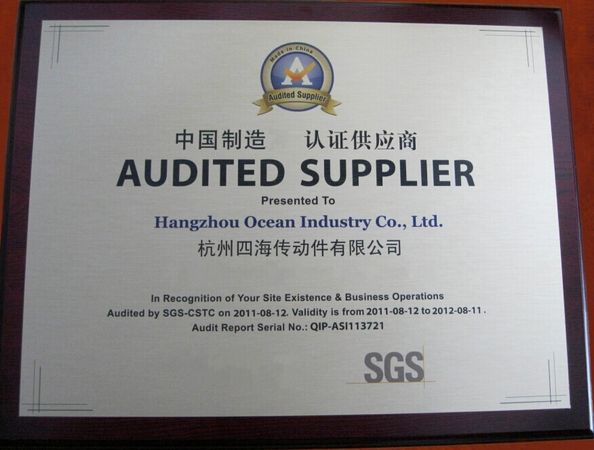
Certification

I am very satisfied with the services. Happy to create long term business relationship with your company.
—— Ashley Scott---USA
Thanks for the good quality, good design with reasonable price
—— Anna Diop---United Kingdom
Company News
Vibration and Equipment Fault Diagnosis
Introduction
In the industrial sector, machinery such as motors, fans, water pumps, compressors, and steam turbines is indispensable. Almost all these devices "shake" during operation, a phenomenon known as vibration. Vibration is not only a common physical occurrence but also a key window into understanding equipment health. This article explores the fundamentals of vibration, its relationship with equipment faults, and the core principles of vibration-based fault diagnosis, providing a foundational understanding for industry professionals.

What is Vibration?
Vibration refers to the repetitive motion of an object around a balanced position. It is ubiquitous in nature, daily life, and industrial settings:
- Natural Vibration: Examples include tree branches swaying in the wind, ground undulations during earthquakes, in-place vibration of air molecules when sound propagates, and high-speed flapping of hummingbirds' wings.
- Daily Life Vibration: Common instances are phone vibrations for incoming calls, shaking of washing machines during dehydration, jolts of vehicles on bumpy roads, swaying of swings, and vibration of plucked guitar strings.
- Mechanical Equipment Vibration: Industrial machinery consists of rotating and moving components like motor rotors, bearings, gears, and couplings. During operation, factors such as rotational inertia, friction, eccentricity, or assembly errors cause periodic shaking—known as mechanical vibration. Under normal conditions, this vibration is regular and minimal; however, faults like component wear, imbalance, or misalignment alter its characteristics, forming the basis for fault diagnosis.
The Dual Nature of Vibration: Not All Vibration is Harmful
Vibration itself is a natural phenomenon and does not inherently indicate equipment failure. Regular, mild vibration is a "health signal," while irregular, intense vibration is a "distress signal." Uncontrolled excessive vibration poses significant risks:
- Noise Pollution: Structural resonance generates noise, deteriorating the working environment.
- Equipment Damage: Prolonged vibration leads to loose bolts, bearing wear, and crack propagation.
- Production Downtime: Severe vibration triggers unplanned maintenance, resulting in economic losses.
- Safety Hazards: High-speed equipment may experience component ejection or structural fracture due to excessive vibration.
Thus, vibration monitoring is crucial for detecting anomalies early and preventing faults before they occur.
Key Parameters for Describing Vibration
To analyze vibration effectively, three core parameters are used to characterize its features:
The most basic form of vibration is simple harmonic motion, described by the mathematical formula:(y = A·sin(2πft + φ))Where:
- A = Amplitude
- f = Frequency
- (φ) = Phase
Although real-world mechanical vibration is more complex, it can be decomposed into the superposition of multiple simple harmonic motions.
Three Manifestations of Vibration
Vibration intensity is typically measured using three physical quantities, each suited to specific scenarios:
Pub Time : 2025-12-05 09:06:04
>> News list
Privacy Policy | China sealing o ring Supplier. Copyright © 2014 - 2026 Hangzhou Ocean Industry Co.,Ltd. All Rights Reserved. Developed by ECER