 |
|
|
|
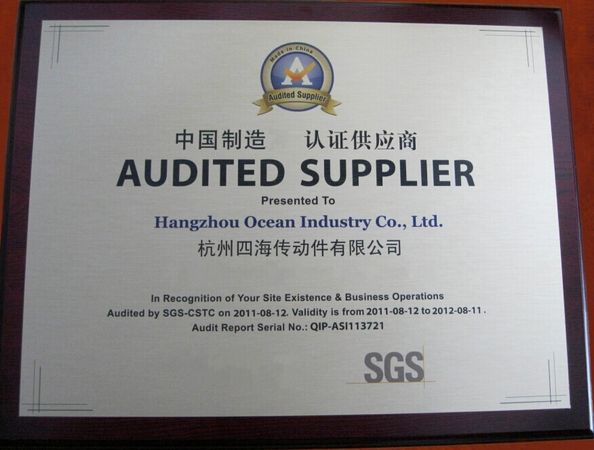
Certification

- I'm Online Chat Now
Company News
Worm Gearbox Industry Knowledge
Worm gearbox, also commonly referred to as worm speed reducer or worm gear reducer, is a foundational power transmission component widely deployed across global industrial automation and mechanical engineering fields. As a mature reduction solution, it converts high-speed, low-torque input power from electric motors into low-speed, high-torque output for driven machinery. Its core transmission pair consists of a worm shaft and a worm wheel. In most standard configurations, the worm acts as the driving member, meshing with the worm wheel to realize speed reduction and torque multiplication. When compared with helical gear reducers, spiral bevel gearboxes and planetary reduction units, worm gear systems stand out with ultra-compact dimensions, simple assembly structure, smooth running performance and distinctive self-locking capability. These inherent advantages make them indispensable for a broad spectrum of light to medium-duty industrial applications.
Material selection and matching are the critical factors that define the working life, load capacity and reliability of a worm gearbox. The worm shaft is usually manufactured from alloy steel grades including 20CrMnTi or 40Cr. After raw material machining, the worm undergoes carburizing or high-frequency quenching treatment, followed by precision grinding of the tooth profile. This manufacturing process delivers high surface hardness, excellent wear resistance and stable meshing accuracy. The mating worm wheel is typically cast from tin bronze or nickel bronze alloy. The combination of hardened steel worm and bronze worm wheel creates a low-friction meshing pair, which effectively prevents metal seizure and reduces running noise under continuous operation. For popular NMRV and NRV series small worm gearboxes, die-cast aluminum alloy housing is the mainstream option. Aluminum housing brings light weight, outstanding heat dissipation performance and moderate corrosion resistance. For heavy load, high impact or harsh working environments, cast iron housing will be adopted to provide stronger structural rigidity and anti-vibration performance.
Worm gear reducers are well-known for achieving large reduction ratios within a single reduction stage. The reduction ratio range for single-stage NMRV / NRV worm gearboxes generally covers 5 to 100. When customers require much higher speed reduction, combined multi-stage structures can be applied. The NMRV+NMRV two-stage worm gear combination is a typical heavy-duty solution, which can deliver total reduction ratios up to 5000. Another widely adopted composite type is PC+NMRV, adding a pre-stage helical gear unit before the worm reduction stage. This hybrid design greatly lifts the overall transmission efficiency to approximately 90%, which helps overcome the inherent low-efficiency weakness of pure single-stage worm drives. This upgraded structure is highly favored by packaging machinery and automated conveyor system manufacturers.
Self-locking property is one of the most recognizable features of worm gear transmission. When the lead angle of the worm thread is smaller than the friction angle of the meshing pair, reverse transmission becomes impossible. In other words, the output worm wheel cannot drive the input worm shaft. This safety characteristic is heavily applied in lifting equipment, screw jack systems and vertical material handling machinery to prevent load back-drifting during power failure. However, it should be noted that self-locking comes with higher friction loss and lower transmission efficiency. Mechanical designers need to carefully balance safety requirements and energy consumption during model selection. It is also important to clarify that not all worm gearboxes are self-locking; self-locking performance is determined by worm lead angle and operating load conditions.
Standard NMRV and NRV worm gearboxes support flexible multi-directional installation. Users can mount the unit horizontally, vertically or at inclined angles to adapt to limited machine layout space. Most finished worm gear reducers are manufactured to meet IP55 protection standard, which blocks solid dust and splashing liquid. This makes them suitable for food processing machinery, ceramic production equipment, packaging lines, conveyor systems and general automated production lines. Multiple input and output configurations are available for flexible connection. The input side can be fitted with IEC or NEMA standard motor flanges for direct coupling with electric motors. Output options include solid shaft output, hollow shaft output, flange output and dual solid shaft output to satisfy different mechanical connection demands.
Proper routine maintenance is vital to guarantee long-term stable operation of worm gearboxes. WA460 synthetic worm gear lubricating oil is the standard lubricant for NMRV/NRV series. The correct oil viscosity grade must be selected according to ambient temperature, continuous running time and actual working load. Overheating and oil leakage are the two most common failure issues in daily operation. Long-term overload operation will accelerate wear of the bronze worm wheel, resulting in increased backlash, vibration and abnormal noise. To maximize service life, operators should avoid sustained overload work, regularly inspect oil level, replace lubricant on schedule and check sealing rings for aging or damage.
The global worm gearbox market keeps developing to meet evolving industrial requirements. Gearbox manufacturers continuously optimize housing heat sink structures, improve tooth profile machining precision and upgrade surface anti-corrosion treatments. Small aluminum worm reducers remain the cost-effective preferred choice for light and medium automation projects. Meanwhile, heavy-duty cast iron worm gear units serve metallurgical, mining and bulk material handling industries. Although helical and planetary reducers gain growing market share in high-efficiency applications, worm gearboxes still maintain stable market demand. Their compact footprint, quiet running and inherent safety self-locking function ensure they will stay as a core power transmission product for automation machinery for years to come.
Pub Time : 2026-10-10 10:37:35
>> News list
Contact Details
Hangzhou Ocean Industry Co.,Ltd
Contact Person: Mrs. Lily Mao
Tel: 008613588811830
Fax: 86-571-88844378