 |
|
|
|
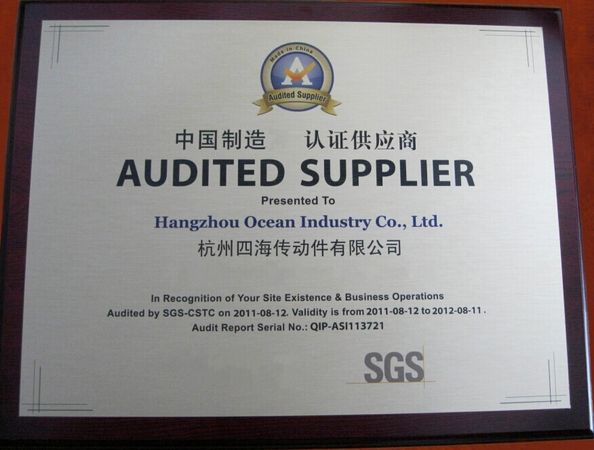
Certification

- I'm Online Chat Now
Company News
40Cr vs 42CrMo: A Complete Industrial Material Selection Guide
Introduction
40Cr and 42CrMo are two mainstream medium-carbon quenched & tempered alloy structural steels widely adopted in automotive, machinery, construction machinery and new energy equipment. Engineers frequently struggle with material substitution between them; improper downgrade replacement often triggers abrupt fracture, premature fatigue failure and drastically shortened service life. This guide systematically compares the two grades from chemical composition, mechanical performance, heat treatment, application scenarios and substitution rules, providing actionable standards for industrial material selection and production risk control.
1. Core Chemical Composition Difference
Both grades contain 0.37%–0.45% carbon and 0.80%–1.10% chromium, which improves base strength and hardenability. The decisive gap lies in molybdenum (Mo):
- 40Cr: No intentional molybdenum addition
- 42CrMo: Contains 0.15%–0.25% Mo element
Molybdenum is the fundamental factor that lifts 42CrMo’s overall performance above 40Cr. It suppresses temper brittleness, enhances deep-section hardenability, boosts fatigue resistance and stabilizes mechanical properties under medium-temperature working conditions.
2. Mechanical Property Comparison (Quenched & Tempered State)
After standard quenching + high-temperature tempering, 42CrMo shows comprehensive advantages in strength, toughness and fatigue durability:
| Performance Index | 40Cr | 42CrMo |
|---|---|---|
| Minimum Tensile Strength | ≥980 MPa | ≥1080 MPa |
| Minimum Yield Strength | ≥785 MPa | ≥930 MPa |
| Fatigue Limit | ~380 MPa | ~550 MPa |
| Impact Toughness | Moderate, sensitive to low temperature | Excellent, low-temperature brittle fracture resistance |
| Effective Oil-Quench Critical Diameter | ≤40 mm | 40–70 mm |
40Cr can only guarantee uniform core strength for small cross-section parts. For thick components, non-martensitic ferrite-pearlite structures remain at the core, reducing core strength below 600 MPa. 42CrMo achieves full through-hardening for large-size workpieces, delivering consistent strength and toughness from surface to core中国机械科....
3. Heat Treatment Process Contrast
3.1 Quenching Temperature Window
- 40Cr: Fixed quenching temperature at 850°C, narrow process window with low production tolerance
- 42CrMo: 840°C–860°C wide temperature range, higher fault tolerance for workshop mass production
3.2 Cooling Medium
- 40Cr: Only oil quenching is allowed; water cooling easily causes cracking, and air cooling fails to harden parts thoroughly
- 42CrMo: Supports both oil and water quenching, its superior hardenability greatly expands process flexibility
3.3 Tempering & Temper Brittleness
- 40Cr: Standard tempering temperature around 520°C, highly susceptible to 2nd-class temper brittleness; impact toughness drops sharply after tempering in critical temperature zones
- 42CrMo: Tempering range 550°C–650°C. Molybdenum effectively eliminates temper brittleness, maintaining stable toughness across a broad tempering interval
3.4 Surface Hardening Performance
Both grades support induction surface hardening. However, 40Cr forms a thin hardened layer (<2 mm) lacking sufficient core support, leading to surface spalling under heavy loads. 42CrMo retains strong core toughness after surface quenching, preventing layer collapse under alternating loads.
4. Industrial Application Classification
4.1 Typical Applications of 40Cr (Light Load, Small Section, Cost-Sensitive Parts)
- Automotive non-load-bearing components: Ordinary transmission intermediate shafts, non-main load wheel hubs, steering tie rod joints
- General machine tools: Common spindle sleeves, low-speed worm gears, light-duty transmission parts
- Light construction & agricultural machinery: Small excavator connecting pins, low-load farm drive shafts
4.2 Typical Applications of 42CrMo (Heavy Load, Large Section, High Reliability & Safety-Critical Parts)
- Heavy-duty automotive transmission: Heavy truck crankshafts, differential gears, large vehicle axles
- High-cycle fatigue core parts: Wind power main shafts, engine crankshafts, high-strength structural bolts above Grade 10.9
- Large cross-section forgings: Shafts over 50 mm diameter, thick-wall hydraulic pipe fittings, bridge anchorage components
- Low-temperature & corrosive working environments: Cold-region drilling equipment, offshore wind fasteners
- Composite surface strengthening parts: Induction-hardened crankshafts, nitrided heavy-duty gears
5. Permissible Downgrade Substitution Rules (40Cr Replacing 42CrMo)
40Cr can only substitute 42CrMo when all the following rigid conditions are satisfied simultaneously:
- Automotive lightweight transmission parts
- Workpiece section diameter ≤40 mm
- No continuous high-frequency alternating loads, non-safety critical components
- Required quenched & tempered hardness only 30–34 HRC
- General machine tool parts
- Long-term operating temperature ≤150°C
- No severe impact loads, no requirement for induction surface hardening
- Allow 30%–50% reduction in overall design service life
- Light engineering machinery parts
- Workpiece cross-section ≤50 mm
- No corrosive media, operating environment temperature above 0°C
- No sustained heavy load or frequent overload cycles
6. Strict Forbidden Substitution Scenarios (Red Lines for 40Cr Instead of 42CrMo)
Cost-driven downgrade replacement in these scenarios will lead to catastrophic sudden fracture:
- Heavy-load transmission systems: 40Cr’s insufficient hardenability weakens core strength of large-section parts, causing plastic deformation and torsional fracture
- High-cycle fatigue working conditions: 40Cr’s fatigue limit is far lower; service life decreases by over 50% after substitution
- Components with cross-section over 50 mm: Incomplete through-hardening creates soft core regions with insufficient bearing capacity
- Low-temperature or corrosive environments: Poor low-temperature impact toughness triggers unforeseen brittle fracture below 0°C
- Parts requiring high-strength surface strengthening: Thin hardened layers lack core support, resulting in rapid surface peeling and failure under heavy loads
7. Three Core Material Selection Principles
- Light-load small parts, limited budget: Choose 40Cr for cost control
- Heavy-load large components, long service life, alternating or low-temperature working conditions: Mandatory selection of 42CrMo
- Material substitution must strictly follow boundary limits; never downgrade for safety-critical parts
Conclusion
The molybdenum alloy element is the core dividing line between 40Cr and 42CrMo. 40Cr serves as an economical choice for low-demand small-size components, while 42CrMo is the high-reliability grade for heavy-load, large-section and safety-related industrial parts. Material engineers must evaluate workpiece cross-section, load type, operating temperature, fatigue requirements and service life indicators comprehensively before confirming steel grades, and avoid blind cost-cutting substitution to eliminate production safety risks.
Pub Time : 2026-07-27 09:49:38
>> News list
Contact Details
Hangzhou Ocean Industry Co.,Ltd
Contact Person: Mrs. Lily Mao
Tel: 008613588811830
Fax: 86-571-88844378