 |
|
|
|
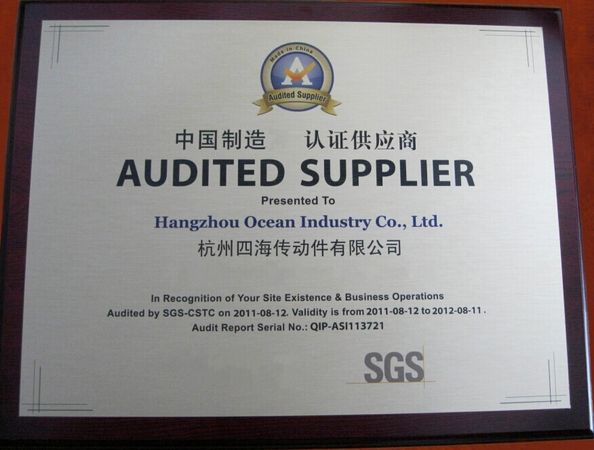
Certification

- I'm Online Chat Now
Company News
Production Process of Aluminum Alloy Wheels

The production processes of aluminum alloy wheels for automobiles mainly fall into the following categories:
1.Casting Processes:
• Gravity Casting: Liquid aluminum alloy is poured into a mold and fills the mold under the action of gravity before cooling and taking shape. This process requires relatively low equipment investment and is relatively simple to operate, being suitable for small-batch production. However, the casting efficiency is low, the consistency of product quality is poor, and casting defects such as porosity and shrinkage porosity are prone to occur.
• Low-Pressure Casting: In a sealed crucible, the liquid aluminum alloy is pressed into the mold at a relatively low pressure by inert gas and solidifies under pressure. The castings produced by this process have a dense structure and good internal quality, with relatively high production efficiency, and are suitable for large-batch production. However, it requires a large investment in equipment, has high requirements for molds, and the mold cost is also high.
• Spinning Casting: It is an improved process based on low-pressure casting. First, a rough blank of the wheel hub is formed through low-pressure casting, and then the blank is fixed on a spinning machine. Through the rotating mold and pressure, the structure of the rim part of the wheel hub is gradually deformed and extended. This process not only retains the advantages of low-pressure casting but also can improve the strength and precision of the wheel hub while reducing its weight.
2.Forging Process: After the aluminum alloy is heated to a certain temperature, it is forged and shaped in the mold by a forging press. The forging process can be divided into the following two types:
Conventional Forging: The whole aluminum ingot is directly forged into the shape of a wheel hub under relatively high pressure. The wheel hubs produced by this process have a high material utilization rate, with less waste, and the mechanical properties of the forgings are excellent, having good strength and toughness. However, it requires a large investment in equipment, the process is complex, and it demands a high technical level of the operating workers.
• Semi-solid Forging: First, the aluminum alloy is heated to a semi-solid state. At this time, the aluminum alloy has certain fluidity and forgeability, and then forging is carried out. This process can reduce the energy consumption during forging, improve production efficiency, and also improve the quality of the wheel hub.
3.Welding Process: Roll the sheet into a cylinder and weld it, then perform simple processing on it or press it into a wheel rim with a mold, and finally weld the pre-cast wheel disc to produce a wheel hub. Welding methods such as laser welding and electron beam welding can be adopted. This process requires a dedicated production line, has high production efficiency, and is suitable for mass production. However, the appearance is not so good, and welding quality problems are prone to occur at the welding joints.
Pub Time : 2024-11-22 09:40:20
>> News list
Contact Details
Hangzhou Ocean Industry Co.,Ltd
Contact Person: Mrs. Lily Mao
Tel: 008613588811830
Fax: 86-571-88844378