 |
|


|
|
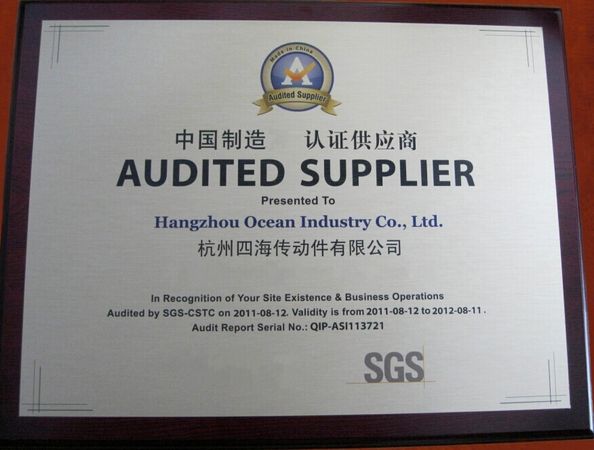
Certification

- I'm Online Chat Now
Company News
Solution Treatment, Annealing and Aging: What Exactly Does Heat Treatment "Treat"?
Heat Treatment and Material Delivery Condition
For alloys with the identical grade and chemical composition, mechanical properties can differ greatly depending on the delivery condition. Heat treatment is far more than simple reheating. It controls phase transformation and precipitation to tune the material’s strength, corrosion resistance and dimensional stability to target specifications. Mastering these three heat treatment processes and condition codes prevents misjudgment merely by material grade names.
01 Definition: Core Purposes of the Three Heat Treatment Processes
These three widely used industrial heat treatments serve distinct purposes. Solution Treatment: The alloy is heated to a proper temperature to dissolve strengthening phases into the matrix, followed by rapid quenching to form a supersaturated solid solution, preparing the material for subsequent aging. It is commonly applied to austenitic stainless steel and precipitation-hardening alloys. Annealing: It softens materials via recrystallization or stress relief, improving workability and dimensional stability. Typical applications include stress-relief annealing for titanium strips and soft annealing for stainless steel. Aging (Precipitation Hardening): The supersaturated alloy after solution treatment is held at a relatively low temperature. Fine, dispersed strengthening phases precipitate out, which dramatically raises strength and hardness. Representative grades include 17-4PH (630) and Inconel series.
Simply put: solution treatment dissolves phases into matrix, annealing softens the material, and aging precipitates strengthening phases.
02 Specifications: Delivery Conditions and Condition Codes
Condition codes specified in standards are the primary basis for material acceptance. For titanium products under GB/T 3621 (plates) and GB/T 3622 (strips and foils):
- M: Annealed condition
- Y (1/4H, 1/2H, H): Cold-work hardened condition
- R: Hot-worked condition
Stainless steel and nickel alloy strips are commonly marked as A (annealed), 1/4 hard, 1/2 hard, full hard and other cold-worked states. ASTM B265 also defines annealed and worked conditions for titanium.
Condition codes directly govern hardness, tensile strength and formability, and must be clearly stated on drawings and purchase orders.
表格
| Material / Standard | Condition Code | Description |
|---|---|---|
| Titanium GB/T 3621, GB/T 3622 | M | Annealed |
| Titanium | Y (1/4H, 1/2H, H) | Cold-work hardened |
| Titanium | R | Hot-worked |
| Stainless steel / Nickel alloy strip | A | Annealed |
| Stainless steel / Nickel alloy strip | 1/4H, 1/2H, H | Cold-work hardened |
| ASTM B265 (Titanium) | Annealed / Worked | Specified annealed and worked conditions |
03 Selection & Acceptance: Match Condition to Service Requirements
Align condition codes with service requirements during material selection and inspection. Components requiring deep drawing, tube expansion and welding shall adopt annealed condition for sufficient plasticity and weldability. Thin strips for spring performance or structural load can use cold-work hardened condition to skip extra post-processing heat treatment. For precipitation-hardening grades such as 17-4PH (630), it is critical to confirm delivery as solution treated or aged, since their strength can vary multiple times. During acceptance, condition code, hardness, mechanical properties and grain size shall all comply with standards and drawing requirements. Material grade alone is not sufficient for qualification.
04 Standards & Acceptance Rules
Titanium delivery conditions follow GB/T 3621, GB/T 3622 and ASTM B265. Stainless steel and nickel alloy strips comply with condition and mechanical property clauses in their respective product standards. GB/T 9452 covers the measurement of effective heating zones for heat treatment furnaces for process validation and quality control. Hardness test, tensile test and intergranular corrosion test are carried out in accordance with corresponding test method standards. Precipitation-hardening alloys require additional verification of precipitated phases and strength against defined aging cycles.
Reference Standards: GB/T 3621, GB/T 3622, ASTM B265 for titanium delivery conditions; dedicated product standards for stainless steel and nickel alloy strips; GB/T 9452 for heat treatment quality control; corresponding test standards for hardness, tensile and intergranular corrosion; aging schedule verification for precipitation-hardening materials.
To sum up: solution treatment dissolves, annealing softens, aging precipitates. Always check delivery condition besides material grade. The condition codes and heat treatment schedules on material certificates determine the actual performance of your alloy parts.
Pub Time : 2026-11-16 10:15:08
>> News list
Contact Details
Hangzhou Ocean Industry Co.,Ltd
Contact Person: Mrs. Lily Mao
Tel: 008613588811830
Fax: 86-571-88844378