 |
|
|
|
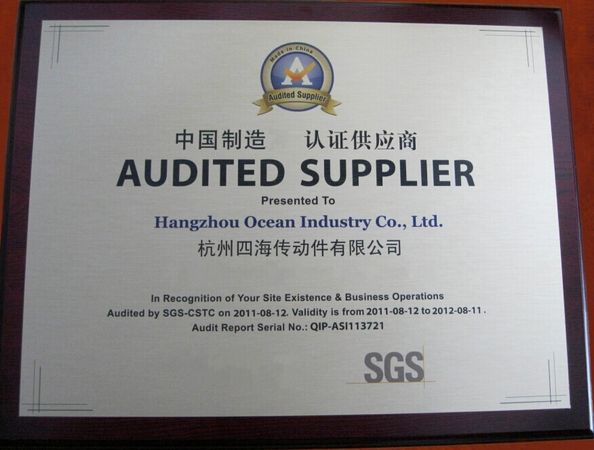
Certification

- I'm Online Chat Now
Company News
 |
Twist Phenomenon, Calculation and Correction in Helical Gear Manufacturing 1. Definition and Essence of Helical Gear Twist Gear twist is a common geometric deviation occurring in the precision machining of helical gears, referring to the non-uniform dimensional error on the tooth profile and tooth ... Read More
|
|
|
Spur Gears and Their Importance in Industrial Applications Spur gears are a type of cylindrical gear characterized by their straight, parallel teeth, which are designed to mesh together efficiently. These gears are primarily utilized in mechanical systems to transmit torque and rotational motion ... Read More
|
|
|
Industry Knowledge: Problems Caused by Excessive Gear Clearance in Planetary Reducers 1. Function of Proper Gear Clearance Designed clearance between meshing gears is essential for compensating manufacturing and assembly tolerances, accommodating thermal expansion during operation to avoid gear ... Read More
|
|
|
Complete Industry Guide to Bearing Internal Clearance (C0/C1/C2/C3/C4/C5) Introduction Codes like C0, C3 and C4 represent standardized internal clearance grades of rolling bearings, a core parameter governing equipment stability, running noise and bearing service life in procurement, mechanical ... Read More
|
|
|
Industry Knowledge about Bearing Cage Failures Introduction The bearing cage is an indispensable core component of rolling bearings, tasked with separating rolling elements, evenly distributing clearance between balls or rollers and storing lubricating grease. Statistically, cage failures occupy a ... Read More
|
|
|
Chrome electroplating is one of the most widely applied surface strengthening and decorative treatment technologies in the modern machinery, automobile, marine and chemical industries. As a general technical term, chrome plating can be subdivided into two core categories according to process ... Read More
|
|
|
A Comprehensive Guide to 304 and 316 Austenitic Stainless Steel Introduction Stainless steel is a cornerstone material in modern industry, valued for its exceptional corrosion resistance, mechanical strength, formability, and aesthetic appeal. Among the numerous grades, 304 (UNS S30400) and 316 (UNS ... Read More
|
|
|
In the field of metal material processing and heat treatment, thermal stress and structural stress, also known as phase transformation stress, are two fundamental internal stresses inevitably generated during steel heating and quenching processes. Their formation mechanisms, evolutionary rules, ... Read More
|
|
|
Steel pretreatment refers to the process of removing surface scale, rust, oil stains and moisture from steel before application. It further forms protective films or ideal roughness via physical or chemical methods. The core purposes are rust prevention, enhancement of coating adhesion and ... Read More
|
|
|
1. Definition Structural stress, also named transformation stress, is a type of internal stress generated during steel heat treatment, especially quenching. It arises from asynchronous phase transformation and specific volume differences among microstructures. Mutual restriction of volume changes in ... Read More
|