 |
|
|
|
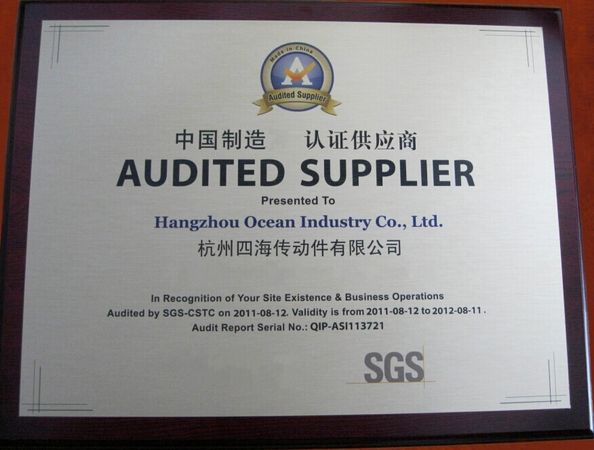
Certification

- I'm Online Chat Now
Company News
 |
1. Basic Overview 201, 304 and 316 all belong to austenitic stainless steel, widely used for mechanical parts, equipment housings, food machinery, pipeline systems, architectural decoration and transmission components. The core performance gap originates from differences in chemical composition, ... Read More
|
|
|
Series: Gear Heat Treatment Selection (Chapter 2/3) Published: July 23, 2026 | Original Author: Markov Chain | Gear AGI, Shanghai Preface The previous chapter focused on working condition definition. This chapter elaborates on mainstream heat treatment processes for gears. Process selection should ... Read More
|
|
|
Common Misconception in the Mechanical Industry Most mechanical engineers spend massive time mastering various 3D modeling software and improving drawing speed, regarding software proficiency as their core competitiveness. However, when practical on-site issues occur — such as abnormal equipment ... Read More
|
|
|
1. Common On-Site Failure Phenomenon It is a widespread mechanical manufacturing issue: a machined polyamide (nylon) bushing passes all dimensional inspections right after CNC processing, with qualified inner diameter, outer diameter and roundness. After press-fitting into metal housings and ... Read More
|
|
|
·Systematic Identification & Full-Lifecycle Mitigation of Hydrogen Embrittlement in Metallic Components Hydrogen Embrittlement: Establishing Complete Forensic Evidence Chains & Holistic Prevention Schemes for High-Strength Alloys Mechanism, Characterization & Process Control of Hydrogen-Assisted ... Read More
|
|
|
As the fundamental core component of mechanical transmission systems, gears underpin a vast spectrum of industrial sectors, including automated machinery, new energy vehicles, construction machinery, precision machine tools, food and chemical processing equipment, as well as rail transit. A ... Read More
|
|
|
1. Core Definition of Hydrogen Embrittlement: Not Ordinary Corrosion Failure In industrial failure analysis, hydrogen embrittlement (HE) is one of the most concealed and destructive material degradation modes, widely observed in high-strength bolts, welded structural parts, electroplated hardware, ... Read More
|
|
|
Plastic gears are transmission components manufactured from engineering polymers, widely adopted for light-load, low-noise, corrosion-resistant and self-lubricating working scenarios. Compared with metal gears, they feature light weight, quiet operation, lubrication-free performance, corrosion ... Read More
|
|
|
Gears are indispensable core mechanical transmission components in the modern machinery industry, serving as the key foundation for power and motion transmission of almost all mechanical and automated equipment. They enjoy extremely extensive application scenarios, covering industrial processing ... Read More
|
|
|
Worm gear drives are widely adopted right-angle power transmission solutions for industrial machinery, agricultural equipment, lifting platforms, valve actuators and automated conveyors. They stand out for single-stage large reduction ratios, compact layout, stable low-speed torque output and ... Read More
|